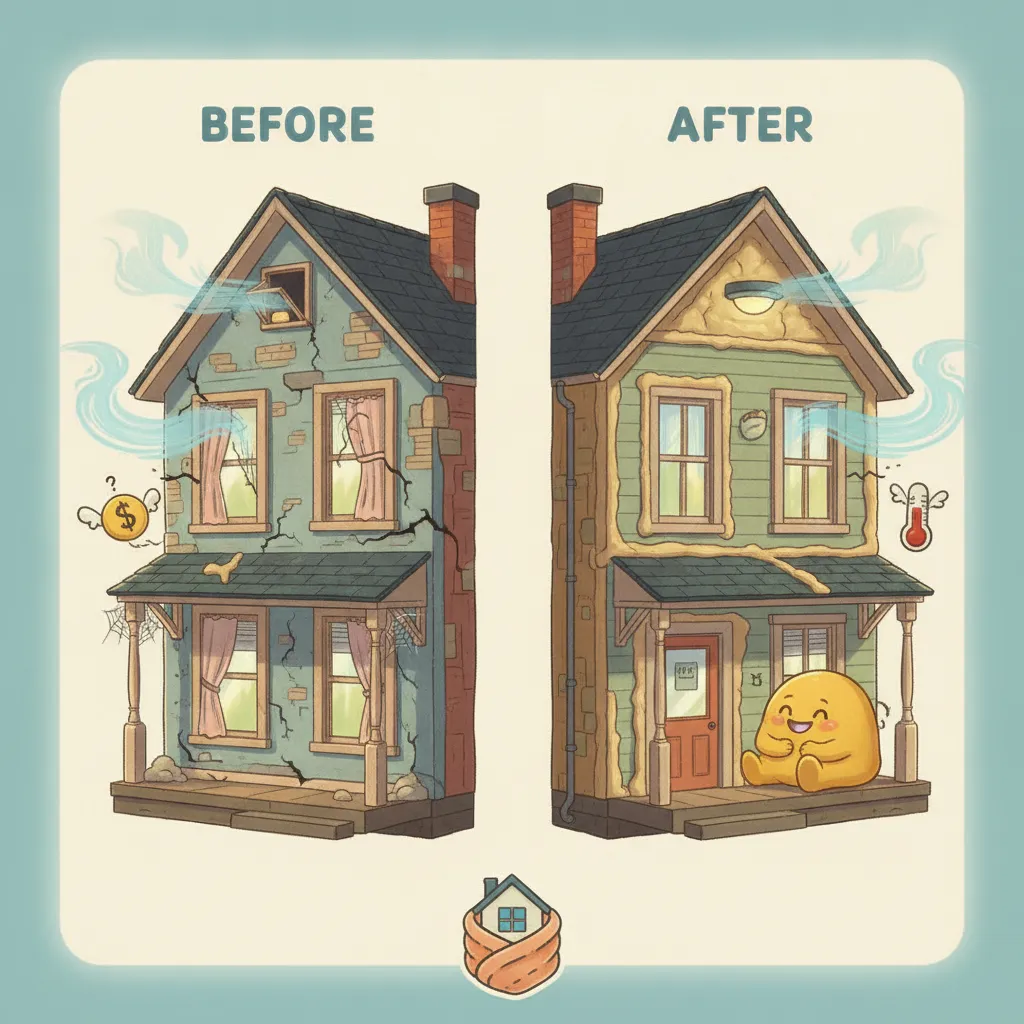
Home Energy Efficiency
Before spending money on solar panels or fancy smart thermostats, the single most cost-effective energy upgrade for most homes is something far less glamorous: sealing up the leaks.
Cheat Sheet
- Home energy efficiency refers to reducing the amount of energy a home consumes while maintaining the same level of comfort and functionality, typically achieved through improved insulation, efficient appliances, and better-sealed building envelopes.
- Heating and cooling generally account for the largest single share of a typical home's overall energy consumption, making improvements in this area often the most impactful starting point for efficiency upgrades.
- Proper insulation and air sealing, preventing unwanted heat transfer and air leakage through walls, attics, and windows, are widely considered among the most cost-effective home energy efficiency improvements available.
- Energy-efficient appliances and lighting, such as ENERGY STAR-certified products and LED bulbs, can meaningfully reduce electricity consumption compared to older, less efficient equivalents, often recouping their higher upfront cost over time through lower utility bills.
- A home energy audit, a professional assessment identifying a specific home's biggest sources of energy waste, is commonly recommended as a starting point before investing in broader efficiency upgrades.
- Various financial incentives, including government tax credits and utility company rebate programs, are frequently available to help offset the upfront cost of qualifying home energy efficiency improvements.
The 60-Second Version
Home energy efficiency refers to reducing the amount of energy a home consumes while maintaining the same level of comfort and functionality, typically achieved through improved insulation, efficient appliances, and better-sealed building envelopes. Heating and cooling generally account for the largest single share of a typical home's overall energy consumption, making improvements in this area often the most impactful starting point for efficiency upgrades. Proper insulation and air sealing, preventing unwanted heat transfer and air leakage through walls, attics, and windows, are widely considered among the most cost-effective home energy efficiency improvements available. Energy-efficient appliances and lighting, such as ENERGY STAR-certified products and LED bulbs, can meaningfully reduce electricity consumption compared to older, less efficient equivalents, often recouping their higher upfront cost over time through lower utility bills. A home energy audit, a professional assessment identifying a specific home's biggest sources of energy waste, is commonly recommended as a starting point before investing in broader efficiency upgrades. Various financial incentives, including government tax credits and utility company rebate programs, are frequently available to help offset the upfront cost of qualifying home energy efficiency improvements.
The Long Version
Where Most of a Home's Energy Actually Goes
Heating and cooling generally account for the largest single share of a typical home's overall energy consumption, considerably more than lighting or most individual appliances, making improvements specifically targeting heating and cooling efficiency often the most impactful starting point for anyone looking to meaningfully reduce a home's overall energy use.
The Unglamorous Upgrade With the Best Return
Proper insulation and air sealing, addressing unwanted heat transfer and air leakage through walls, attics, windows, and doors, are widely considered among the most cost-effective home energy efficiency improvements available, since a poorly insulated or leaky home forces heating and cooling systems to work considerably harder than necessary to maintain a comfortable indoor temperature, regardless of how efficient the actual heating or cooling equipment itself might be.
Efficient Appliances and Lighting Add Up Over Time
Energy-efficient appliances and lighting, such as ENERGY STAR-certified products and LED light bulbs, can meaningfully reduce electricity consumption compared to older, less efficient equivalents, and while these products often carry a higher upfront purchase cost, that cost is frequently recouped over time through lower ongoing utility bills, making the long-term total cost often lower despite the higher initial price.
Starting With an Audit, and Finding Available Incentives
A home energy audit, a professional assessment specifically identifying a given home's biggest individual sources of energy waste, is commonly recommended as a practical starting point before committing to broader efficiency upgrades, since it helps prioritize which specific improvements will deliver the most meaningful impact for that particular home. Various financial incentives, including government tax credits and utility company rebate programs, are also frequently available to help offset the upfront cost of qualifying efficiency improvements, meaningfully improving the overall value proposition for homeowners considering these upgrades.
Ad slot (placeholder — set NEXT_PUBLIC_ADSENSE_SLOT_ID once an ad unit is created)
Glossary
- Building envelope
- The physical barrier separating a home's interior from the outdoors, including walls, windows, roof, and foundation, central to energy efficiency.
- Air sealing
- The process of closing gaps and leaks in a home's building envelope to prevent unwanted air leakage and energy loss.
- Home energy audit
- A professional assessment identifying a specific home's biggest sources of energy waste, commonly recommended before major efficiency upgrades.
- ENERGY STAR
- A government-backed certification program identifying appliances and products that meet specific energy efficiency standards.
- Energy efficiency rebate
- A financial incentive, often from a government or utility program, helping offset the cost of qualifying energy efficiency improvements.