Water Conservation
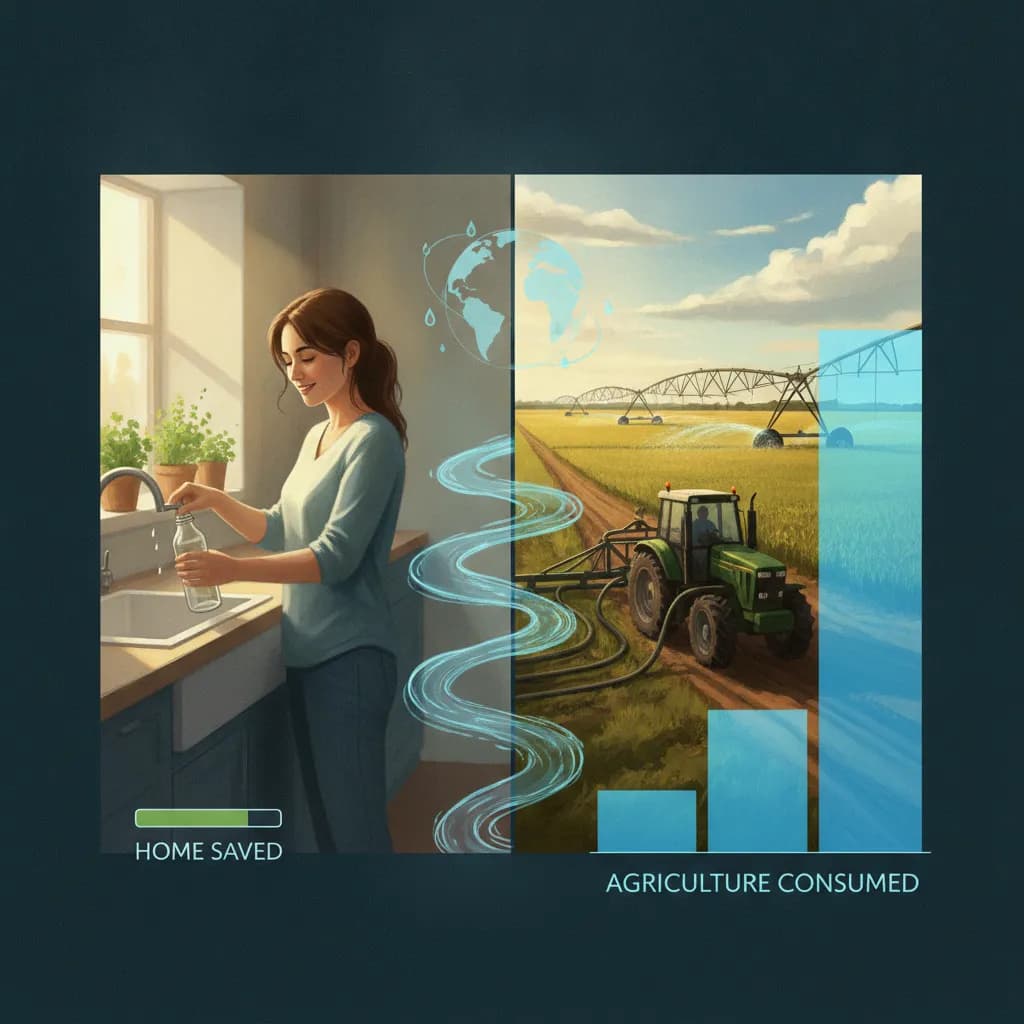
Individually conserving water at home genuinely helps — but agriculture alone consumes far more global freshwater than every household combined, putting household efforts in useful perspective.
Cheat Sheet
- Water conservation refers to the practice of using water more efficiently and reducing unnecessary water waste, both at the individual household level and at larger agricultural and industrial scales.
- Household water use is typically dominated by a relatively small number of activities, including toilet flushing, showering, and outdoor irrigation, making improvements in these specific areas generally the most impactful for reducing overall household water consumption.
- Low-flow fixtures, including efficient showerheads, faucets, and toilets, can meaningfully reduce water consumption without noticeably compromising everyday functionality, often becoming a standard feature in newer homes and renovations.
- Outdoor irrigation, particularly for lawns and gardens, represents a significant and often less efficiently managed portion of overall household water use, especially in warmer or drier climates.
- Agriculture accounts for the largest overall share of global freshwater consumption, meaning agricultural water efficiency improvements can have a considerably larger aggregate impact than household-level conservation efforts alone.
- Water scarcity concerns have grown significantly in various regions due to a combination of population growth, climate change effects on precipitation patterns, and increasing overall water demand, making conservation an increasingly significant policy and infrastructure priority.
The 60-Second Version
Water conservation refers to the practice of using water more efficiently and reducing unnecessary water waste, both at the individual household level and at larger agricultural and industrial scales. Household water use is typically dominated by a relatively small number of activities, including toilet flushing, showering, and outdoor irrigation, making improvements in these specific areas generally the most impactful for reducing overall household water consumption. Low-flow fixtures, including efficient showerheads, faucets, and toilets, can meaningfully reduce water consumption without noticeably compromising everyday functionality, often becoming a standard feature in newer homes and renovations. Outdoor irrigation, particularly for lawns and gardens, represents a significant and often less efficiently managed portion of overall household water use, especially in warmer or drier climates. Agriculture accounts for the largest overall share of global freshwater consumption, meaning agricultural water efficiency improvements can have a considerably larger aggregate impact than household-level conservation efforts alone. Water scarcity concerns have grown significantly in various regions due to a combination of population growth, climate change effects on precipitation patterns, and increasing overall water demand, making conservation an increasingly significant policy and infrastructure priority.
The Long Version
Where Household Water Actually Goes
Household water use is typically dominated by a relatively small number of specific activities, including toilet flushing, showering, and outdoor irrigation, meaning targeted improvements in these particular areas generally deliver the most meaningful reduction in overall household water consumption, considerably more impactful than smaller behavioral changes elsewhere in daily water use.
Low-Flow Fixtures Without Sacrificing Function
Low-flow fixtures, including efficient showerheads, faucets, and toilets specifically engineered to use meaningfully less water per use, have become increasingly standard in newer homes and renovations, since modern designs can achieve significant water savings without noticeably compromising everyday functionality compared to older, less efficient fixtures.
Lawns and Gardens: An Often-Overlooked Water Drain
Outdoor irrigation, particularly for lawns and gardens, represents a significant and often inefficiently managed portion of overall household water use, especially in warmer or drier climates where irrigation needs are highest, making practices like xeriscaping, landscaping with drought-tolerant plants specifically chosen to reduce irrigation needs, an increasingly popular conservation strategy in water-stressed regions.
Agriculture's Outsized Role, and Growing Scarcity Concerns
Agriculture accounts for the largest overall share of global freshwater consumption, considerably more than household or industrial use combined, meaning improvements in agricultural water efficiency can have a considerably larger aggregate impact on overall water conservation than household-level efforts alone, even though household conservation still carries genuine local value. Compounding the broader picture, water scarcity concerns have grown significantly in various regions due to a combination of population growth, climate change effects on precipitation patterns, and rising overall water demand, making conservation an increasingly significant policy and infrastructure priority well beyond individual household habits.
Ad slot (placeholder — set NEXT_PUBLIC_ADSENSE_SLOT_ID once an ad unit is created)
Glossary
- Low-flow fixture
- A water-efficient showerhead, faucet, or toilet designed to reduce water consumption without significantly compromising functionality.
- Outdoor irrigation
- Water used for lawns and gardens, representing a significant and often inefficiently managed portion of overall household water use.
- Water scarcity
- A shortage of available freshwater relative to demand, an increasingly significant concern in various regions worldwide.
- Agricultural water use
- Water consumed for farming and irrigation, accounting for the largest overall share of global freshwater consumption.
- Xeriscaping
- A landscaping approach using drought-tolerant plants specifically to reduce outdoor irrigation water needs.