Drywall Repair
The hardest part of a drywall repair usually isn't the hole itself — it's making the patched texture disappear into the surrounding wall.
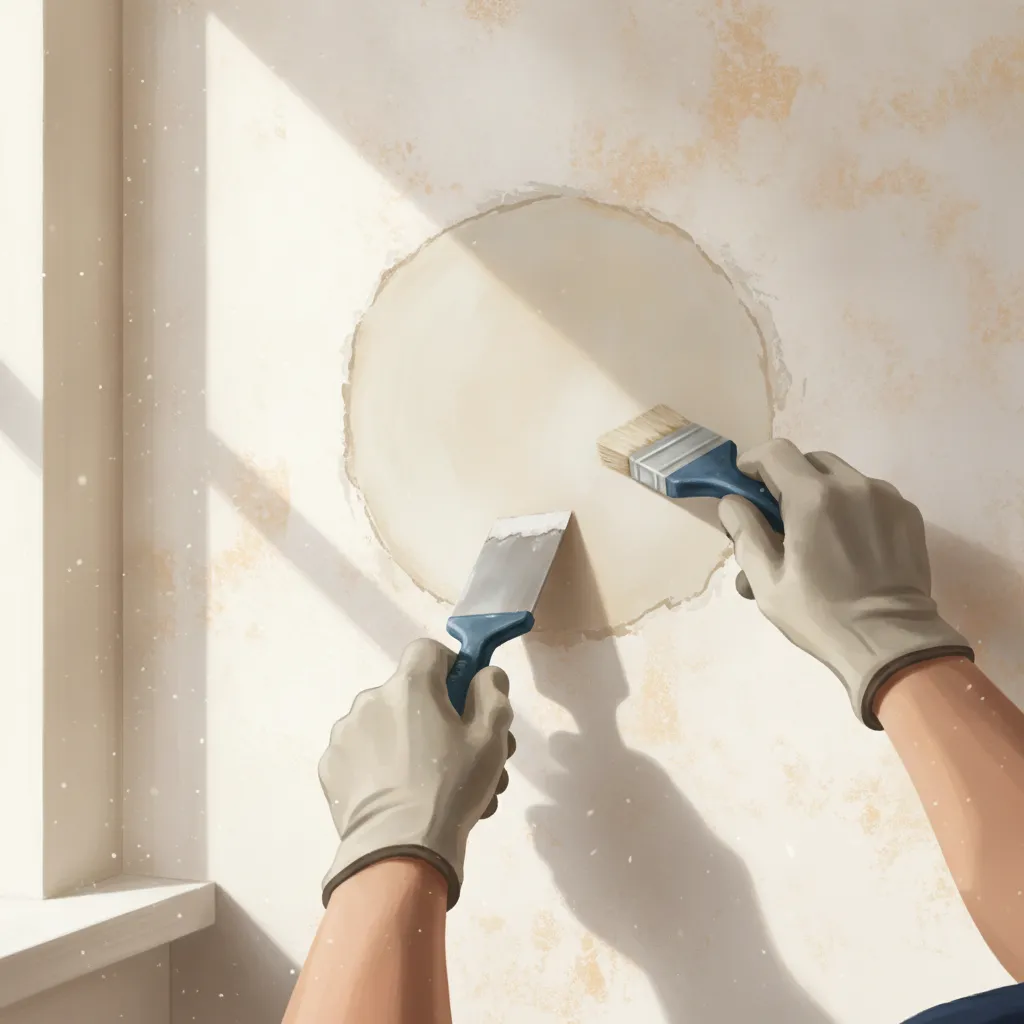
Cheat Sheet
- Drywall, also called gypsum board, is the standard interior wall material in most modern homes, made of a gypsum core sandwiched between layers of paper.
- Small holes and dents in drywall, such as those from picture hangers, can typically be repaired with a small amount of spackle or joint compound and light sanding.
- Larger holes generally require a patch, often made from a piece of scrap drywall or a self-adhesive mesh patch, secured before joint compound is applied over it.
- Joint compound must be applied in thin layers and allowed to dry fully between coats, since applying it too thick or sanding before it's dry often leads to a visibly uneven, cracking repair.
- Matching wall texture, such as orange peel or knockdown finishes, is often the most challenging part of a drywall repair, since an otherwise perfect patch can still look obvious if the texture doesn't blend.
- Water-damaged drywall requires addressing the underlying moisture source first, since patching over drywall that's still wet or has mold growth will only mask a problem that will resurface.
The 60-Second Version
Drywall, also called gypsum board, is the standard interior wall material in most modern homes, made of a gypsum core sandwiched between layers of paper. Small holes and dents in drywall, such as those from picture hangers, can typically be repaired with a small amount of spackle or joint compound and light sanding. Larger holes generally require a patch, often made from a piece of scrap drywall or a self-adhesive mesh patch, secured before joint compound is applied over it. Joint compound must be applied in thin layers and allowed to dry fully between coats, since applying it too thick or sanding before it's dry often leads to a visibly uneven, cracking repair. Matching wall texture, such as orange peel or knockdown finishes, is often the most challenging part of a drywall repair, since an otherwise perfect patch can still look obvious if the texture doesn't blend. Water-damaged drywall requires addressing the underlying moisture source first, since patching over drywall that's still wet or has mold growth will only mask a problem that will resurface.
The Long Version
What Drywall Actually Is
Drywall, also called gypsum board, is the standard interior wall material in most modern homes, constructed from a gypsum core sandwiched between two layers of heavy paper, a design that makes it relatively easy to cut, install, and, fortunately, repair compared to older plaster wall systems.
Small Fixes vs. Bigger Patches
Small holes and dents in drywall, such as those left behind by picture hangers or minor bumps, can typically be repaired with just a small amount of spackle or joint compound followed by light sanding once dry, a quick fix well within reach for most homeowners. Larger holes, however, generally require an actual patch, often cut from a piece of scrap drywall or a self-adhesive mesh patch, which needs to be properly secured to the wall before joint compound is applied over the top to blend it in.
The Discipline of Thin Layers
Joint compound must be applied in thin layers and allowed to dry fully between each coat, since applying it too thick in a single pass, or sanding before it's genuinely dry, tends to produce a visibly uneven repair that can crack or show through paint later, making patience one of the most important parts of doing this well.
The Truly Tricky Part: Texture
Matching the surrounding wall's texture, whether a stippled "orange peel" finish or a heavier "knockdown" texture, is often the single most challenging part of any drywall repair, since even a technically flawless patch underneath can still look obviously off if its surface texture doesn't blend seamlessly with the wall around it.
When Water Damage Is the Real Culprit
Water-damaged drywall requires addressing the underlying moisture source first, before any cosmetic patching begins, since simply covering over drywall that's still wet, or that has visible mold growth, will only temporarily mask a problem that's guaranteed to resurface, often in worse condition, once the moisture source is left unaddressed.
Ad slot (placeholder — set NEXT_PUBLIC_ADSENSE_SLOT_ID once an ad unit is created)
Why People Care
Drywall repair is one of the most common and approachable home maintenance skills to learn, and understanding the difference between a quick spackle fix and a proper patch job can save homeowners real money on small repairs they'd otherwise have to hire out.
Glossary
- Joint compound
- A paste used to fill and smooth drywall seams and repairs, also known as 'mud,' applied in thin layers and sanded once dry.
- Spackle
- A lightweight filler compound commonly used for small drywall holes and dents, typically drying faster than joint compound.
- Mesh patch
- A self-adhesive fiberglass mesh used to cover larger drywall holes before applying joint compound over it.
- Wall texture
- A surface finish, such as orange peel or knockdown, applied to drywall that must be matched during a repair to avoid a visible patch.
- Stud
- A vertical wall framing member, often needed to properly secure a larger drywall patch.
Go Deeper
More to Explore
- Hiring a Contractor
A contractor asking for a large cash deposit before lifting a single tool is one of the clearest warning signs in home renovation — and one many homeowners still miss.
- Power Tools 101
A single cordless tool, the humble drill/driver, is consistently recommended as the one power tool a total beginner should own before any other.
- Painting Techniques
The single biggest factor in whether a paint job looks professional or amateur usually has nothing to do with the actual painting — it's what happens before a single drop of paint goes on the wall.
- Basic Home Repairs
A surprisingly large share of common household repairs come down to just a handful of tools and a willingness to watch one good tutorial before starting.
- The KonMari Method
Marie Kondo's method doesn't start by asking what to throw away — it asks the opposite question entirely, and that single reframe is why it caught on worldwide.