Immunotherapy
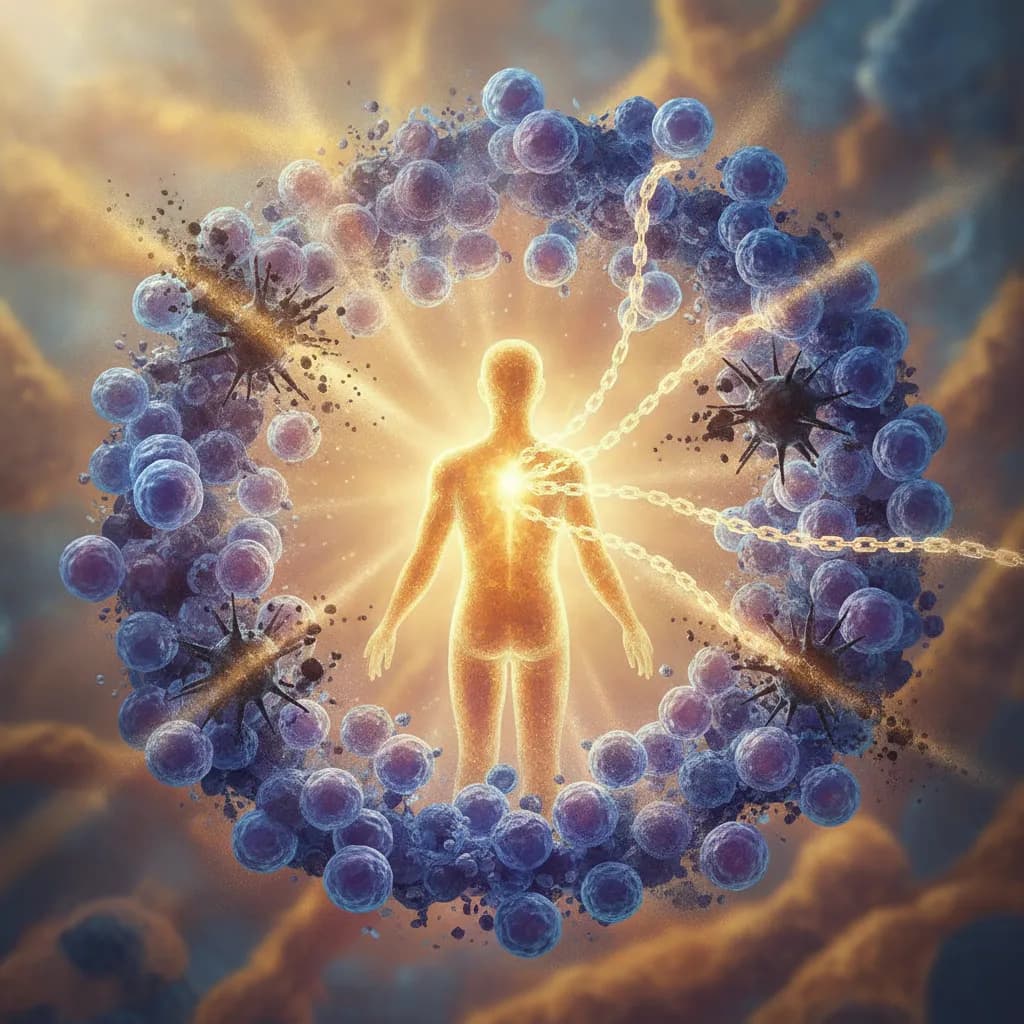
Immunotherapy recruits your own immune system to fight cancer, sometimes by simply releasing its brakes.
By Greg Goodwin · Published November 4, 2026
Cheat Sheet
- Types: NCI lists five main types: checkpoint inhibitors, T-cell transfer therapy, monoclonal antibodies, treatment vaccines, and immune system modulators.
- Checkpoint targets: approved drugs act against CTLA-4, PD-1, or PD-L1.
- CAR T firsts: the FDA approved the first CAR T-cell therapy in 2017, for children with acute lymphoblastic leukemia.
- CAR T timeline: from blood collection to infusion takes about 3 to 5 weeks, and the product is returned as a single infusion.
- Delivery: immunotherapy can be given intravenously, orally, topically as a cream, or directly into the bladder.
- Common checkpoint side effects: rash, diarrhea, and fatigue.
The 60-Second Version
Immunotherapy is a type of cancer treatment that helps your immune system fight cancer. The immune system, made of white blood cells and the organs and tissues of the lymph system, probably prevents or curbs many cancers, but tumors have ways of slipping past it. They may carry genetic changes that make them less visible, display proteins that switch immune cells off, or reshape the normal cells around them. Immunotherapy works against these tricks. Some versions block the brakes on immune cells, called checkpoints. Others engineer a patient's own T cells, supply lab-made antibodies, or boost the immune response in other ways. It is not yet as widely used as surgery, chemotherapy, or radiation, and only a small portion of people respond. This page is general information, not medical advice; treatment choices belong with an oncology team.
The Long Version
How Cancer Hides
NCI explains that the immune system detects and destroys abnormal cells as part of its normal job. Immune cells found in and around tumors, called tumor-infiltrating lymphocytes, are a sign that the immune system is responding, and people whose tumors contain them often do better than those whose tumors do not. Cancer cells nonetheless have ways to avoid destruction. They may have genetic changes that make them less visible, proteins on their surface that turn off immune cells, or an ability to change nearby normal cells so those interfere with the immune response. Immunotherapy exists to tilt this contest back toward the immune system.
The Five Families
NCI describes several types of immunotherapy used against cancer. Immune checkpoint inhibitors block checkpoints that keep immune responses from being too strong. T-cell transfer therapy takes immune cells from a tumor, selects or changes the most active ones in the lab, grows them in large batches, and returns them through a vein. Monoclonal antibodies are lab-made immune proteins designed to bind specific targets on cancer cells, and some mark them for destruction. Treatment vaccines boost the immune response to cancer cells and differ from vaccines that prevent disease. Immune system modulators enhance the body's immune response, some narrowly and some broadly.
Releasing the Brakes
Checkpoints are a normal safeguard so that an immune response does not destroy healthy cells. When proteins on T cells bind partner proteins on other cells, including some tumor cells, they send an "off" signal. Checkpoint inhibitors block that binding so T cells can kill cancer cells. One drug acts against a checkpoint protein called CTLA-4, and others act against PD-1 or its partner PD-L1; some tumors turn down the T cell response by making lots of PD-L1. NCI says approved uses span many cancers, including melanoma, lung, bladder, kidney, liver, stomach, colon, rectal, breast, cervical, and head and neck cancers and Hodgkin lymphoma. Common side effects include rash, diarrhea, and fatigue.
CAR T-Cell Therapy
CAR T-cell therapy is the "living drug" version. Doctors collect a patient's blood, separate the T cells, and send them to a lab where they are engineered to make chimeric antigen receptors that latch onto proteins on cancer cells. The cells are expanded to hundreds of millions and returned in a single infusion, a process that currently takes about 3 to 5 weeks. The FDA approved the first CAR T therapy in 2017 for children with acute lymphoblastic leukemia, and later approvals cover adult blood cancers including lymphomas and multiple myeloma. In one trial of advanced follicular lymphoma, a CAR T product eliminated the cancer in nearly 80% of patients. Progress against solid tumors has lagged.
Costs of a Revved-Up Immune System
Because immunotherapy turns up the immune system, many side effects occur when it also acts on healthy tissue. NCI notes that rarer checkpoint side effects can involve widespread inflammation, which can affect organs such as the lungs, colon, liver, thyroid, pancreas, heart muscle, and kidneys. CAR T therapy has its own concerns, especially cytokine release syndrome, which can cause dangerously high fevers and sharp blood pressure drops, and neurologic problems called ICANS. NCI says many cases can be managed. Researchers are working to predict who will respond, overcome resistance, learn how cancers evade the immune system, and reduce side effects.
Why People Care
Immunotherapy changed how cancer is treated, and NCI calls it a cornerstone of cancer care. Understanding the basics helps make sense of headlines about checkpoint drugs and CAR T cells and the questions patients may bring to their doctors. This is general information, not medical advice.
Glossary
- Immune checkpoint
- A normal part of the immune system that keeps immune responses from being too strong.
- T cells
- White blood cells, the body's primary killers of infected and other diseased cells.
- CAR T-cell therapy
- A treatment in which a patient's own T cells are engineered to carry receptors that latch onto proteins on cancer cells.
- Monoclonal antibody
- A lab-made immune system protein designed to bind to specific targets on cancer cells.
- Cytokine release syndrome
- A CAR T side effect in which infused T cells flood the bloodstream with cytokines, causing high fevers and drops in blood pressure.
Go Deeper
More to Explore
- Cholesterol
A waxy substance your body needs and your arteries would rather you not overdo.
- Blood Pressure
Two numbers, one cuff, and the quietest early-warning system your body has.
- Pandemics
Pandemics have reshaped history, from medieval Europe to the modern world.
- Organ Transplants
The first successful organ transplant, in 1954, worked only because the donor and recipient were identical twins.
- Anesthesia
Anesthesia has worked safely for over a century, yet scientists still can't fully explain how it switches consciousness off.