Organ Transplants
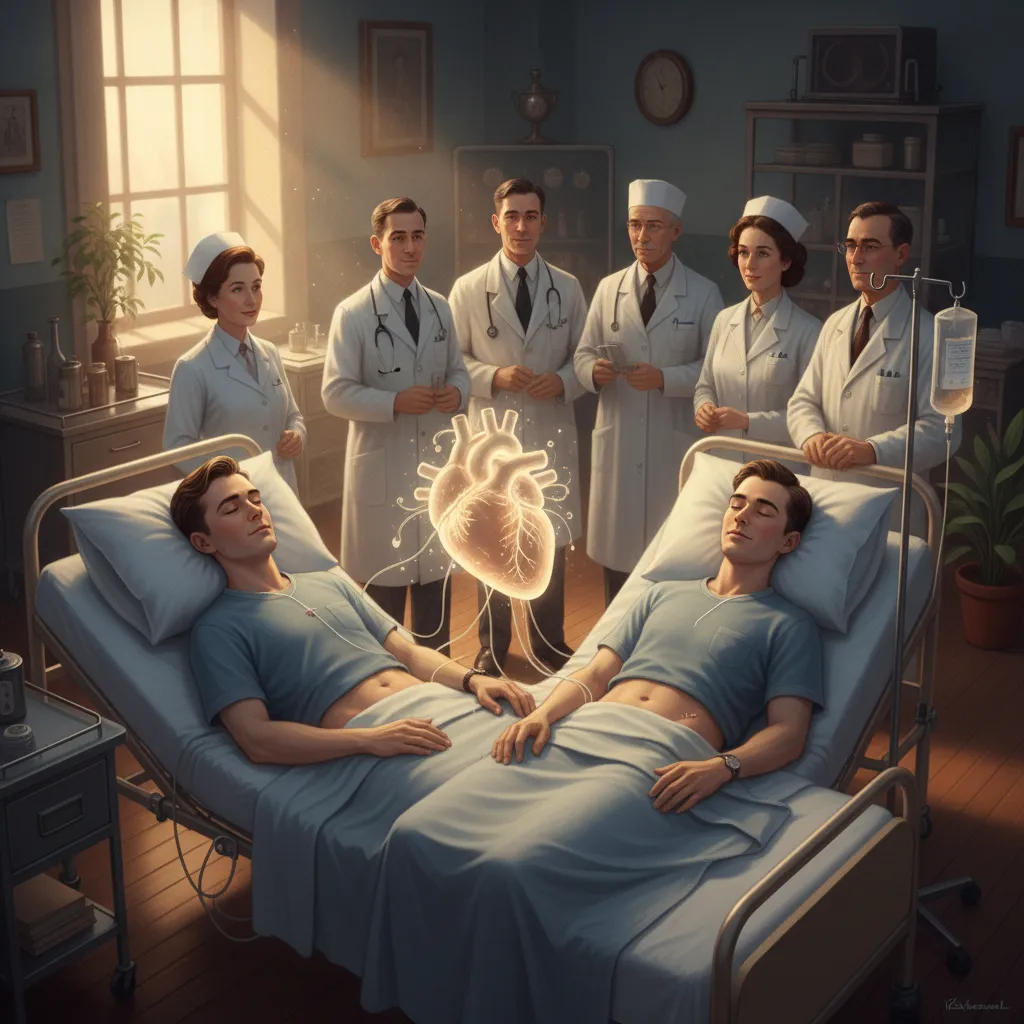
The first successful organ transplant only worked because the donor and recipient happened to be identical twins — a lucky genetic shortcut around a rejection problem doctors wouldn't actually solve for another three decades.
Cheat Sheet
- The first successful human organ transplant, a kidney between identical twins, was performed by Dr. Joseph Murray in 1954.
- Because the twins in that first transplant were genetically identical, their bodies didn't reject the new organ — a problem that took decades longer to solve for unrelated donors.
- The development of immunosuppressant drugs, especially cyclosporine's approval in the 1980s, dramatically improved transplant success rates between non-related donors and recipients.
- Organs can come from living donors (kidney, partial liver) or deceased donors (heart, lungs, full liver, and others).
- Organ rejection occurs when a recipient's immune system identifies the transplanted organ as foreign and attacks it, requiring lifelong immunosuppressant medication in most cases.
- Demand for donor organs significantly and persistently outpaces supply worldwide, resulting in long waiting lists for most organ types.
The 60-Second Version
Organ transplantation's first real success came in 1954, when Dr. Joseph Murray transplanted a kidney between a pair of identical twins, a milestone that worked specifically because the twins' genetically identical immune systems didn't recognize the new organ as foreign material to attack. That same genetic identity made the achievement something of a special case rather than a fully generalizable solution, since transplants between unrelated donors and recipients kept failing due to organ rejection, the recipient's immune system identifying the new organ as an invader and attacking it. The real breakthrough that made transplantation broadly viable didn't arrive until decades later, with the development of immunosuppressant drugs, particularly cyclosporine's approval in the 1980s, which dramatically improved success rates by suppressing that immune attack without disabling the immune system's other functions entirely. Donor organs today can come from either living donors, generally for organs like a kidney or a portion of a liver that a person can survive without, or from deceased donors for organs like the heart and lungs that can only be transplanted after death. Despite decades of medical progress, global demand for donor organs continues to significantly outpace available supply, leaving long waiting lists for most organ types in nearly every country.
The Long Version
A Twin-to-Twin Breakthrough
Organ transplantation's first genuine success came in 1954, when Dr. Joseph Murray transplanted a kidney between a pair of identical twins, a milestone that specifically worked because the twins' genetically identical immune systems simply didn't register the new organ as foreign tissue worth attacking.
The Rejection Problem That Held Back Progress
That same genetic identity made the achievement more of a special case than a broadly repeatable solution, since transplants attempted between unrelated donors and recipients kept failing due to organ rejection, a process in which a recipient's immune system correctly identifies the new organ as foreign material and mounts an attack against it.
The Drug That Changed Everything
The real breakthrough that finally made transplantation broadly viable for unrelated donors and recipients didn't arrive until decades later, with the development of immunosuppressant drugs, most notably cyclosporine's approval in the 1980s, which dramatically improved success rates by suppressing that immune attack without shutting down the immune system's other necessary functions entirely.
Living Donors, Deceased Donors, and a Persistent Shortage
Modern organ transplants generally come from one of two sources: living donors, typically for organs like a kidney or a portion of a liver that a person can survive without, or deceased donors, necessary for organs like the heart and lungs that can only be transplanted after death. Despite decades of continued medical progress, global demand for donor organs still significantly and persistently outpaces available supply, resulting in long waiting lists for most organ types across nearly every country.
Ad slot (placeholder — set NEXT_PUBLIC_ADSENSE_SLOT_ID once an ad unit is created)
Why People Care
Organ transplantation stands as one of modern medicine's most remarkable achievements, transforming once-fatal organ failure into a treatable condition, and understanding both its history and its persistent supply shortage explains why organ donation remains such a consistently emphasized public health priority.
Glossary
- Immunosuppressant
- A drug that suppresses immune system activity, used to prevent a transplant recipient's body from rejecting a new organ.
- Organ rejection
- An immune response in which a recipient's body identifies a transplanted organ as foreign and attacks it.
- Cyclosporine
- An immunosuppressant drug approved in the 1980s that dramatically improved transplant success rates between unrelated donors and recipients.
- Living donor
- A living person who donates an organ or partial organ, such as a kidney or part of a liver, typically to someone they know.
- Transplant waiting list
- A ranked list of patients awaiting a donor organ, reflecting the persistent global gap between organ demand and supply.
Go Deeper
More to Explore
- Anesthesia
Anesthesia has safely put patients to sleep for surgery for well over a century, and scientists still can't fully explain exactly how it actually switches consciousness off.
- Vaccines
A medical intervention effective enough to have completely eliminated one deadly disease from the entire planet — smallpox hasn't caused a single natural case since the late 1970s.
- Modern Surgery
Before three specific breakthroughs, surgery meant being fully conscious, at serious risk of deadly infection, and hoping you didn't bleed out on the table.
- Antibiotics
A single accidental discovery in a London laboratory in 1928 turned once-routinely-fatal bacterial infections into something treatable in days.
- HIIT (High-Intensity Interval Training)
A workout protocol designed in the 1990s to train Olympic speed skaters became, decades later, one of the most popular ways ordinary gym-goers try to save time.