Go
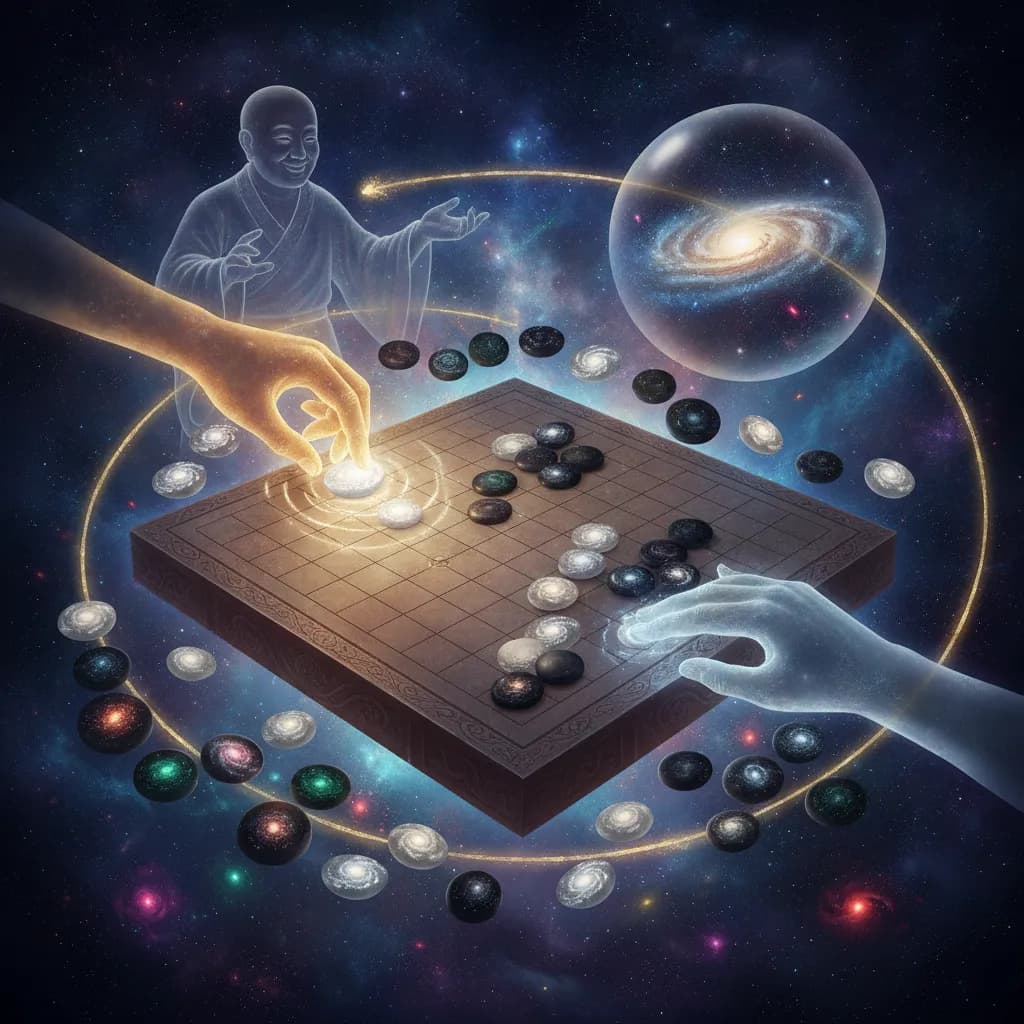
Go has more possible board positions than there are atoms estimated to exist in the observable universe, yet the rules can be explained in about a minute.
Cheat Sheet
- Go is an ancient strategy board game originating in China more than 2,500 years ago, making it one of the oldest board games still widely played today.
- Players take turns placing black or white stones on a grid, aiming to surround and control more territory on the board than their opponent.
- Despite its simple rules, Go is considered one of the most strategically complex games ever devised, with more possible board positions than atoms estimated to exist in the observable universe.
- Go is traditionally played on a 19x19 grid, though smaller 9x9 or 13x13 boards are commonly used by beginners to learn the fundamentals more quickly.
- In 2016, an AI program called AlphaGo defeated top-ranked human professional Lee Sedol, a milestone widely seen as arriving years earlier than most AI researchers had predicted.
- Go remains especially popular in China, Japan, and South Korea, where professional players compete in high-level tournaments and rankings are taken as seriously as those in chess.
The 60-Second Version
Go is an ancient strategy board game originating in China more than 2,500 years ago, making it one of the oldest board games still widely played today. Players take turns placing black or white stones on a grid, aiming to surround and control more territory on the board than their opponent. Despite its simple rules, Go is considered one of the most strategically complex games ever devised, with more possible board positions than atoms estimated to exist in the observable universe. Go is traditionally played on a 19x19 grid, though smaller 9x9 or 13x13 boards are commonly used by beginners to learn the fundamentals more quickly. In 2016, an AI program called AlphaGo defeated top-ranked human professional Lee Sedol, a milestone widely seen as arriving years earlier than most AI researchers had predicted. Go remains especially popular in China, Japan, and South Korea, where professional players compete in high-level tournaments and rankings are taken as seriously as those in chess.
The Long Version
Ancient Origins
Go is an ancient strategy board game originating in China more than 2,500 years ago, making it one of the oldest board games still widely played in its essentially original form today. Over the centuries the game spread throughout East Asia, becoming especially deeply embedded in the cultural and intellectual traditions of China, Japan, and Korea, where it was historically considered one of the essential accomplished arts for a cultivated person to master.
Simple Rules, Enormous Depth
Players take turns placing black or white stones on the intersections of a grid, aiming to surround and control more territory on the board than their opponent while also capturing opposing stones by fully surrounding them. Despite these genuinely simple rules, which can be explained in just a few minutes, Go is considered one of the most strategically complex games ever devised, with more possible board positions than the estimated number of atoms in the observable universe, a staggering figure that helps explain the game's enduring intellectual appeal.
Board Sizes and Learning the Game
Go is traditionally played on a 19x19 grid, a board size that supports its enormous strategic depth, though smaller 9x9 or 13x13 boards are commonly used by beginners to learn the fundamentals more quickly without being overwhelmed by the full board's complexity. This graduated approach allows new players to build genuine skill and understanding before tackling the traditional full-size game.
AlphaGo and Continued Global Popularity
In 2016, an artificial intelligence program called AlphaGo, developed by DeepMind, defeated top-ranked human professional Lee Sedol in a widely watched match, a milestone many AI researchers had previously believed was still years away, given Go's far greater complexity compared to games like chess. Despite this landmark moment for AI, Go remains especially popular as a human pursuit in China, Japan, and South Korea, where professional players compete in high-level tournaments and formal rankings are taken every bit as seriously as those in chess.
Ad slot (placeholder — set NEXT_PUBLIC_ADSENSE_SLOT_ID once an ad unit is created)
Glossary
- Stone
- A playing piece in Go, either black or white, placed on the board's grid intersections to claim territory and capture opponent stones.
- Territory
- The area of the board effectively surrounded and controlled by one player's stones, used to determine the winner at the end of a game.
- AlphaGo
- An artificial intelligence program developed by DeepMind that defeated top-ranked professional Go player Lee Sedol in 2016.
- Handicap
- A system in Go where a weaker player is given extra starting stones to make a match between players of different skill levels more competitive.
- Board size
- The grid dimensions used for a Go game, traditionally 19x19, with smaller 9x9 or 13x13 boards commonly used for beginners.