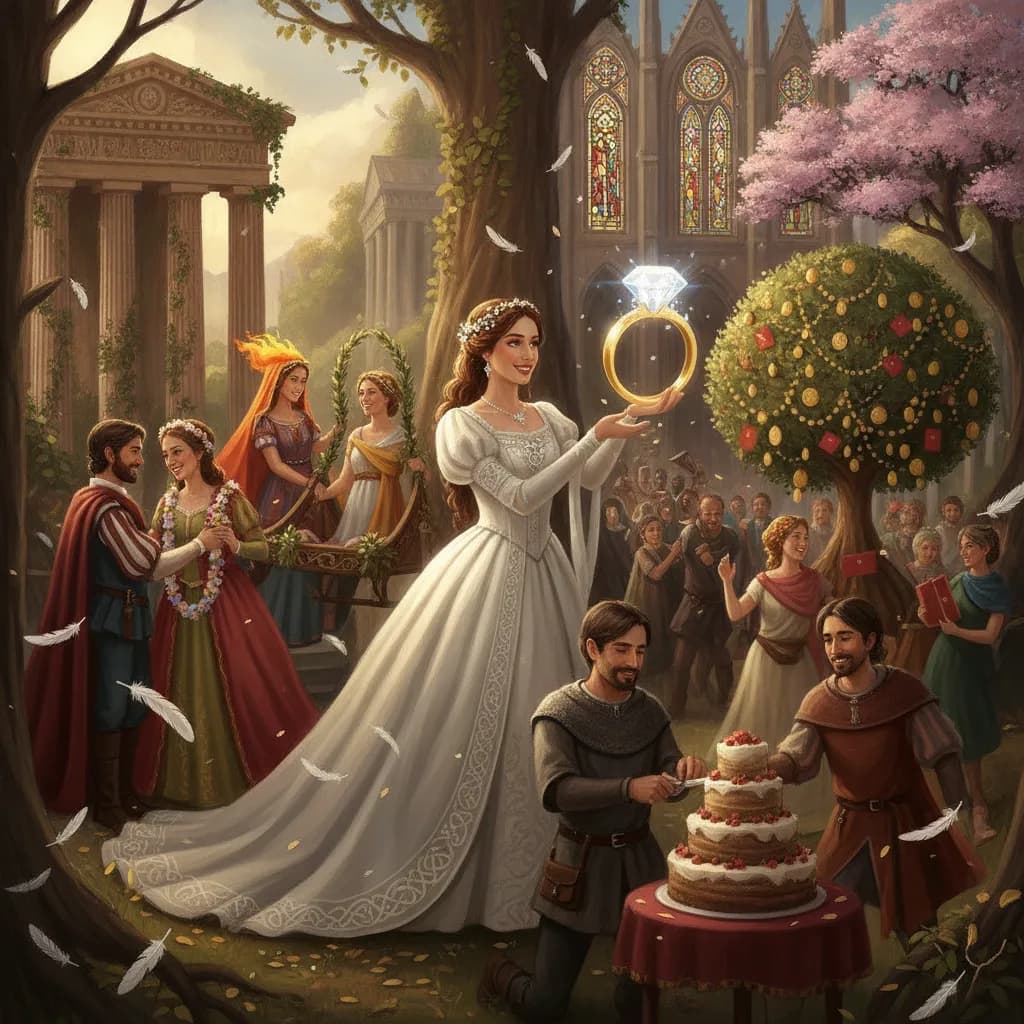
Wedding Traditions
Several wedding customs that feel timeless and ancient, including the white dress and the diamond engagement ring, are actually considerably more recent inventions than most people assume.
Cheat Sheet
- Wedding traditions vary enormously across cultures and religions, though certain widely recognized customs, such as exchanging rings or vows, appear in some form across a broad range of traditions worldwide.
- Many familiar Western wedding customs, including wearing a white wedding dress and the specific tradition of a diamond engagement ring, are considerably more recent inventions than commonly assumed, often popularized within just the past couple of centuries.
- Certain wedding customs carry practical historical origins that have since become primarily symbolic, such as the tradition of a best man, historically believed by some scholars to relate to an era of arranged unions requiring physical protection during the ceremony.
- Religious and cultural wedding ceremonies often incorporate specific symbolic elements, such as particular colors, foods, or ritual actions, each carrying meaning specific to that culture's own history and values.
- Modern couples increasingly blend traditional customs with personalized elements reflecting their own individual relationship, values, or blended cultural backgrounds, rather than following a single fixed traditional template.
- The wedding industry has grown into a substantial global commercial sector, with average wedding costs varying enormously by country, region, and the specific scale of traditions a couple chooses to incorporate.
The 60-Second Version
Wedding traditions vary enormously across cultures and religions, though certain widely recognized customs, such as exchanging rings or vows, appear in some form across a broad range of traditions worldwide. Many familiar Western wedding customs, including wearing a white wedding dress and the specific tradition of a diamond engagement ring, are considerably more recent inventions than commonly assumed, often popularized within just the past couple of centuries. Certain wedding customs carry practical historical origins that have since become primarily symbolic, such as the tradition of a best man, historically believed by some scholars to relate to an era of arranged unions requiring physical protection during the ceremony. Religious and cultural wedding ceremonies often incorporate specific symbolic elements, such as particular colors, foods, or ritual actions, each carrying meaning specific to that culture's own history and values. Modern couples increasingly blend traditional customs with personalized elements reflecting their own individual relationship, values, or blended cultural backgrounds, rather than following a single fixed traditional template. The wedding industry has grown into a substantial global commercial sector, with average wedding costs varying enormously by country, region, and the specific scale of traditions a couple chooses to incorporate.
The Long Version
Traditions Older and Newer Than They Feel
Wedding traditions vary enormously across cultures and religions worldwide, though certain widely recognized customs, such as exchanging rings or formal vows in some form, appear across a genuinely broad range of otherwise very different traditions, while other seemingly timeless customs are actually surprisingly recent, including the now-ubiquitous white wedding dress and the specific tradition of a diamond engagement ring, both popularized within just the past couple of centuries rather than representing genuinely ancient practice.
Practical Origins Behind Symbolic Customs
Certain wedding customs carry practical historical origins that have since become primarily symbolic over time, such as the tradition of a best man, which some scholars trace back to an era of arranged or contested unions where a groom's close companion may have provided genuine physical support or protection during the ceremony itself, a practical function long since faded into today's purely ceremonial, symbolic role.
Culturally Specific Symbolism
Religious and cultural wedding ceremonies frequently incorporate specific symbolic elements, including particular colors, foods, or ritual actions, each carrying meaning deeply specific to that culture's own history, values, and beliefs, illustrating just how much genuine cultural and religious diversity exists beneath the broad, general category of "wedding traditions."
Personalization and a Substantial Modern Industry
Modern couples increasingly blend traditional customs with personalized elements reflecting their own individual relationship, personal values, or blended cultural backgrounds, rather than adhering strictly to a single fixed traditional template, a trend reflecting broader shifts toward personalization in modern life more generally. Alongside this trend, the wedding industry has grown into a substantial global commercial sector, with average wedding costs varying enormously by country, region, and the specific scale of traditions a given couple chooses to incorporate into their celebration.
Ad slot (placeholder — set NEXT_PUBLIC_ADSENSE_SLOT_ID once an ad unit is created)
Glossary
- White wedding dress
- A now-common Western bridal tradition considerably more recent in origin than often assumed, popularized within the past couple of centuries.
- Best man
- A wedding role with historical origins some scholars trace to an era of arranged unions requiring physical protection during the ceremony.
- Engagement ring tradition
- The custom of a diamond engagement ring, a considerably more recent commercial tradition than commonly assumed.
- Ritual symbolism (weddings)
- Specific colors, foods, or actions incorporated into a wedding ceremony, each carrying meaning specific to a given culture's history and values.
- Blended wedding traditions
- A modern approach combining customs from multiple cultural or religious backgrounds, or personalized elements, rather than a single fixed template.
Go Deeper
- Smithsonian — History of Wedding Traditions
- The Knot — Wedding Traditions