Pregnancy
Forty weeks, three trimesters, and one very busy uterus: the quick tour of how pregnancy works.
By Greg Goodwin · Published November 4, 2026
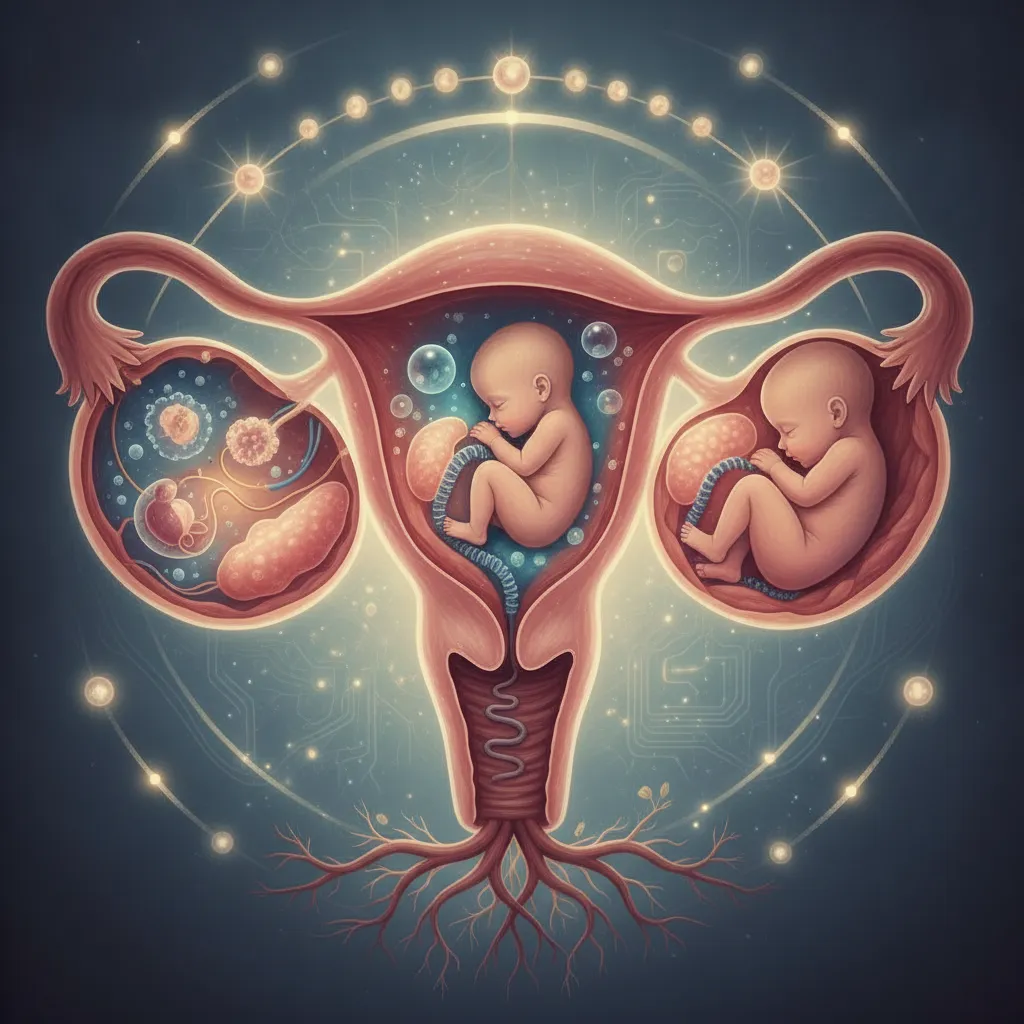
Cheat Sheet
- Length: about 40 weeks, counted from the first day of the last normal period.
- Trimesters: first is weeks 1 to 12, second is weeks 13 to 28, third is weeks 29 to 40 (Office on Women's Health).
- Full term: 39 weeks, when the baby's organs are ready to function on their own.
- Week 8: the embryo becomes a fetus, nearly 1 inch long and under one-eighth of an ounce.
- Week 20: the halfway point, with the baby about 6 inches long and about 9 ounces.
- Birth size: at birth a baby may weigh between 6 pounds 2 ounces and 9 pounds 2 ounces and be 19 to 21 inches long, a range most full-term babies fall within.
The 60-Second Version
Pregnancy is the period in which a fetus develops inside the body until the baby is ready to be born. Hormonal changes affect almost every organ system, and they can trigger symptoms even in the very first weeks. A stopped period is a clear sign, and others may include extreme tiredness, tender breasts, nausea, food cravings and mood swings, though some people feel little discomfort at all. Clinicians count the weeks from the first day of the last normal period and group them into three trimesters, each with its own milestones. Early on, the major organs begin to form. In the middle stretch, the abdomen expands and the baby's movements become noticeable. Late in pregnancy, the baby grows quickly and the body prepares for birth. Just as each person is different, so is each pregnancy. MedlinePlus emphasizes regular prenatal care so a provider can monitor the pregnancy. This page is general information, not medical advice; for your own situation, ask a clinician.
The Long Version
How Pregnancy Is Counted
The Office on Women's Health at the U.S. Department of Health and Human Services says pregnancy lasts about 40 weeks, counting from the first day of your last normal period. Those weeks are grouped into three trimesters: the first trimester runs through week 12, the second covers weeks 13 to 28, and the third covers weeks 29 to 40. The developing baby has different names along the way. At around weeks 4 to 5 it is described as an embryo, and at the end of week 8 it is called a fetus. By 39 weeks, the page says, a baby is considered full term, with organs ready to function on their own.
The First Trimester
During weeks 1 to 12, the body undergoes many changes, and hormonal shifts affect almost every organ system. Possible changes include extreme tiredness, tender swollen breasts, an upset stomach with or without throwing up, cravings or distaste for certain foods, mood swings, constipation, needing to urinate more often, headache and heartburn. The Office on Women's Health notes that most of these discomforts will go away as the pregnancy progresses, and that some women might not feel any discomfort at all. Meanwhile the baby is changing fast. At four to five weeks the brain and spinal cord begin to form and the heart begins to form. At eight weeks all major organs have begun to form. By 12 weeks the baby is about 3 inches long.
The Second Trimester
The Office on Women's Health says most women find the second trimester easier than the first, as nausea and fatigue often fade. New changes appear, however, as the abdomen expands. Possible changes include body aches, stretch marks, darkening of the skin around the nipples, swelling of the ankles, fingers and face, and numb or tingling hands. Before this trimester is over, you will feel your baby begin to move. The baby's growth is steady: about 4 to 5 inches and almost 3 ounces at 16 weeks, about 6 inches and 9 ounces at 20 weeks, and about 12 inches and 1.5 pounds at 24 weeks. By then the lungs are formed but do not work yet.
The Third Trimester
Weeks 29 to 40 are the home stretch. Many women find breathing more difficult and need the bathroom more often, because the growing baby puts more pressure on the organs. Other changes can include heartburn, swelling, hemorrhoids, trouble sleeping, the baby dropping lower in the abdomen, and contractions. At 32 weeks the baby is gaining about one-half pound a week and measures about 15 to 17 inches. As the due date nears, the cervix becomes thinner and softer, called effacing, which helps the birth canal open for birth. Most babies turn head down. At birth, a baby may weigh between 6 pounds 2 ounces and 9 pounds 2 ounces, though healthy babies come in many sizes.
Prenatal Care and Asking Questions
MedlinePlus lists regular visits with a health care provider as a key part of a healthy pregnancy. During prenatal care visits, a provider checks your health and carefully monitors the pregnancy, and if there are health problems they can often be found early. The same page says to check with your provider before starting or stopping any medicine, including over-the-counter medicines and supplements, and notes that it can be hard to know whether a new symptom is normal or a sign of a problem. Its advice is to check with your provider if something is bothering or worrying you. That is the reliable general rule, and the details belong in a conversation with a clinician.
Why People Care
Pregnancy changes bodies, plans and families, and most people have questions about what is normal and when. A basic map of the weeks and trimesters makes those conversations easier. This is general information, not medical advice; your clinician is the right person for questions about your own pregnancy.
Glossary
- Trimester
- One of the three stages of pregnancy, each spanning roughly three months of the roughly 40 weeks.
- Embryo
- The name the Office on Women's Health uses for the developing baby at about weeks 4 to 5, up until the end of week 8.
- Fetus
- The developing baby from the end of week 8 until birth.
- Full term
- A pregnancy that has reached 39 weeks, when the baby's organs are ready to function on their own.
- Prenatal care
- Regular visits with a health care provider who checks your health and monitors the pregnancy until delivery.
Go Deeper
More to Explore
- Menopause
A natural biological milestone that arrives with a long runway and surprisingly little advance briefing.
- The Menstrual Cycle
Your body runs a monthly rehearsal for pregnancy, and when the show does not go on, it cleans up the stage.
- PTSD
PTSD is a mind stuck on alert after the danger has passed, and it is treatable.
- Protein
Protein is the nutrient everyone talks about and few can quantify, so here is the short, sourced version.
- Parkinson's Disease
Parkinson's disease is about far more than a tremor, and it starts with a shortage of one brain chemical.