Protein
Protein is the nutrient everyone talks about and few can quantify, so here is the short, sourced version.
By Greg Goodwin · Published November 4, 2026
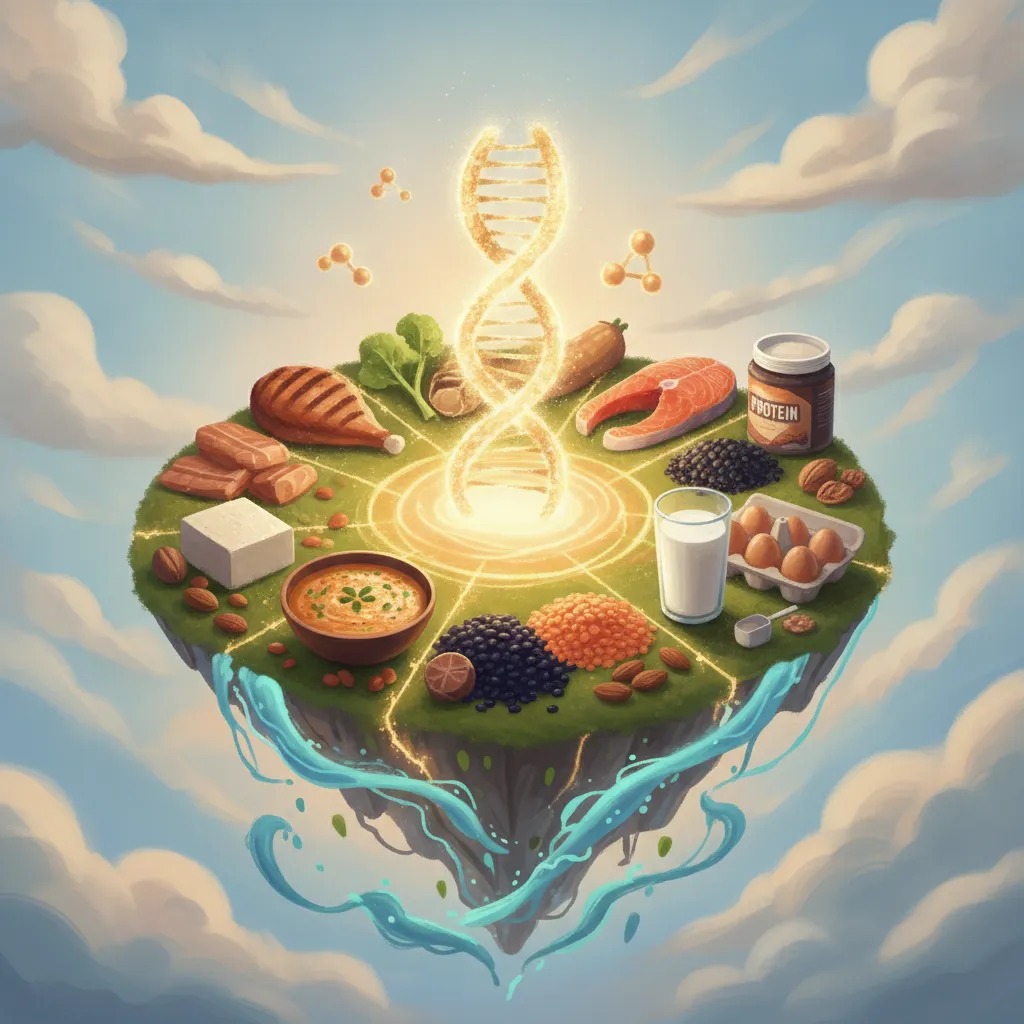
Cheat Sheet
- Energy: 1 gram of protein supplies 4 calories.
- Share of calories: the daily recommended intake for healthy adults is 10% to 35% of total calorie needs (MedlinePlus).
- Baseline: the National Academy of Medicine recommends a minimum of 0.8 grams per kilogram of body weight per day, or just over 7 grams per 20 pounds.
- Essential count: 9 amino acids are essential, meaning the body cannot make them from scratch or from other amino acids.
- Portion math: an ounce (30 g) of meat, fish or poultry, or 1 large egg, is each counted as about 7 grams of protein.
- Timing: essential amino acids do not need to be eaten at every meal, and the balance over the whole day matters more.
The 60-Second Version
Protein is a macronutrient, and every cell in the human body contains it. Its basic structure is a chain of amino acids. When you eat protein, digestion breaks it into those amino acids, and your body uses them to repair cells and make new ones. That is why protein is especially important for growth and development in children, teens and pregnant women. Foods that supply it range from meat, fish, milk and eggs to soy, beans, legumes, nut butters and some grains, and MedlinePlus notes that you do not need to eat animal products to get all the protein you need. Some amino acids are called essential because the body cannot make them, so food has to provide them. Protein gets plenty of marketing attention, but the underlying question is simple: you need some every day, and most of the debate is about exactly how much. This page is general information, not medical advice; a clinician or registered dietitian can speak to your own needs.
The Long Version
What Protein Is Made Of
MedlinePlus describes proteins as the building blocks of life, with a basic structure that is a chain of amino acids. The protein in food is broken down into those amino acids during digestion. Amino acids fall into three groups. Essential amino acids cannot be made by the body, so they must be supplied by food. Nonessential amino acids are made by the body, either from essential amino acids or during the normal breakdown of proteins. Conditional amino acids are needed in times of illness and stress. Harvard's Nutrition Source puts the number of essential amino acids at nine, and notes that some food proteins are incomplete, lacking one or more of them.
What It Does in the Body
Every cell in the human body contains protein, which is why MedlinePlus calls it a building block of life. You need protein in your diet to help your body repair cells and make new ones. It is also important for growth and development in children, teens and pregnant women. That is the broad job description: maintenance and construction at the cellular level. Because the body breaks food protein down into amino acids first, what matters nutritionally is the supply of those amino acids, and in particular the essential ones that the body cannot manufacture on its own.
Where It Comes From
Amino acids are found in animal sources such as meats, milk, fish and eggs. They are also found in plant sources such as soy, beans, legumes, nut butters and some grains, including wheat germ and quinoa. MedlinePlus is explicit that you do not need to eat animal products to get all the protein you need in your diet. It also notes that whole grains contain more protein than refined or white products. Because the essential amino acids do not have to be eaten at every meal, and the balance across the whole day is more important, a varied pattern of eating is the practical frame rather than any single food.
How Much the Guidelines Suggest
Two yardsticks are in common use. The National Academy of Medicine recommends that adults get a minimum of 0.8 grams of protein for every kilogram of body weight per day, which Harvard translates as just over 7 grams for every 20 pounds. The other yardstick is a share of calories: MedlinePlus gives the daily recommended intake for healthy adults as 10% to 35% of total calorie needs, with 1 gram of protein supplying 4 calories. On a 2,000 calorie diet, it works out that 100 grams of protein would be 400 calories, or 20% of the day. Children and teens may need different amounts depending on their age.
Choosing Sources Wisely
Harvard's Nutrition Source frames the topic by saying that not all food sources of protein are created equal, and that you may not need as much as you think. MedlinePlus offers examples of how to shop: poultry with the skin removed, lean cuts of beef or pork with visible fat trimmed, fish or shellfish, beans and lentils, tofu and tempeh, and low-fat dairy. It also points out that nuts and seeds are high in fat, so portion size is worth keeping in mind, since calories in excess of your needs may lead to weight gain. A rough portion guide from the same page: an ounce of most protein-rich foods holds about 7 grams.
Why People Care
Protein shows up on nearly every food label and in endless diet arguments, so knowing what it is and roughly how much adults are advised to get helps you cut through the noise. This is general information, not medical advice; ask a clinician or dietitian about your own needs.
Glossary
- Amino acid
- A building block of protein; the basic structure of a protein is a chain of amino acids.
- Essential amino acid
- An amino acid the body cannot make, so it must be supplied by food.
- Conditional amino acid
- An amino acid that is needed in times of illness and stress.
- Incomplete protein
- A food protein that lacks one or more of the nine essential amino acids.
- Recommended Dietary Allowance
- A daily intake level set by the National Academy of Medicine; for protein in healthy adults it is 0.8 grams per kilogram of body weight.
Go Deeper
More to Explore
- Vitamins
Tiny molecules with enormous résumés: you need them in minuscule amounts, and you cannot do without them.
- Macronutrients
Everything you eat boils down to three big players, and your food label has been quietly keeping score.
- PTSD
PTSD is a mind stuck on alert after the danger has passed, and it is treatable.
- Pregnancy
Forty weeks, three trimesters, and one very busy uterus: the quick tour of how pregnancy works.
- Parkinson's Disease
Parkinson's disease is about far more than a tremor, and it starts with a shortage of one brain chemical.