Fragrance & Perfume Basics
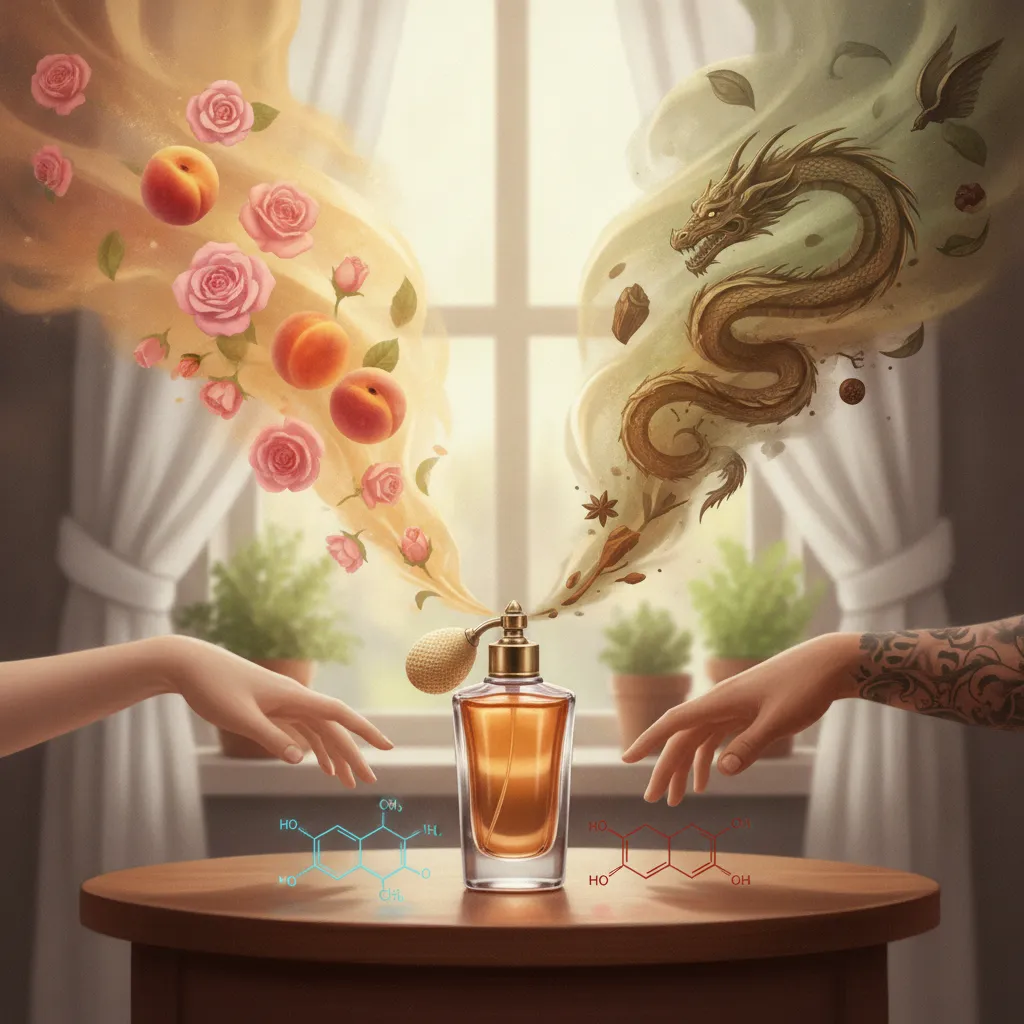
The same bottle of perfume can smell completely different on two different people, all because of how it reacts with each person's own skin chemistry.
Cheat Sheet
- A fragrance's scent evolves in three stages, called notes: top notes (the initial impression, fading within minutes), heart notes (the core scent, emerging as top notes fade), and base notes (the long-lasting foundation, lingering for hours).
- Concentration terms like eau de parfum and eau de toilette refer to how much actual fragrance oil is diluted in alcohol, directly determining both scent strength and how long a fragrance lasts on skin.
- Eau de parfum typically contains a higher concentration of fragrance oil than eau de toilette, making it stronger and longer-lasting, though also usually more expensive.
- Fragrance interacts with individual body chemistry, meaning the same perfume can smell noticeably different from one person's skin to another's.
- Applying fragrance to pulse points, such as wrists and the neck, is a common practice believed to help the scent project more effectively, since these areas generate more body heat.
- Fragrances are broadly grouped into families such as floral, woody, citrus, and oriental, a classification system that helps people identify scents they tend to enjoy.
The 60-Second Version
A fragrance's scent evolves in three stages, called notes: top notes (the initial impression, fading within minutes), heart notes (the core scent, emerging as top notes fade), and base notes (the long-lasting foundation, lingering for hours). Concentration terms like eau de parfum and eau de toilette refer to how much actual fragrance oil is diluted in alcohol, directly determining both scent strength and how long a fragrance lasts on skin. Eau de parfum typically contains a higher concentration of fragrance oil than eau de toilette, making it stronger and longer-lasting, though also usually more expensive. Fragrance interacts with individual body chemistry, meaning the same perfume can smell noticeably different from one person's skin to another's. Applying fragrance to pulse points, such as wrists and the neck, is a common practice believed to help the scent project more effectively, since these areas generate more body heat. Fragrances are broadly grouped into families such as floral, woody, citrus, and oriental, a classification system that helps people identify scents they tend to enjoy.
The Long Version
A Scent That Unfolds in Stages
A fragrance's scent evolves in three distinct stages, called notes: top notes provide the initial impression immediately after application but fade within minutes, heart notes form the core scent and emerge as the top notes fade, and base notes provide the long-lasting foundation that often lingers for hours after the earlier notes have disappeared entirely.
What "Concentration" Actually Means
Concentration terms like eau de parfum and eau de toilette refer to how much actual fragrance oil is diluted in alcohol and water, a ratio that directly determines both how strong a fragrance smells and how long it lasts on skin. Eau de parfum typically contains a meaningfully higher concentration of fragrance oil than eau de toilette, making it both stronger and longer-lasting, though this added intensity and longevity usually comes with a higher price tag as well.
Why the Same Bottle Smells Different on Different People
Fragrance interacts directly with an individual's own body chemistry, including factors like skin pH and natural oils, meaning the exact same perfume can smell noticeably different from one person's skin to another's, which is part of why trying a fragrance on your own skin before buying is generally recommended over judging it from a store tester strip alone.
Application and Classification
Applying fragrance to pulse points, such as the wrists and neck, is a common and long-practiced technique believed to help a scent project more effectively throughout the day, since these areas of the body generate more natural heat, which helps volatilize and spread the fragrance. To make sense of the vast range of available scents, fragrances are broadly grouped into families such as floral, woody, citrus, and oriental, a classification system that gives people a practical vocabulary for identifying and shopping for scents they already know they tend to enjoy.
Ad slot (placeholder — set NEXT_PUBLIC_ADSENSE_SLOT_ID once an ad unit is created)
Why People Care
Understanding how fragrance actually works, from its layered notes to how it reacts with individual skin chemistry, makes shopping for a signature scent a far less overwhelming and more informed experience.
Glossary
- Top note
- The initial scent impression of a fragrance, noticeable immediately after application but fading within minutes.
- Heart note
- The core scent of a fragrance, emerging as the top notes fade and typically lasting several hours.
- Base note
- The long-lasting foundation of a fragrance, often the most noticeable scent hours after application.
- Eau de parfum
- A fragrance concentration with a relatively high percentage of fragrance oil, resulting in a stronger, longer-lasting scent.
- Fragrance family
- A broad category, such as floral or woody, used to classify and describe similar types of scents.
Go Deeper
More to Explore
- Hair Care Fundamentals
Trimming your hair doesn't make it grow faster — that happens entirely at the scalp — but skip the trims and you'll watch split ends travel further up the strand.
- Skincare Basics
Dermatologists widely agree the single most impactful skincare step isn't a trendy serum or elaborate routine — it's simply wearing sunscreen every day.
- Men's Grooming
The men's grooming industry has grown considerably in recent years — largely by finally applying skincare basics that were never actually gender-specific to begin with.
- Makeup Fundamentals
Professional makeup artists consistently point to the same single skill as the real difference-maker between an amateur and professional-looking application — and it isn't the products themselves, it's the blending.
- The History of Denim
Blue jeans started life as reinforced pants for gold miners, and it took nearly a century before anyone thought to sell them as fashion rather than pure workwear.