The European Union
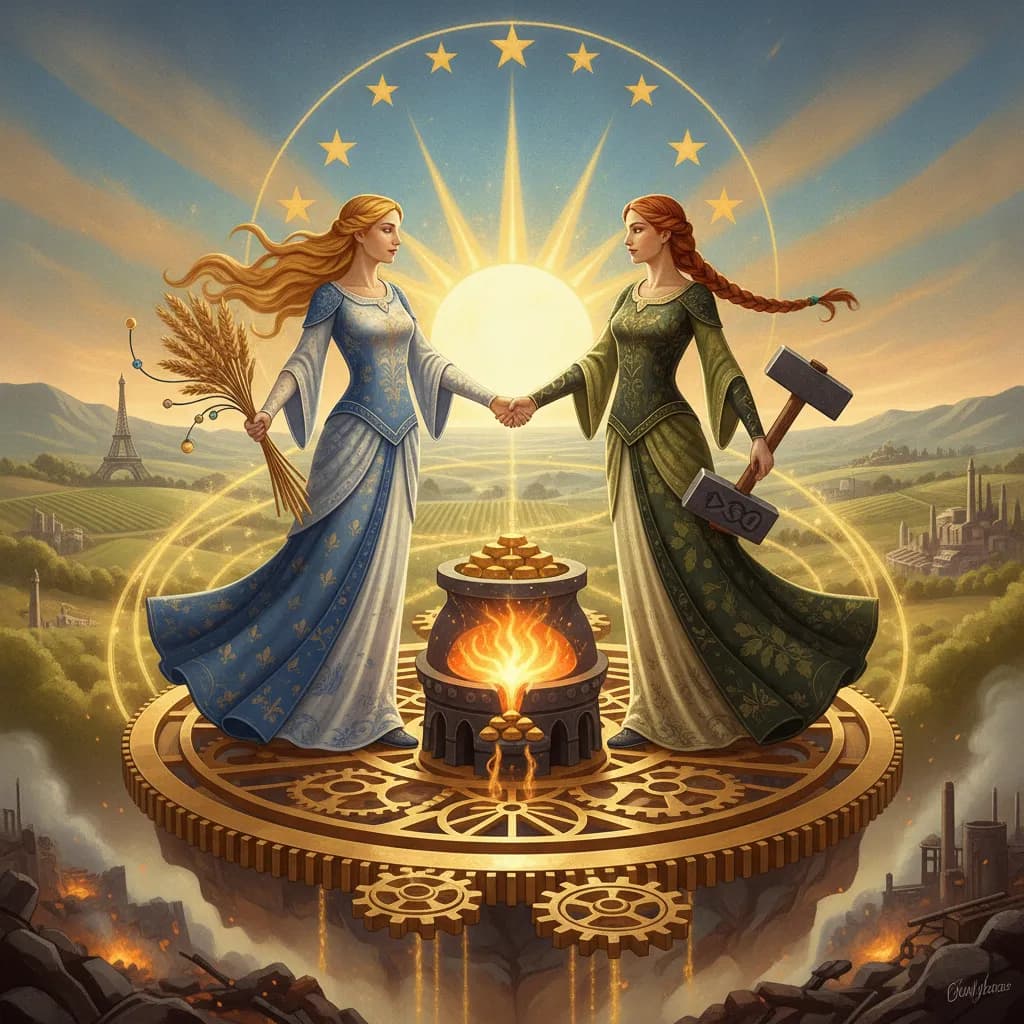
The organization that became the European Union started with a strikingly narrow goal: making France and Germany so economically dependent on each other that another war between them would become practically unthinkable.
Cheat Sheet
- Formally established by the 1993 Maastricht Treaty, building on earlier post-WWII European economic cooperation bodies dating back to 1951.
- 27 member states as of the mid-2020s, following the United Kingdom's 2020 exit ('Brexit') — the only member state to have left.
- The euro, adopted by most but not all member states, is the shared currency used across the 'eurozone.'
- The Schengen Area allows passport-free travel across most member states, functioning independently from eurozone currency membership.
- Key institutions include the European Commission (executive), European Parliament (directly elected legislature), and European Council (heads of state).
- Founded explicitly to make another European war 'materially impossible' by economically interlinking historic rivals, especially France and Germany.
The 60-Second Version
The European Union grew out of a deliberate post-World War II strategy to prevent future European wars by economically interlinking historic rivals, especially France and Germany, starting with a coal and steel cooperation agreement in 1951 long before the EU itself formally existed. That gradual economic integration eventually culminated in the 1993 Maastricht Treaty, which formally established the European Union as a distinct political and economic body rather than just a trade cooperation agreement. Today's EU includes 27 member states following the United Kingdom's 2020 departure, commonly known as Brexit, which remains the only instance of a country actually leaving the union. Two of its most visible achievements operate independently of each other: the euro, a shared currency adopted by most but not all member states, and the separate Schengen Area, which allows passport-free travel across most (though again not all) of the same member states. Running the whole system requires several distinct institutions working together, including an executive body that proposes and enforces legislation, and a directly elected parliament representing citizens across all member countries.
The Long Version
Born From a Desire to Prevent War
The organization that eventually became the European Union traces its roots to a deliberate post-World War II strategy of economically interlinking historic rivals, particularly France and Germany, starting with a coal and steel cooperation agreement in 1951 explicitly designed to make future war between them economically impractical rather than simply hoping diplomacy alone would hold.
From Trade Bloc to Political Union
That initial economic cooperation gradually deepened over subsequent decades until the 1993 Maastricht Treaty formally established the European Union as a distinct political and economic entity, moving well beyond its origins as a narrower trade cooperation agreement into something with real shared institutions and policy authority.
Membership, and the One Country That Left
The EU currently includes 27 member states following the United Kingdom's formal exit in 2020, an event widely known as Brexit that remains the only instance in the union's history of a member state actually withdrawing, a departure that required years of negotiation given how deeply intertwined member economies and regulations had become.
Currency and Borders Are Separate Systems
Two of the EU's most visible achievements actually function as entirely separate systems: the euro, a shared currency adopted by most but notably not all member states, and the Schengen Area, which enables passport-free travel across most (though again not identical) member countries, meaning currency and border membership don't automatically come as a package deal. Running the union day to day requires several distinct institutions working in coordination, including the European Commission, which proposes and enforces legislation, and the directly elected European Parliament, which represents citizens across all member states.
Ad slot (placeholder — set NEXT_PUBLIC_ADSENSE_SLOT_ID once an ad unit is created)
Why People Care
The European Union represents one of history's most ambitious peacetime experiments in voluntary political and economic integration, and understanding its structure helps make sense of major ongoing stories, from currency and trade policy to Brexit's lasting economic ripple effects.
Glossary
- Maastricht Treaty
- The 1993 treaty that formally established the European Union, building on earlier European economic cooperation agreements.
- Eurozone
- The group of EU member states that have adopted the euro as their official shared currency.
- Schengen Area
- A zone of European countries that have abolished passport and border controls at their mutual borders.
- European Commission
- The EU's executive branch, responsible for proposing legislation and enforcing EU treaties and law.
- Brexit
- The United Kingdom's 2020 withdrawal from the European Union, the only instance of a member state leaving.
Go Deeper
More to Explore
- Economic Sanctions
A country can be economically isolated from most of the world without a single shot being fired, simply by cutting off its access to global banking.
- Trade Agreements
An agreement that can quietly change the price of everyday goods on store shelves, long before most consumers ever notice it was signed.
- The United Nations
An organization built explicitly to prevent another world war, whose most powerful decision-making body still gives just five countries the power to individually block almost anything.
- NATO
A military alliance built around a single core promise — attack one member, and you've effectively attacked them all — that has only actually been invoked once, and not for the reason most people would guess.
- Political Parties
George Washington explicitly warned against political parties in his farewell address — and disputes within his own cabinet had already helped create them before he even finished his term.