ADHD
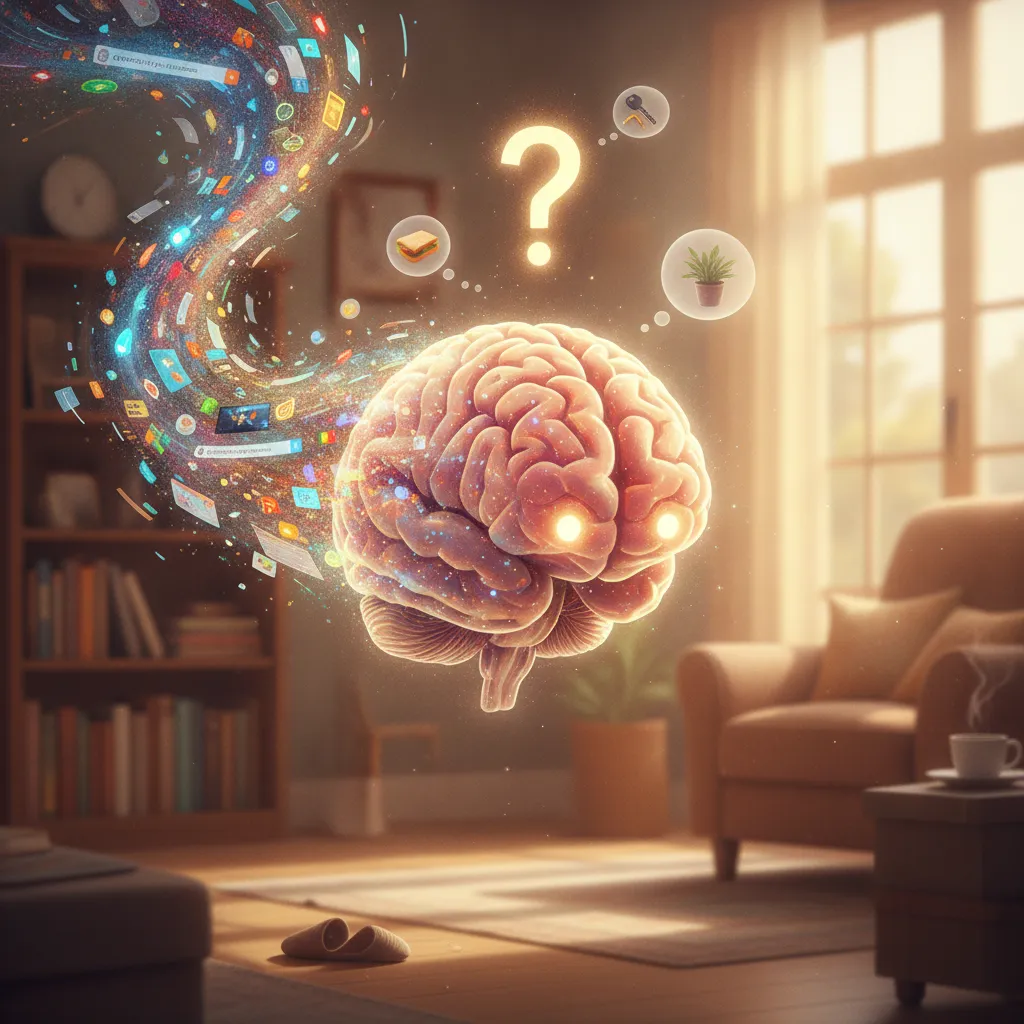
A brain with a world-class browser history and no idea why it walked into this room.
By Greg Goodwin · Published October 24, 2026
Cheat Sheet
- Child prevalence: 11.4% of US children ages 3 to 17 (7.1 million) had ever been diagnosed, and 10.5% (6.5 million) currently had ADHD, in 2022 survey data.
- Severity mix: among children with current ADHD, 58.1% were rated moderate or severe (2022 parent-report data).
- Co-occurring conditions: 77.9% of children with current ADHD had at least one other diagnosed condition (2022 data).
- Trend: diagnosed prevalence among children ages 4 to 17 rose from 7.8% in 2003 to 11.0% in 2011.
- Age at diagnosis: median 4 years for severe ADHD, 6 for moderate, 7 for mild (NIMH, 2011 parent-report data).
- Adults: about 4.4% of US adults ages 18 to 44 had current ADHD in 2001-2003 interview data, the most recent figure NIMH lists.
The 60-Second Version
Attention-deficit/hyperactivity disorder, or ADHD, is a neurodevelopmental condition marked by lasting patterns of inattention, hyperactivity, and impulsivity that interfere with daily life. It is one of the most common childhood conditions, but it does not stay in childhood for everyone, and many adults live with it too. The core issue is not a lack of intelligence or effort. It is difficulty regulating attention and behavior, so a person may hyperfocus on something absorbing yet struggle to start a boring task, keep track of belongings, or wait their turn. Symptoms vary a great deal from person to person, and they look different at different ages. Diagnosis is made by a qualified clinician after a careful evaluation, not by a quiz or a viral video. This page is general information, not medical advice; anyone concerned about ADHD in themselves or a child should talk with a health professional.
The Long Version
What ADHD Is and Is Not
The National Institute of Mental Health describes ADHD as one of the most common childhood disorders that can continue through adolescence and into adulthood. Its symptoms include difficulty staying focused and paying attention, difficulty controlling behavior, and hyperactivity. Clinicians commonly describe a mostly inattentive presentation, a mostly hyperactive-impulsive one, and a combined one, which helps explain why a quiet daydreamer and a bouncing-off-the-walls kid can share a diagnosis. ADHD is not a character flaw, a sign of laziness, or the result of too much screen time or sugar. It is a difference in how the brain manages attention and self-regulation, which is why willpower alone rarely closes the gap.
How Common It Is
In a 2022 US national survey of parents, 11.4% of children ages 3 to 17, about 7.1 million, had ever received an ADHD diagnosis, and 10.5%, about 6.5 million, currently had it. Of those with current ADHD, 58.1% were described as having moderate or severe ADHD, and 77.9% had at least one other diagnosed condition. The numbers have climbed over time: NIMH reports that diagnosed prevalence among children ages 4 to 17 rose from 7.8% in 2003 to 11.0% in 2011. Rising diagnoses can reflect more awareness and better recognition as well as true changes, and researchers still debate how much is which.
Boys, Girls, and Adults
ADHD has long been diagnosed more often in boys. In a national adolescent interview survey conducted from 2001 to 2004, the lifetime prevalence among ages 13 to 18 was 8.7%, with 13.0% of boys and 4.2% of girls affected. Some of that gap may reflect how the condition shows up, since inattentive symptoms are quieter and can be missed. For adults, NIMH cites interview data from 2001 to 2003 putting current ADHD at 4.4% of those ages 18 to 44, and lifetime prevalence at 8.1%. NIMH also notes that approximately one-third of children diagnosed with ADHD retain the diagnosis into adulthood, and these figures come from older surveys, so newer estimates may differ.
Getting Noticed and Diagnosed
Timing of diagnosis tracks with severity. In NIMH's summary of national parent-report data, the median age of diagnosis was 4 years for severe ADHD, 6 for moderate, and 7 for mild. Because many conditions, from anxiety to learning difficulties to sleep problems, can look like inattention, the diagnostic process is meant to gather information about how someone functions across settings such as home, school, and work, and to rule out other explanations. That is why a clinician rather than an online test makes the call, and why the high rate of co-occurring conditions matters to the whole picture.
Living With It
Because ADHD is a spectrum of challenges rather than a single trait, what helps varies by person, and decisions about care belong to the individual, their family, and their clinician. Many people with ADHD describe strengths too, such as energy, creativity, and intense focus on topics they love, though the condition can also bring real difficulties with school, work, and relationships when it goes unrecognized. Understanding that the struggle is neurological, not moral, tends to change how families, teachers, and employers respond, which is often the first step toward making daily life easier.
Why People Care
ADHD touches roughly one in ten children and a meaningful share of adults, so almost everyone knows someone affected. Understanding it replaces blame with context at home, school, and work. This is general information, not medical advice; a qualified clinician should evaluate any concerns.
Glossary
- Inattention
- Trouble sustaining focus, following through on tasks, or keeping track of things, beyond what is typical for someone's age.
- Hyperactivity
- Excess movement or restlessness, such as fidgeting or difficulty staying seated when it is expected.
- Impulsivity
- Acting before thinking, such as interrupting or struggling to wait a turn.
- Executive function
- The mental skills that handle planning, working memory, and self-control, which are often affected in ADHD.
- Comorbidity
- Having another condition alongside ADHD, such as anxiety, learning difficulties, or behavior disorders.
Go Deeper
More to Explore
- Bipolar Disorder
It is a medical condition, not a personality quirk: mood and energy shift far beyond the ordinary ups and downs.
- Burnout
The World Health Organization has an official definition for burnout, yet it deliberately stops just short of calling it a medical condition at all.
- Depression
Depression is extremely common and effective treatments exist, yet stigma still keeps many people from seeking help.
- Therapy Basics
A structured conversation that's less about lying on a couch and more about learning to notice your own thought patterns.
- Mindfulness
A 2,500-year-old Buddhist practice that a Massachusetts doctor turned into a secular, evidence-backed stress-reduction program.