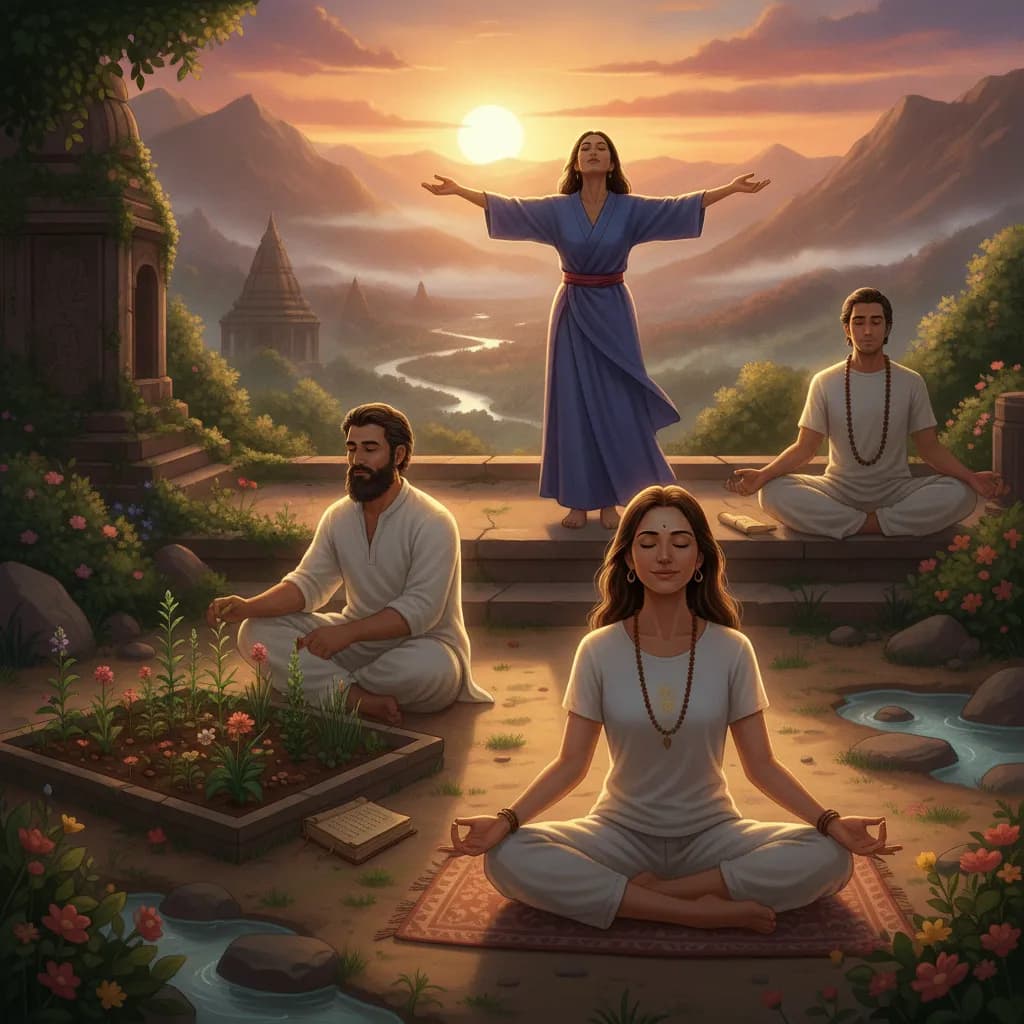
Yoga
A practice that, in its original form, was never really about touching your toes — the physical postures were just one piece of a much broader spiritual and philosophical system.
Cheat Sheet
- Yoga is an ancient practice originating in India thousands of years ago, traditionally encompassing physical postures, breathing exercises, and meditation as part of a broader spiritual and philosophical system.
- In much of the modern West, yoga is most commonly practiced primarily as a physical exercise focused on flexibility, strength, and stress reduction, representing just one dimension of its original, much broader traditional scope.
- Different yoga styles vary considerably in pace and intensity, from slower, gentler styles like Hatha yoga to more physically vigorous styles like Vinyasa or Ashtanga yoga.
- Regular yoga practice has been associated in research with a range of benefits, including improved flexibility, reduced stress, and better overall body awareness.
- Pranayama, or controlled breathing exercises, forms a core traditional component of yoga practice, believed to support both physical and mental regulation.
- Yoga's global popularity has grown substantially in recent decades, though this widespread modern adoption has also generated ongoing discussion about cultural context and the practice's relationship to its original South Asian religious and philosophical roots.
The 60-Second Version
Yoga is an ancient practice originating in India thousands of years ago, traditionally encompassing physical postures, breathing exercises, and meditation as part of a broader spiritual and philosophical system. In much of the modern West, yoga is most commonly practiced primarily as a physical exercise focused on flexibility, strength, and stress reduction, representing just one dimension of its original, much broader traditional scope. Different yoga styles vary considerably in pace and intensity, from slower, gentler styles like Hatha yoga to more physically vigorous styles like Vinyasa or Ashtanga yoga. Regular yoga practice has been associated in research with a range of benefits, including improved flexibility, reduced stress, and better overall body awareness. Pranayama, or controlled breathing exercises, forms a core traditional component of yoga practice, believed to support both physical and mental regulation. Yoga's global popularity has grown substantially in recent decades, though this widespread modern adoption has also generated ongoing discussion about cultural context and the practice's relationship to its original South Asian religious and philosophical roots.
The Long Version
A Much Broader Traditional System Than Just Postures
Yoga originated in India thousands of years ago as a comprehensive spiritual and philosophical practice, traditionally integrating physical postures, called asanas, controlled breathing exercises, and meditation as interconnected components of a unified system aimed at broader physical, mental, and spiritual development, rather than the physical postures functioning as a standalone exercise routine.
The Modern Western Emphasis on the Physical
In much of the modern West, yoga is most commonly practiced primarily as a physical exercise, emphasizing flexibility, strength, and stress reduction through its postures, representing just one specific dimension of yoga's original, considerably broader traditional scope, a shift in emphasis that has generated ongoing discussion about the practice's relationship to its original South Asian religious and philosophical context.
A Wide Range of Styles and Intensities
Yoga today encompasses a considerable range of distinct styles varying significantly in pace and physical intensity, from slower, gentler approaches like Hatha yoga, which emphasizes basic postures and breathing at a more measured pace, to considerably more physically vigorous, flow-based styles like Vinyasa or the highly structured, demanding sequences of Ashtanga yoga.
Breathing as a Core, Often Overlooked Component
Pranayama, controlled breathing exercises, forms a core traditional component of yoga practice, believed within the tradition to support both physical and mental regulation, and remains an integral part of most yoga styles today even when the physical postures receive comparatively more attention and emphasis in modern popular practice.
Ad slot (placeholder — set NEXT_PUBLIC_ADSENSE_SLOT_ID once an ad unit is created)
Glossary
- Asana
- A physical yoga posture, one component of the broader traditional yoga practice.
- Pranayama
- Controlled breathing exercises forming a core traditional component of yoga practice.
- Hatha yoga
- A generally slower-paced, gentler style of yoga emphasizing basic postures and breathing.
- Vinyasa yoga
- A more physically vigorous, flow-based style of yoga linking movement with breath.
- Meditation
- A practice of focused mental attention, traditionally an integral part of yoga alongside physical postures and breathing.