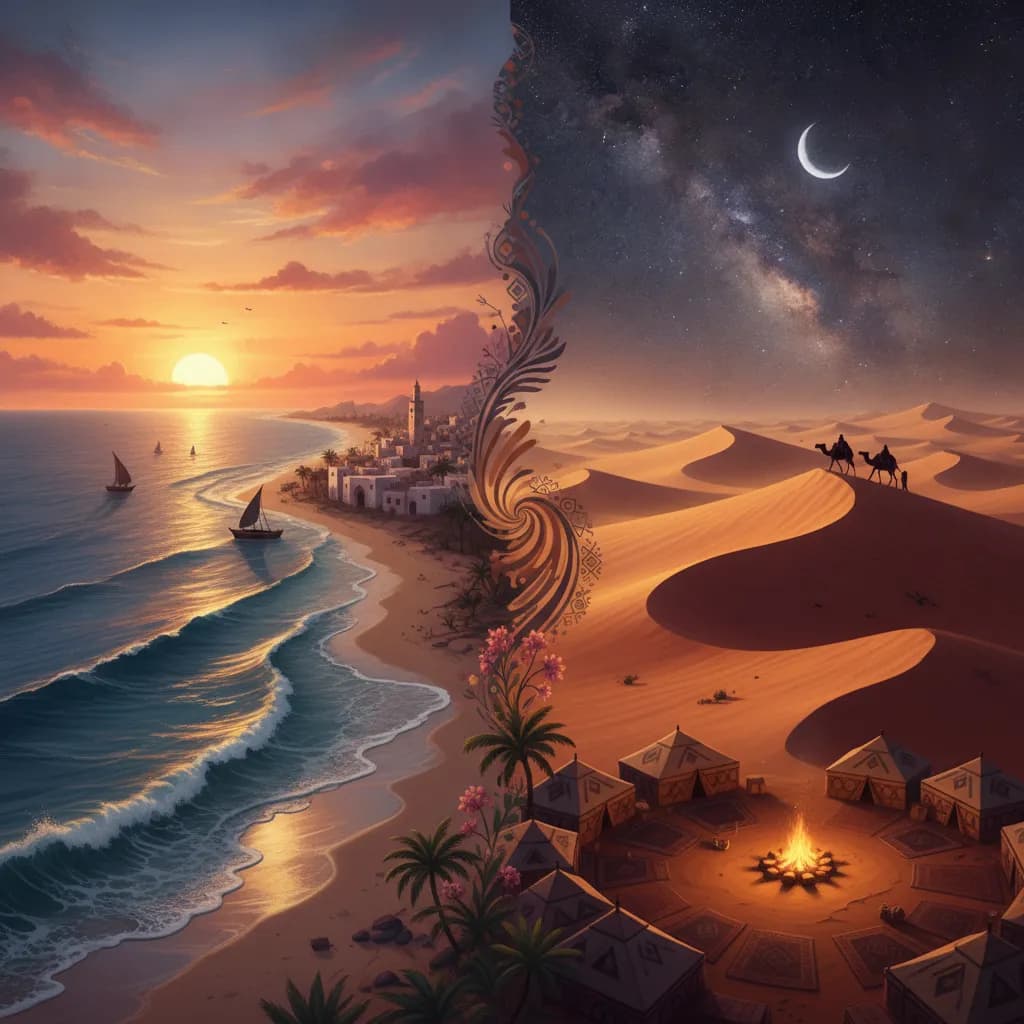
Morocco
A country where you can watch the sun set over the Atlantic in the morning and stand among Sahara sand dunes by nightfall.
Cheat Sheet
- Morocco is a North African country bordered by both the Atlantic Ocean and Mediterranean Sea, with a landscape ranging from coastline to the Sahara Desert to the Atlas Mountains.
- Morocco's culture reflects a distinctive blend of Berber (Amazigh), Arab, and French colonial influences, visible in its languages, architecture, and cuisine.
- Morocco's historic imperial cities, including Fez, Marrakesh, Meknes, and Rabat, each served as a capital at different points and remain major cultural and tourism centers today.
- The medina, a densely packed historic old city center found in Moroccan cities, is typically characterized by narrow winding streets, traditional markets called souks, and buildings dating back centuries.
- Morocco was a French protectorate for much of the early-to-mid 20th century before gaining independence in 1956, a colonial history that continues to shape the country's language and institutions today.
- Moroccan cuisine, including dishes like tagine and couscous, along with a strong tea culture centered on mint tea, reflects the country's blended cultural heritage.
The 60-Second Version
Morocco is a North African country bordered by both the Atlantic Ocean and Mediterranean Sea, with a landscape ranging from coastline to the Sahara Desert to the Atlas Mountains. Morocco's culture reflects a distinctive blend of Berber, or Amazigh, Arab, and French colonial influences, visible in its languages, architecture, and cuisine. Morocco's historic imperial cities, including Fez, Marrakesh, Meknes, and Rabat, each served as a capital at different points and remain major cultural and tourism centers today. The medina, a densely packed historic old city center found in Moroccan cities, is typically characterized by narrow winding streets, traditional markets called souks, and buildings dating back centuries. Morocco was a French protectorate for much of the early-to-mid 20th century before gaining independence in 1956, a colonial history that continues to shape the country's language and institutions today. Moroccan cuisine, including dishes like tagine and couscous, along with a strong tea culture centered on mint tea, reflects the country's blended cultural heritage.
The Long Version
A Remarkably Varied Landscape
Morocco's geography spans an unusually wide range for a single country: Atlantic and Mediterranean coastlines, the dramatic peaks of the Atlas Mountains, and the vast dunes of the Sahara Desert, all within relatively close proximity, giving the country a striking geographic and climatic diversity that shapes both its regional cultures and its appeal to travelers.
A Blended Cultural Identity
Moroccan culture reflects the layered influence of the indigenous Berber, or Amazigh, peoples who predate Arab arrival in North Africa, subsequent Arab influence that brought Islam and the Arabic language, and later French colonial influence, a combination visible today in Morocco's languages, architecture, and cuisine.
Cities That Each Once Ruled an Empire
Morocco's four historic imperial cities, Fez, Marrakesh, Meknes, and Rabat, each served as the country's capital at different points in its history, and each remains a major cultural and historical center today, with Fez in particular renowned for its exceptionally well-preserved medieval old city.
Life Inside the Medina, and a Recent Colonial Past
The medina, found at the heart of Morocco's historic cities, is a densely packed old town characterized by narrow, winding streets and traditional markets called souks, often dating back centuries and largely closed to motor vehicle traffic. More recently, Morocco spent much of the early-to-mid 20th century as a French protectorate before achieving independence in 1956, a relatively recent colonial history that continues to shape the country's bilingual French-Arabic institutions and education system today.
Ad slot (placeholder — set NEXT_PUBLIC_ADSENSE_SLOT_ID once an ad unit is created)
Glossary
- Berber (Amazigh)
- The indigenous peoples and languages of North Africa predating Arab influence, forming a core part of Moroccan identity.
- Medina
- The densely packed historic old city center found in Moroccan cities, featuring narrow streets and traditional markets.
- Souk
- A traditional market found in Moroccan medinas, typically organized by trade or type of good sold.
- Imperial city
- One of Morocco's historic former capital cities, including Fez, Marrakesh, Meknes, and Rabat.
- Tagine
- A traditional Moroccan slow-cooked stew, named after the distinctive conical clay pot it's prepared in.