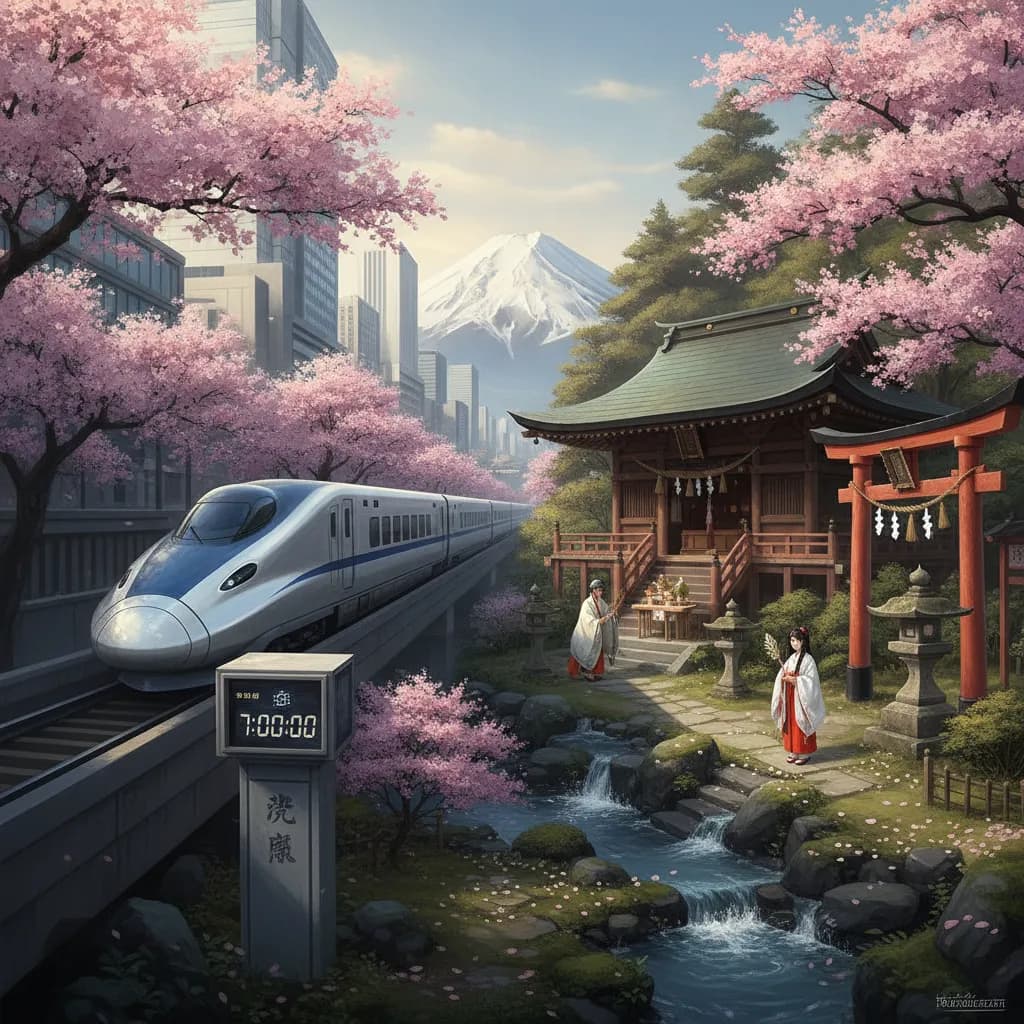
Japan
A country that runs some of the most punctual trains on Earth, down to the second, while also maintaining religious traditions that stretch back over a thousand years.
Cheat Sheet
- Japan is an island nation in East Asia made up of thousands of islands, though the vast majority of its population lives on the four main islands, especially Honshu.
- Japan blends a deeply preserved traditional culture, including practices like tea ceremony and Shinto and Buddhist traditions, with one of the world's most technologically advanced modern societies.
- The country has the world's third-largest economy despite limited natural resources, built substantially on manufacturing, technology, and a strong export sector.
- Japan's population is aging and shrinking, one of the most advanced examples globally of a demographic trend many other developed nations are also beginning to face.
- Japanese cuisine, including sushi, ramen, and a strong emphasis on seasonality and presentation, has become globally influential well beyond Japan's own borders.
- Japan operates one of the world's most famous high-speed rail networks, the Shinkansen (bullet train), renowned for its speed, punctuality, and safety record since opening in 1964.
The 60-Second Version
Japan is an island nation in East Asia made up of thousands of islands, though the vast majority of its population lives on the four main islands, especially Honshu. Japan blends a deeply preserved traditional culture, including practices like tea ceremony and Shinto and Buddhist traditions, with one of the world's most technologically advanced modern societies. The country has the world's third-largest economy despite limited natural resources, built substantially on manufacturing, technology, and a strong export sector. Japan's population is aging and shrinking, one of the most advanced examples globally of a demographic trend many other developed nations are also beginning to face. Japanese cuisine, including sushi, ramen, and a strong emphasis on seasonality and presentation, has become globally influential well beyond Japan's own borders. Japan operates one of the world's most famous high-speed rail networks, the Shinkansen, or bullet train, renowned for its speed, punctuality, and safety record since opening in 1964.
The Long Version
An Island Nation Concentrated on a Few Main Islands
Japan consists of thousands of islands, but the overwhelming majority of its population lives concentrated on just four main islands, particularly Honshu, home to Tokyo and most major Japanese cities, a geography that has significantly shaped the country's dense urban development and efficient public transportation systems.
Tradition and Technology, Side by Side
Japan is distinctive for how thoroughly it maintains deeply rooted traditional culture, including Shinto and Buddhist religious practices, tea ceremony, and traditional arts, alongside one of the world's most technologically advanced modern societies, a combination that shapes much of the country's distinctive global cultural identity.
An Economic Power Built Without Abundant Natural Resources
Despite limited domestic natural resources, Japan built the world's third-largest economy substantially through manufacturing excellence, technological innovation, and a powerful export sector, a trajectory rooted partly in the rapid modernization pursued during the late-19th-century Meiji Restoration, when Japan deliberately transformed from a relatively isolated feudal society into an industrializing global power.
A Rapidly Aging Society
Japan's population is both aging and shrinking, representing one of the world's most advanced real-world examples of a demographic trend that many other developed nations are only beginning to confront, raising significant long-term questions about the country's future workforce, economy, and social support systems.
Ad slot (placeholder — set NEXT_PUBLIC_ADSENSE_SLOT_ID once an ad unit is created)
Glossary
- Honshu
- Japan's largest and most populous main island, home to Tokyo and most of the country's major cities.
- Shinkansen
- Japan's high-speed rail network, commonly known as the bullet train, renowned for speed and punctuality.
- Shinto
- An indigenous Japanese religious tradition centered on kami, or spirits, closely intertwined with Japanese culture and Buddhism.
- Meiji Restoration
- The late-19th-century period in which Japan rapidly modernized and industrialized after centuries of relative isolation.
- Aging population
- A demographic trend, particularly advanced in Japan, involving a shrinking share of younger people relative to older residents.