Egypt
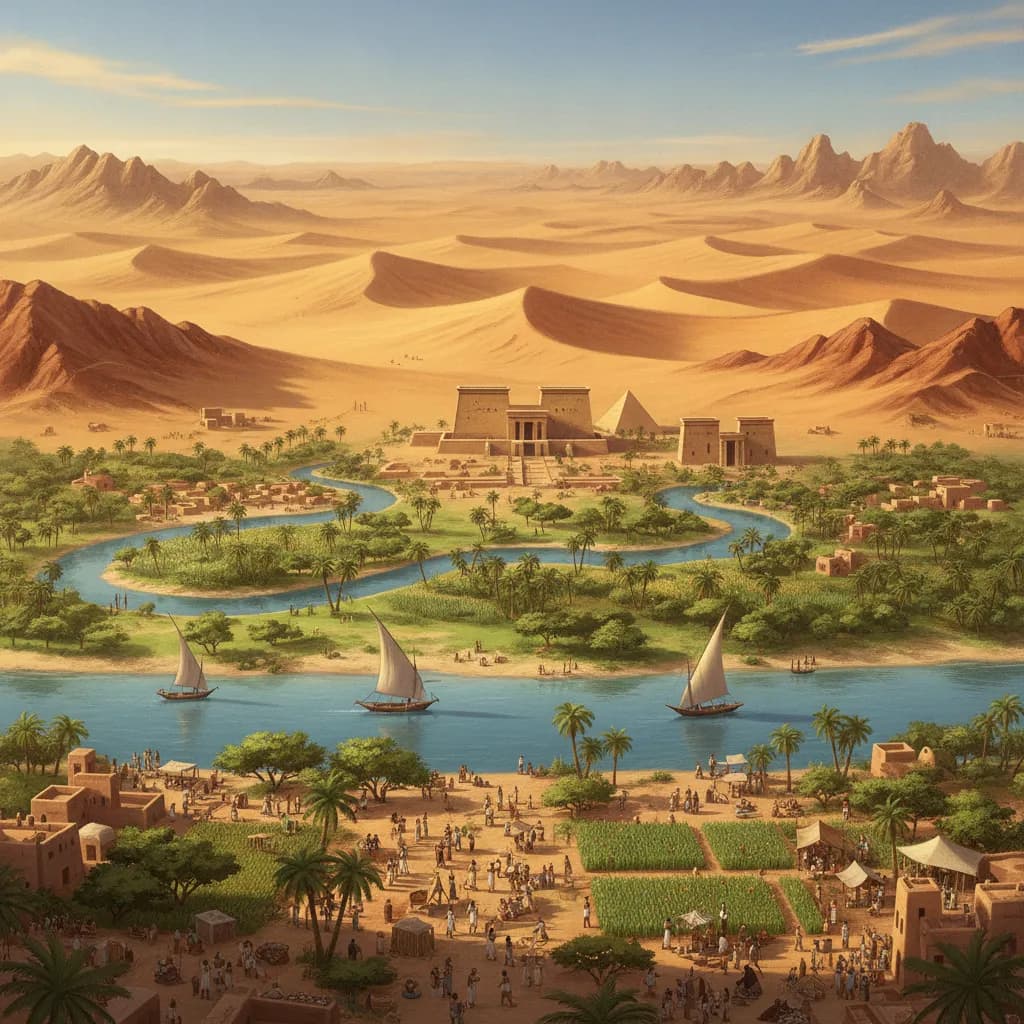
A country whose vast desert makes up most of its actual land area — while nearly its entire population squeezes into a narrow green ribbon along a single river.
Cheat Sheet
- Modern Egypt is a North African and Middle Eastern country whose population and major cities remain concentrated overwhelmingly along the Nile River, despite the country's vast desert territory.
- Egypt is home to some of the world's most iconic ancient monuments, including the Pyramids of Giza and the Sphinx, drawing millions of tourists annually alongside its modern cities and culture.
- Cairo, Egypt's capital and largest city, is one of the largest and most populous urban areas in both Africa and the wider Middle East.
- Egypt has played a historically significant strategic role due to the Suez Canal, a vital global shipping route connecting the Mediterranean and Red Seas.
- Arabic is Egypt's official language, and the country holds a historically significant position within the broader Arab world, including as a center of Arabic-language film, music, and media.
- Egypt's modern history includes a pivotal 2011 revolution as part of the broader Arab Spring movement, which led to significant, still-evolving political change in the years that followed.
The 60-Second Version
Modern Egypt is a North African and Middle Eastern country whose population and major cities remain concentrated overwhelmingly along the Nile River, despite the country's vast desert territory. Egypt is home to some of the world's most iconic ancient monuments, including the Pyramids of Giza and the Sphinx, drawing millions of tourists annually alongside its modern cities and culture. Cairo, Egypt's capital and largest city, is one of the largest and most populous urban areas in both Africa and the wider Middle East. Egypt has played a historically significant strategic role due to the Suez Canal, a vital global shipping route connecting the Mediterranean and Red Seas. Arabic is Egypt's official language, and the country holds a historically significant position within the broader Arab world, including as a center of Arabic-language film, music, and media. Egypt's modern history includes a pivotal 2011 revolution as part of the broader Arab Spring movement, which led to significant, still-evolving political change in the years that followed.
The Long Version
A Population Concentrated Along a Single River
Despite Egypt's vast overall land area, the overwhelming majority of its population lives concentrated along the Nile River and its delta, a narrow strip of fertile, habitable land surrounded by extensive desert, a geographic reality that has shaped Egyptian settlement patterns since ancient times and continues to define the country's population distribution today.
Ancient Monuments Alongside a Modern Nation
Egypt is home to some of the world's most iconic ancient monuments, including the Pyramids of Giza and the Sphinx, drawing millions of tourists annually to witness architectural and archaeological achievements that are thousands of years old, existing alongside a thoroughly modern nation with its own distinct contemporary culture, economy, and political life.
Cairo and Egypt's Regional Significance
Cairo, Egypt's capital and largest city, ranks among the largest and most populous urban areas in both Africa and the broader Middle East, and the country holds a historically significant cultural position within the Arab world more broadly, including as a longstanding center of Arabic-language film, music, and media production.
The Suez Canal's Strategic Importance, and Recent Political Change
Egypt's geographic position gives it considerable global strategic significance through the Suez Canal, a vital shipping route connecting the Mediterranean and Red Seas that carries a substantial share of global maritime trade. More recently, Egypt underwent a pivotal 2011 revolution as part of the broader regional Arab Spring movement, leading to significant political change whose effects have continued to evolve in the years since.
Ad slot (placeholder — set NEXT_PUBLIC_ADSENSE_SLOT_ID once an ad unit is created)
Glossary
- Nile River
- The river along which the vast majority of Egypt's population and major cities are concentrated.
- Suez Canal
- A vital global shipping route connecting the Mediterranean and Red Seas, giving Egypt significant historical strategic importance.
- Cairo
- Egypt's capital and largest city, one of the most populous urban areas in Africa and the Middle East.
- Arab Spring
- A wave of pro-democracy protests and uprisings across the Arab world beginning in 2010-2011, including Egypt's 2011 revolution.
- Pyramids of Giza
- Among Egypt's most iconic ancient monuments, drawing millions of tourists to the country annually.