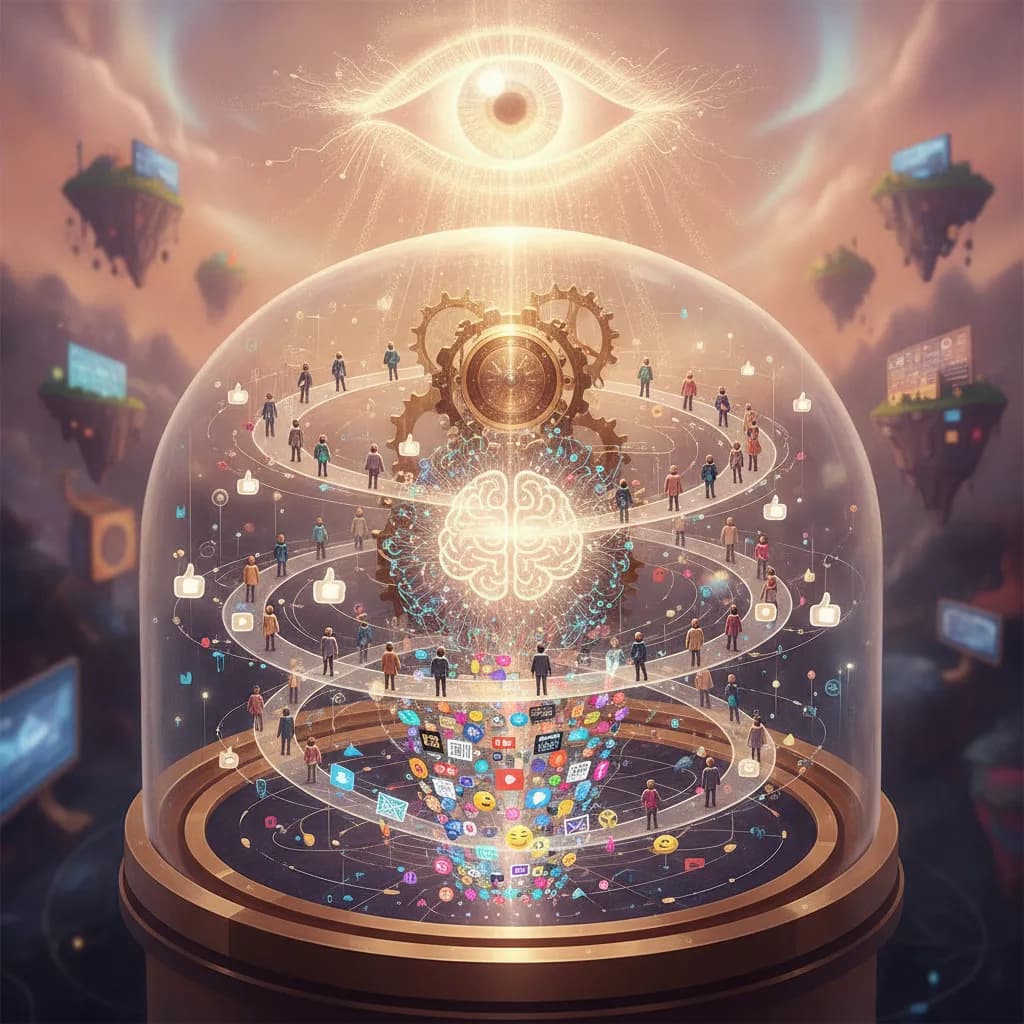
Social Media Algorithms
A system that quietly runs a personalized experiment on every single user, constantly testing what keeps you scrolling just a little bit longer.
Cheat Sheet
- Social media algorithms are automated systems that decide what content appears in a user's feed, typically ranked to maximize engagement rather than shown in strict chronological order.
- Engagement signals — likes, comments, shares, time spent watching, and even how long you pause while scrolling — feed directly into what an algorithm decides to show you more of.
- Algorithms build an individual profile of each user's interests over time, meaning two people can see dramatically different content even when following the same accounts.
- Content that provokes a strong emotional reaction, including outrage or controversy, has been repeatedly documented as tending to perform well under many engagement-optimized algorithms.
- The specific ranking logic used by major platforms is largely proprietary and not fully disclosed publicly, though platforms have gradually released more general information under regulatory pressure.
- Concerns about "filter bubbles" and echo chambers stem partly from algorithms consistently showing users more of what they already engage with, potentially narrowing exposure to different viewpoints over time.
The 60-Second Version
Social media algorithms are automated systems that decide what content appears in a user's feed, typically ranked to maximize engagement rather than shown in strict chronological order. Engagement signals, likes, comments, shares, time spent watching, and even how long you pause while scrolling, feed directly into what an algorithm decides to show you more of. Algorithms build an individual profile of each user's interests over time, meaning two people can see dramatically different content even when following the same accounts. Content that provokes a strong emotional reaction, including outrage or controversy, has been repeatedly documented as tending to perform well under many engagement-optimized algorithms. The specific ranking logic used by major platforms is largely proprietary and not fully disclosed publicly, though platforms have gradually released more general information under regulatory pressure. Concerns about "filter bubbles" and echo chambers stem partly from algorithms consistently showing users more of what they already engage with, potentially narrowing exposure to different viewpoints over time.
The Long Version
What the Algorithm Is Actually Optimizing For
Rather than displaying content in strict chronological order, most social media platforms rank feed content using algorithms designed to predict and maximize engagement, meaning the likelihood a specific user will interact with, or simply spend more time viewing, a given piece of content. This shift from chronological to engagement-based ranking has been one of the most consequential changes in how people experience social platforms.
The Signals Algorithms Actually Track
Algorithms draw on a wide range of user behavior signals beyond obvious actions like likes and comments, including how long a user lingers on a specific post, whether they share it privately, how quickly they scroll past certain content types, and countless other subtle interaction patterns, all combined to build an increasingly detailed and individualized picture of that specific user's interests.
Why Two People See Completely Different Feeds
Because algorithms personalize rankings based on each individual's accumulated behavior and inferred interests, two users following the exact same set of accounts can end up seeing meaningfully different content in their respective feeds, a level of personalization that's largely invisible to the end user experiencing it.
Engagement, Outrage, and the Filter Bubble Concern
Researchers and journalists have repeatedly documented that emotionally provocative content, including outrage-inducing or controversial material, tends to perform particularly well under engagement-optimized ranking systems, since strong emotional reactions reliably drive interaction. Critics argue this dynamic, combined with algorithms consistently reinforcing existing user preferences, contributes to filter bubbles, a narrowing of the range of perspectives and information a given user is regularly exposed to over time.
Ad slot (placeholder — set NEXT_PUBLIC_ADSENSE_SLOT_ID once an ad unit is created)
Glossary
- Engagement
- User actions like likes, comments, shares, and watch time that algorithms use as signals of interest.
- Feed ranking
- The process by which an algorithm orders content in a user's feed, typically prioritizing predicted engagement.
- Filter bubble
- A narrowed range of information or viewpoints a user is exposed to as a result of personalized algorithmic curation.
- Recommendation system
- The broader category of algorithm that suggests content, products, or connections based on user behavior.
- Engagement-optimized
- Describes a system designed primarily to maximize user interaction, sometimes at the expense of other goals like accuracy or wellbeing.