Neural Networks
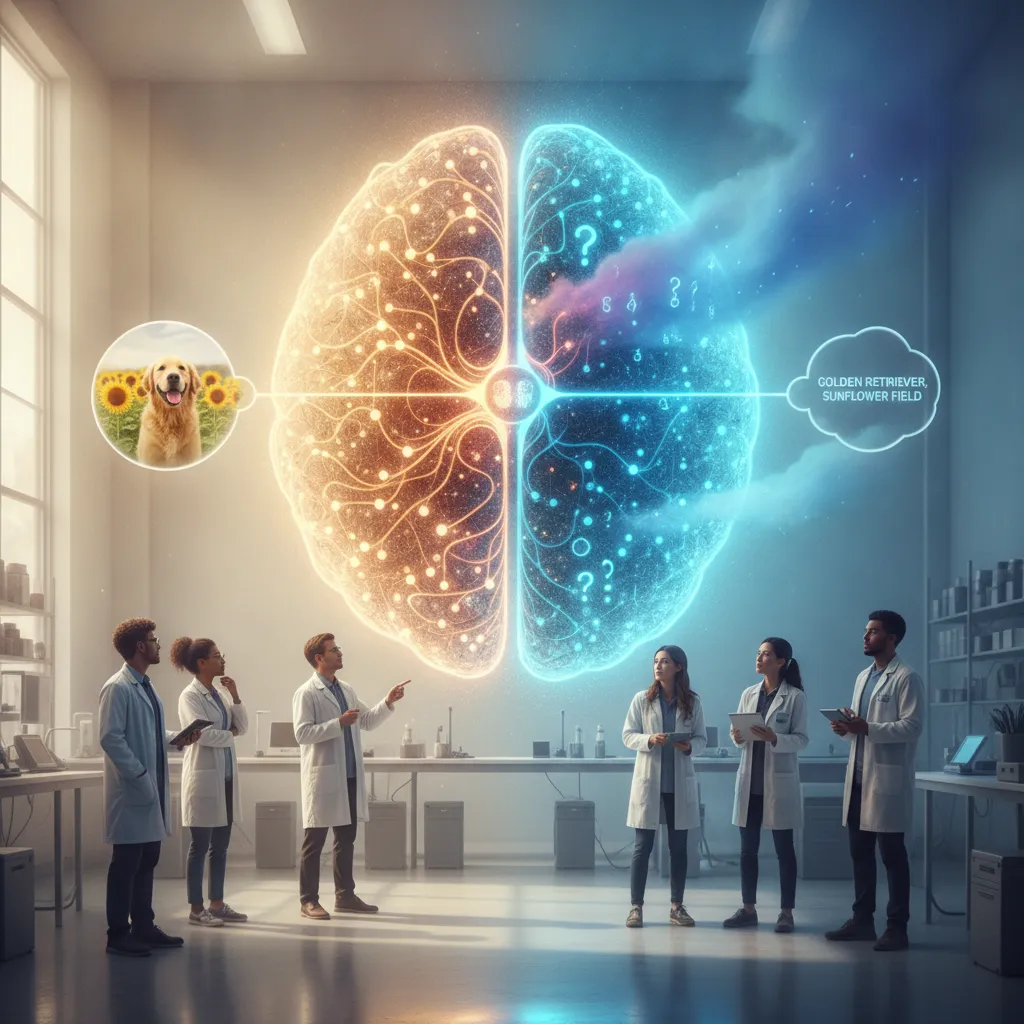
A technology loosely inspired by the human brain that can accurately explain what's in a photo — while researchers still can't fully explain exactly how it arrived at that answer.
Cheat Sheet
- A neural network is a type of computing system loosely inspired by the structure of the human brain, made up of interconnected layers of artificial "neurons" that process and learn from data.
- Neural networks learn by adjusting the strength of connections between artificial neurons based on training data, gradually improving their ability to make accurate predictions or classifications over repeated exposure.
- Deep learning refers specifically to neural networks with many stacked layers, allowing them to learn increasingly abstract and complex patterns as data passes through successive layers.
- Neural networks require large amounts of training data and significant computing power, and both of these factors have grown dramatically over recent years, directly enabling much of the recent rapid progress in AI capability.
- Despite their brain-inspired design, artificial neural networks are a considerable simplification of actual biological neurons, and researchers generally caution against overstating the similarity between the two.
- Neural networks are frequently described as "black boxes," since it can be genuinely difficult to fully explain exactly why a given trained network produces a specific output, even when the output itself is accurate.
The 60-Second Version
A neural network is a type of computing system loosely inspired by the structure of the human brain, made up of interconnected layers of artificial "neurons" that process and learn from data. Neural networks learn by adjusting the strength of connections between artificial neurons based on training data, gradually improving their ability to make accurate predictions or classifications over repeated exposure. Deep learning refers specifically to neural networks with many stacked layers, allowing them to learn increasingly abstract and complex patterns as data passes through successive layers. Neural networks require large amounts of training data and significant computing power, and both of these factors have grown dramatically over recent years, directly enabling much of the recent rapid progress in AI capability. Despite their brain-inspired design, artificial neural networks are a considerable simplification of actual biological neurons, and researchers generally caution against overstating the similarity between the two. Neural networks are frequently described as "black boxes," since it can be genuinely difficult to fully explain exactly why a given trained network produces a specific output, even when the output itself is accurate.
The Long Version
A Loose, Simplified Inspiration From the Brain
Neural networks are structured as interconnected layers of artificial "neurons," a design loosely inspired by the structure of biological neurons in the human brain, though researchers are generally careful to caution that this remains a considerable simplification, artificial neurons operate quite differently from their biological namesake, and the comparison shouldn't be taken too literally.
Learning Through Adjusted Connections
Neural networks learn by processing training data and gradually adjusting the strength of connections, called weights, between their artificial neurons, refining these connections over repeated exposure to training examples until the network's outputs become increasingly accurate at the specific task it's being trained for, whether that's image recognition, language processing, or another pattern-based task.
Going Deep: What "Deep Learning" Actually Means
Deep learning refers specifically to neural networks built with many stacked layers, rather than just one or two, allowing information to pass through successive layers that each learn increasingly abstract and complex patterns, a structural depth that has proven directly responsible for much of the significant recent progress in AI capability across a range of tasks.
More Data, More Compute, and the Black Box Problem
The dramatic growth in both available training data and computing power over recent years has directly enabled neural networks to achieve significantly greater scale and capability than was previously possible. Despite this progress, neural networks are frequently described as "black boxes," since it remains genuinely difficult, even for the researchers who build them, to fully explain exactly why a given trained network produces a specific output, an ongoing area of active research known as AI interpretability.
Ad slot (placeholder — set NEXT_PUBLIC_ADSENSE_SLOT_ID once an ad unit is created)
Glossary
- Artificial neuron
- A basic computational unit in a neural network, loosely inspired by biological neurons, that processes and passes along information.
- Deep learning
- Neural networks with many stacked layers, allowing them to learn increasingly abstract and complex patterns.
- Training data
- The dataset a neural network learns from, adjusting its internal connections based on patterns found within it.
- Black box
- A description of neural networks reflecting the difficulty of fully explaining why a trained network produces a specific output.
- Weights
- The adjustable values representing connection strength between artificial neurons, updated during training.