NASCAR
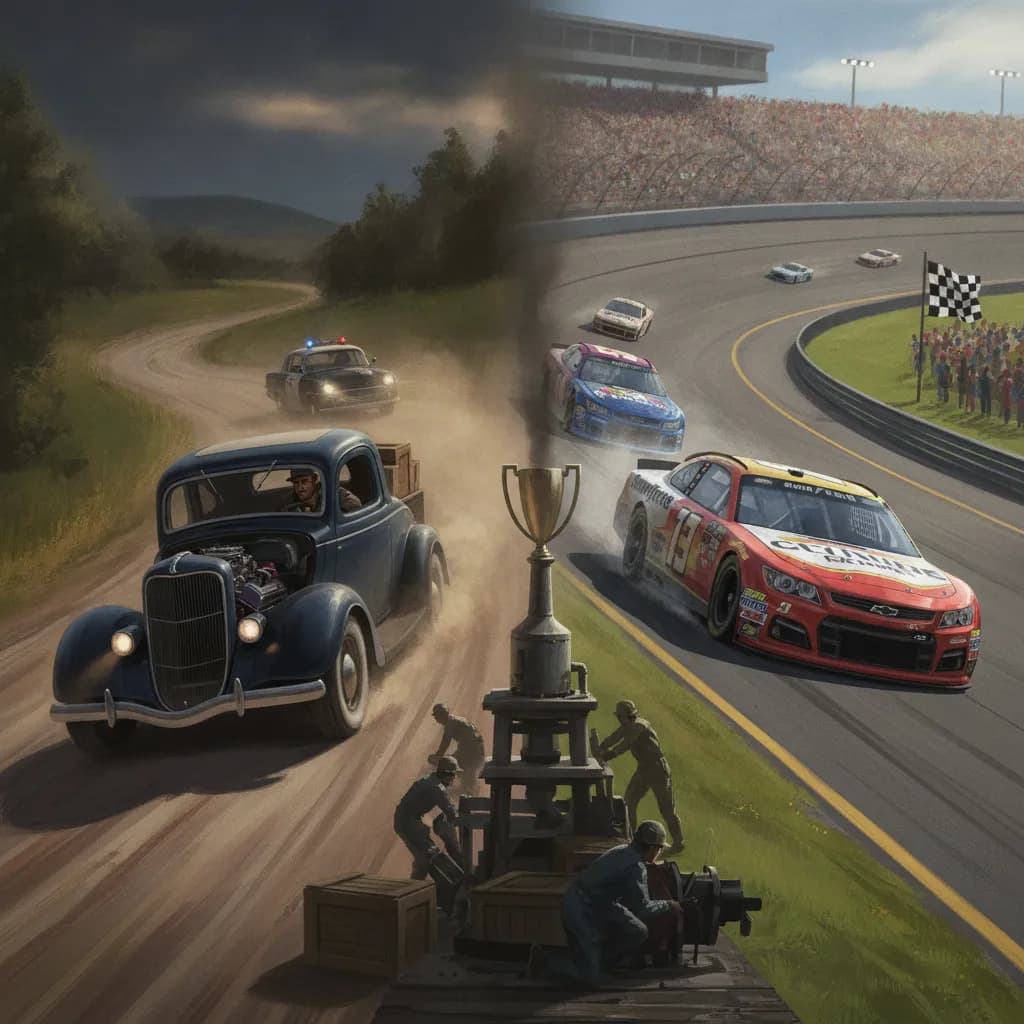
A sport whose roots trace back to Prohibition-era bootleggers modifying their cars to outrun the police, then racing each other for fun.
Cheat Sheet
- NASCAR (National Association for Stock Car Auto Racing) is the top level of American stock car racing, most associated with oval-track events across the US.
- "Stock cars" originally referred to production-based vehicles, though modern NASCAR race cars share only styling cues with retail cars, with purpose-built racing chassis and engines underneath.
- The Cup Series is NASCAR's top-tier championship, decided across a season culminating in a multi-race "playoff" format that determines the final champion.
- Drafting — racing closely behind another car to reduce air resistance — is a major strategic element, especially at high-speed superspeedway tracks like Daytona and Talladega.
- The Daytona 500, held each February, is widely considered NASCAR's most prestigious single race, often called "The Great American Race."
- NASCAR grew out of bootlegging culture in the American South during Prohibition, when drivers modified cars to outrun police, then began racing each other informally once Prohibition ended.
The 60-Second Version
NASCAR (National Association for Stock Car Auto Racing) is the top level of American stock car racing, most associated with oval-track events across the US. "Stock cars" originally referred to production-based vehicles, though modern NASCAR race cars share only styling cues with retail cars, with purpose-built racing chassis and engines underneath. The Cup Series is NASCAR's top-tier championship, decided across a season that culminates in a multi-race "playoff" format determining the final champion. Drafting, racing closely behind another car to reduce air resistance, is a major strategic element, especially at high-speed superspeedway tracks like Daytona and Talladega. The Daytona 500, held each February, is widely considered NASCAR's most prestigious single race, often called "The Great American Race." NASCAR itself grew directly out of bootlegging culture in the American South during Prohibition, when drivers modified their cars to outrun police, then began racing each other informally once Prohibition ended.
The Long Version
From Bootlegging to Racing League
NASCAR's origins trace back to Prohibition-era moonshine runners in the American South, who modified their cars for speed and handling to evade law enforcement while transporting illegal alcohol. Once Prohibition ended, many of these same drivers began informally racing each other to settle bragging rights over whose car, and whose driving, was actually fastest, a culture that eventually formalized into NASCAR in 1948.
What "Stock Car" Actually Means Today
While "stock car" originally described vehicles built on genuine production car platforms, modern NASCAR Cup Series cars are purpose-built racing machines from the ground up, sharing only bodywork styling and general silhouette with the retail cars they're branded after, rather than any actual mechanical components underneath.
How a Championship Season Works
NASCAR's Cup Series runs a full season of races, with points awarded based on finishing position in each event, before transitioning into a multi-race "playoff" format for the season's closing stretch, where a smaller field of contending drivers competes specifically for the championship, adding late-season stakes and drama on top of the regular season standings.
Drafting and the Superspeedway Spectacle
At NASCAR's fastest tracks, known as superspeedways, cars can gain a significant speed advantage by drafting closely behind another car, exploiting the reduced air resistance created by the car ahead. This produces tightly packed, high-speed group racing that's become one of NASCAR's signature spectacles, though it also concentrates risk, since a single mistake at these speeds can trigger large multi-car incidents.
Ad slot (placeholder — set NEXT_PUBLIC_ADSENSE_SLOT_ID once an ad unit is created)
Glossary
- Stock car
- A race car whose bodywork originally resembled standard production vehicles, though modern versions are purpose-built for racing.
- Drafting
- Racing closely behind another car to reduce air resistance and gain a speed advantage.
- Cup Series
- NASCAR's premier, top-level racing championship.
- Superspeedway
- A high-speed oval track, like Daytona or Talladega, over 2 miles long, known for close, high-speed pack racing.
- Caution flag
- A flag signaling drivers to slow down and hold position, typically due to a crash or debris on track.