Formula 1
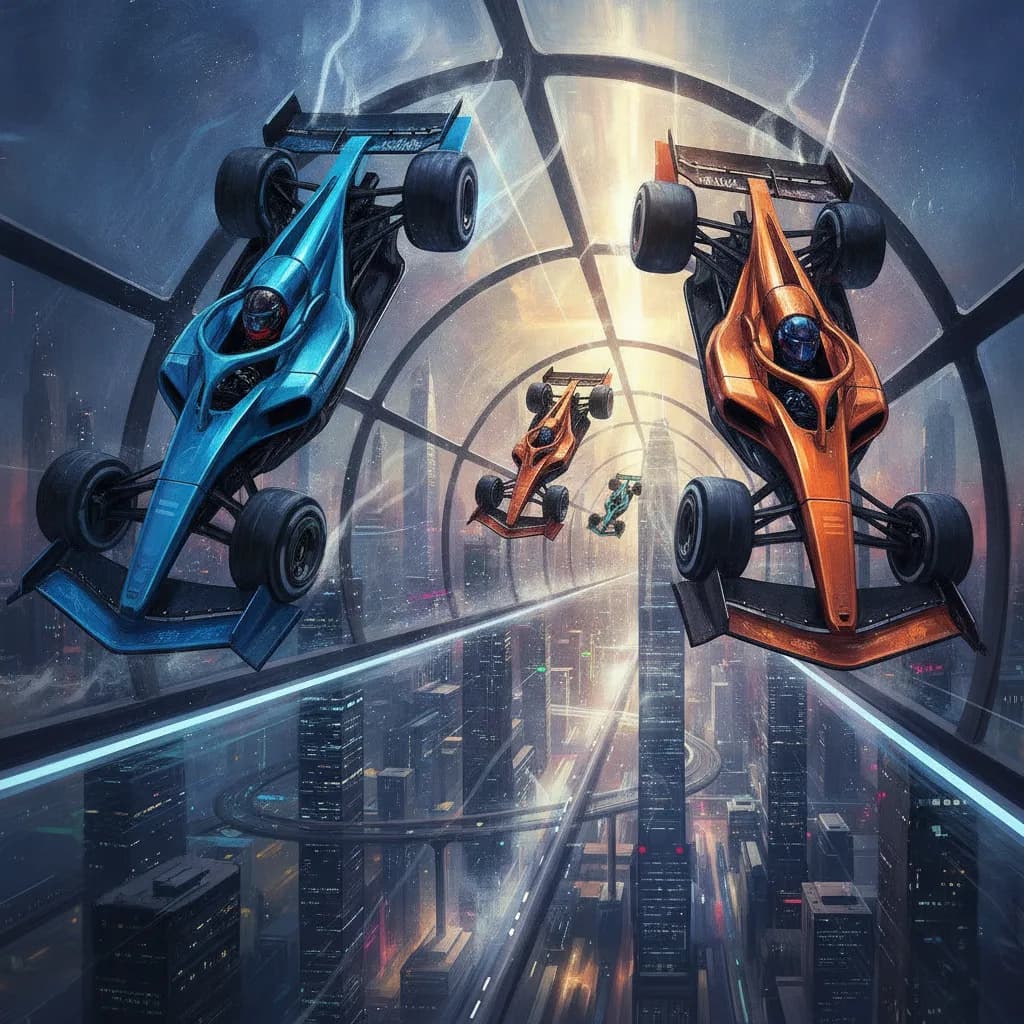
Cars so aerodynamically extreme that, in theory, they could drive upside down through a tunnel at high enough speed.
Cheat Sheet
- Formula 1 (F1) is the highest class of international open-wheel single-seater auto racing, run across roughly 24 races ("Grands Prix") worldwide each season.
- Both drivers and constructors (teams) compete for separate championships, decided by points earned across the season based on finishing position in each race.
- F1 cars are among the most technologically advanced vehicles in the world, capable of speeds over 200 mph and generating enough aerodynamic downforce to theoretically drive upside down at high speed.
- A pit stop, where a car's tires are changed mid-race, is a major strategic and technical spectacle — top teams can complete a full tire change in under 2 seconds.
- Qualifying, held the day before the race, determines the starting grid order based on lap times, with the fastest driver earning "pole position."
- Historic teams like Ferrari and drivers like Lewis Hamilton and Michael Schumacher (both 7-time world champions) are central to F1's decades-long global following.
The 60-Second Version
Formula 1 (F1) is the highest class of international open-wheel single-seater auto racing, run across roughly 24 races, called Grands Prix, worldwide each season. Both drivers and constructors, meaning the teams themselves, compete for separate championships, decided by points earned across the season based on finishing position in each race. F1 cars are among the most technologically advanced vehicles in the world, capable of speeds over 200 mph and generating enough aerodynamic downforce that they could theoretically drive upside down at high enough speed. A pit stop, where a car's tires are changed mid-race, is a major strategic and technical spectacle, with top teams capable of completing a full tire change in under two seconds. Qualifying, held the day before the race, determines the starting grid order based on lap times, with the fastest driver earning "pole position." Historic teams like Ferrari and drivers like Lewis Hamilton and Michael Schumacher, both seven-time world champions, are central to F1's decades-long global following.
The Long Version
Drivers and Constructors: Two Championships in One
F1 runs two parallel championships across each season: the Drivers' Championship, awarded to the individual driver with the most accumulated points, and the Constructors' Championship, awarded to the team whose two drivers combine for the most points. This dual structure means both individual driver skill and overall team performance, including car development and pit crew execution, are recognized and rewarded separately.
What Makes an F1 Car So Extreme
F1 cars are purpose-built prototype racing machines, generating enormous aerodynamic downforce through carefully engineered wings and underbody airflow, which presses the car down onto the track and allows for cornering speeds far beyond what a standard road car could ever achieve. This downforce is so extreme at high speed that, in theory, an F1 car's total downforce could exceed its own weight, meaning it could physically stick to a surface even upside down, a frequently cited (if largely theoretical) illustration of just how aerodynamically extreme these cars are.
Qualifying, Pole Position, and Race Day
The day before a Grand Prix, drivers compete in a qualifying session to set the fastest possible single lap time, which determines their starting position on the grid for the race itself; the fastest driver earns "pole position," the first spot on the grid, generally considered a significant advantage heading into the race. Race day itself typically spans a fixed distance, roughly 190 miles depending on the specific circuit, with drivers required to use multiple tire types at least once during the race.
Pit Stops as a Precision Sport
Pit stops, where a car pulls in during the race to have all four tires changed (and occasionally minor repairs made), have become their own precision discipline within the sport: top teams train their pit crews to complete a full tire change in under two seconds, a level of speed and coordination that has become a genuine spectacle and competitive point of pride separate from the on-track racing itself.
Ad slot (placeholder — set NEXT_PUBLIC_ADSENSE_SLOT_ID once an ad unit is created)
Glossary
- Grand Prix
- An individual Formula 1 race, held at a specific circuit as part of the season-long championship.
- Constructor
- The team that designs and builds an F1 car, competing for its own separate championship alongside individual drivers.
- Pole position
- The first-place starting spot on the grid, earned by setting the fastest lap in qualifying.
- Pit stop
- A mid-race stop where a car's tires, and occasionally other components, are changed for strategic advantage.
- Downforce
- Aerodynamic force pushing a car downward onto the track, increasing grip and cornering speed.