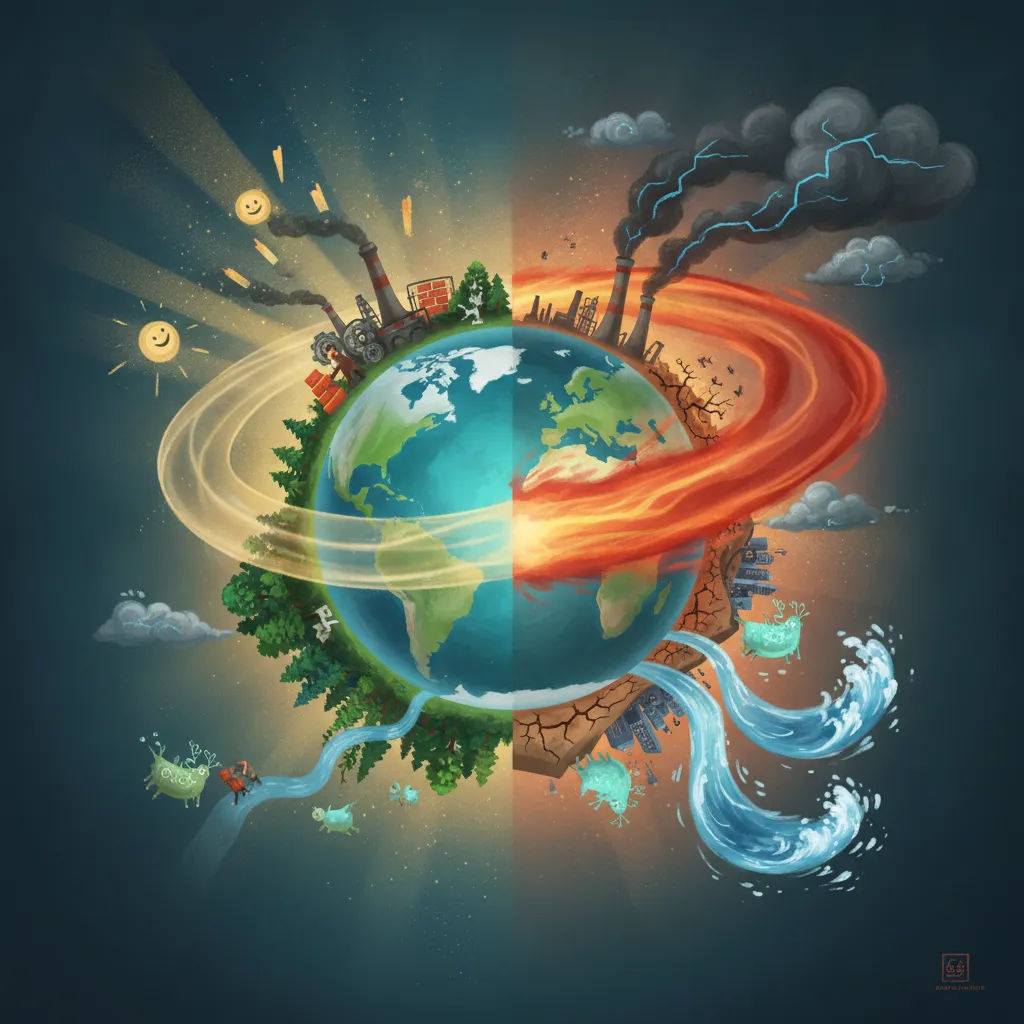
Climate Change
A naturally occurring process that keeps the planet livable becomes a serious problem the moment you add too much of it — which is essentially what's been happening since the industrial era.
Cheat Sheet
- Climate change refers to long-term shifts in global temperatures and weather patterns, with the current warming trend attributed primarily to human greenhouse gas emissions since the industrial era.
- The greenhouse effect, a naturally occurring process that keeps Earth warm enough to support life, becomes a problem when human emissions add excess greenhouse gases, trapping additional heat.
- Carbon dioxide from burning fossil fuels (coal, oil, natural gas) is the largest single contributor to human-caused greenhouse gas emissions.
- The scientific consensus that human activity is the dominant driver of current climate change is supported by the overwhelming majority of actively publishing climate scientists worldwide.
- Documented effects already underway include rising average global temperatures, melting polar ice and glaciers, rising sea levels, and increased frequency of certain extreme weather events.
- International efforts like the Paris Agreement aim to coordinate global action to limit warming, though actual progress toward stated targets remains a subject of ongoing debate and concern among scientists.
The 60-Second Version
Climate change refers to long-term shifts in global temperatures and weather patterns, with the current warming trend attributed primarily to human greenhouse gas emissions since the industrial era. The greenhouse effect, a naturally occurring process that keeps Earth warm enough to support life, becomes a problem when human emissions add excess greenhouse gases, trapping additional heat. Carbon dioxide from burning fossil fuels, coal, oil, and natural gas, is the largest single contributor to human-caused greenhouse gas emissions. The scientific consensus that human activity is the dominant driver of current climate change is supported by the overwhelming majority of actively publishing climate scientists worldwide. Documented effects already underway include rising average global temperatures, melting polar ice and glaciers, rising sea levels, and increased frequency of certain extreme weather events. International efforts like the Paris Agreement aim to coordinate global action to limit warming, though actual progress toward stated targets remains a subject of ongoing debate and concern among scientists.
The Long Version
The Greenhouse Effect, Explained Simply
Earth's atmosphere naturally contains certain gases that trap a portion of the sun's heat, preventing it from radiating directly back out into space and keeping the planet's average temperature warm enough to support life as we know it. This greenhouse effect is entirely natural and essential; the concern with climate change specifically involves human activity adding substantially more of these heat-trapping gases than would occur naturally, amplifying the effect beyond its historical balance.
Where the Extra Emissions Actually Come From
Carbon dioxide released from burning fossil fuels, coal, oil, and natural gas, for energy, transportation, and industry represents the single largest source of human-caused greenhouse gas emissions, though other gases like methane, released from agriculture and other sources, also contribute meaningfully to the overall warming effect.
What the Scientific Consensus Actually Says
Among climate scientists actively publishing peer-reviewed research on the subject, there is overwhelming agreement that human activity, primarily through greenhouse gas emissions, is the dominant driver of the observed warming trend since the industrial era began. This level of scientific consensus is comparable to agreement found on other well-established scientific findings.
Documented Effects Already Underway
Beyond future projections, climate scientists point to a range of already-documented, measurable effects: rising average global temperatures recorded over more than a century of data, measurably melting polar ice caps and glaciers, rising sea levels from both melting ice and warming ocean water expanding in volume, and shifts in the frequency or intensity of certain extreme weather events, all consistent with the broader warming trend.
Ad slot (placeholder — set NEXT_PUBLIC_ADSENSE_SLOT_ID once an ad unit is created)
Glossary
- Greenhouse effect
- The natural process by which certain atmospheric gases trap heat, keeping Earth warm enough to support life.
- Greenhouse gas
- A gas, like carbon dioxide or methane, that traps heat in the atmosphere, contributing to warming.
- Fossil fuel
- Coal, oil, or natural gas formed from ancient organic material, burned for energy and a major source of greenhouse gas emissions.
- Paris Agreement
- An international treaty aiming to coordinate global action to limit climate change.
- Climate scientist consensus
- The overwhelming agreement among actively publishing climate researchers that human activity is the dominant driver of current warming.