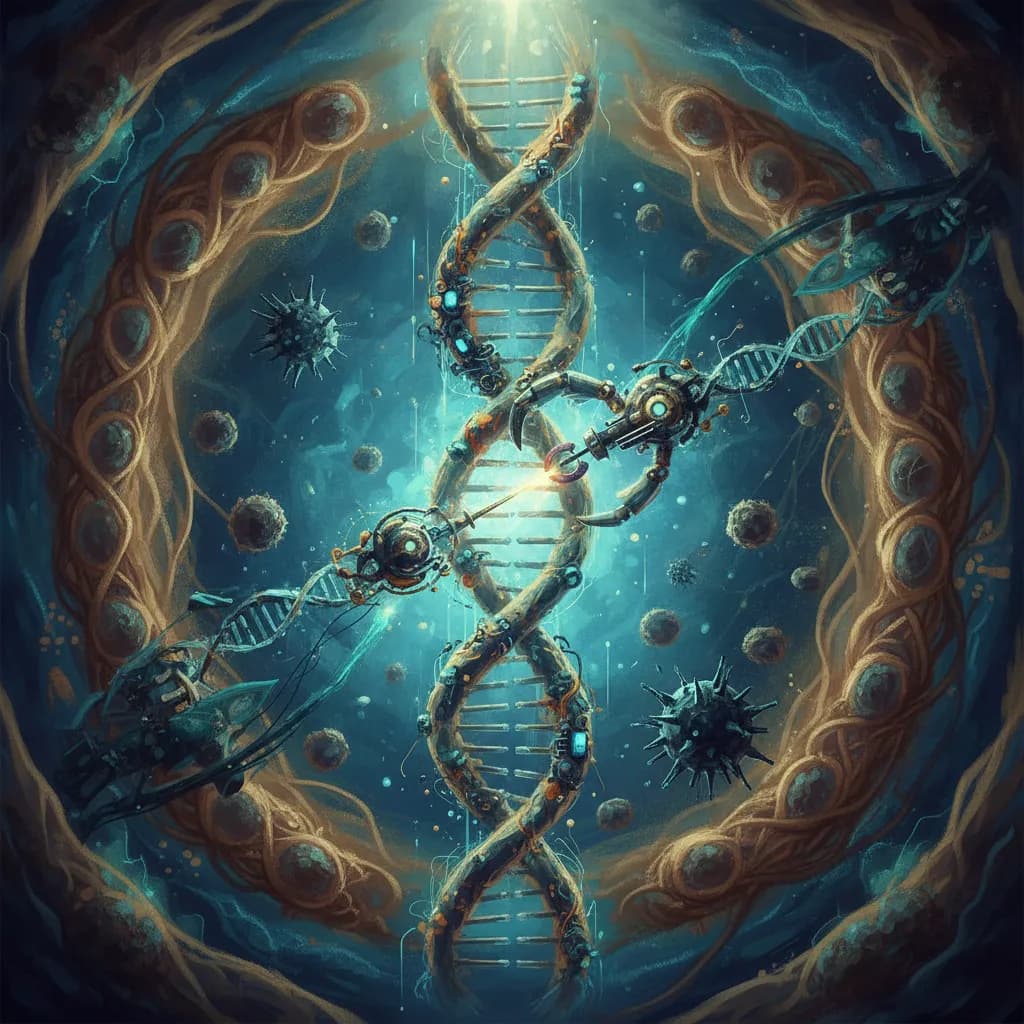
CRISPR
One of the most transformative technologies in modern biology started out as nothing more than a bacterium's own built-in defense system against viruses.
Cheat Sheet
- CRISPR is a gene-editing technology that allows scientists to precisely target, cut, and modify specific sequences of DNA within a living cell.
- CRISPR was originally discovered as part of a natural bacterial immune defense mechanism, which bacteria use to recognize and destroy the DNA of invading viruses.
- The technology's precision, relative simplicity, and low cost compared to earlier gene-editing methods have made it dramatically more accessible to researchers worldwide since its adaptation for gene editing in the early 2010s.
- CRISPR has significant potential medical applications, including treating certain genetic diseases by directly correcting the underlying faulty DNA sequence responsible for the condition.
- The technology has already been used to develop new disease-resistant crops and improve agricultural research, extending its impact well beyond human medicine alone.
- CRISPR's potential use for editing human embryos raises significant, actively debated ethical questions, since such changes could potentially be passed down to future generations, a possibility most countries currently prohibit or tightly restrict.
The 60-Second Version
CRISPR is a gene-editing technology that allows scientists to precisely target, cut, and modify specific sequences of DNA within a living cell. CRISPR was originally discovered as part of a natural bacterial immune defense mechanism, which bacteria use to recognize and destroy the DNA of invading viruses. The technology's precision, relative simplicity, and low cost compared to earlier gene-editing methods have made it dramatically more accessible to researchers worldwide since its adaptation for gene editing in the early 2010s. CRISPR has significant potential medical applications, including treating certain genetic diseases by directly correcting the underlying faulty DNA sequence responsible for the condition. The technology has already been used to develop new disease-resistant crops and improve agricultural research, extending its impact well beyond human medicine alone. CRISPR's potential use for editing human embryos raises significant, actively debated ethical questions, since such changes could potentially be passed down to future generations, a possibility most countries currently prohibit or tightly restrict.
The Long Version
A Bacterial Immune System, Repurposed
CRISPR was originally discovered as part of a natural immune defense mechanism found in bacteria, which use this system to recognize and destroy the DNA of invading viruses, storing snippets of past viral DNA to help recognize and defend against future infections, a natural biological process that scientists later recognized could be adapted into a genuinely powerful gene-editing tool.
Why CRISPR Changed Gene Editing So Dramatically
Since its adaptation for gene editing in the early 2010s, CRISPR's precision, relative technical simplicity, and considerably lower cost compared to earlier gene-editing methods have made it dramatically more accessible to researchers worldwide, significantly accelerating the pace of genetic research across numerous fields well beyond what earlier, more cumbersome gene-editing techniques allowed.
Treating Disease at the Genetic Root
CRISPR holds significant potential medical application for treating certain genetic diseases by directly correcting the underlying faulty DNA sequence responsible for the condition, rather than simply managing symptoms, an approach that, if successfully developed for a given disease, could offer a genuinely curative treatment rather than an ongoing, symptom-focused management strategy.
Beyond Medicine, and the Ethical Line Around Embryos
Beyond human medicine, CRISPR has already been used to develop new disease-resistant crop varieties and to improve broader agricultural research, extending its practical impact considerably beyond medical applications alone. At the same time, CRISPR's potential use for editing human embryos raises significant, actively debated ethical questions, since such genetic changes could potentially be passed down to future generations, a possibility that most countries currently prohibit or tightly restrict given the profound and not fully understood long-term implications involved.
Ad slot (placeholder — set NEXT_PUBLIC_ADSENSE_SLOT_ID once an ad unit is created)
Glossary
- Gene editing
- The direct modification of an organism's DNA sequence, the core function CRISPR technology enables.
- Cas9
- A protein commonly used alongside CRISPR that acts as molecular "scissors," cutting DNA at a precisely targeted location.
- Bacterial immune defense
- The natural mechanism in bacteria from which CRISPR technology was originally discovered and adapted.
- Genetic disease
- A disease caused by a specific faulty DNA sequence, a category of condition CRISPR has significant potential to treat directly.
- Germline editing
- Gene editing performed on embryos or reproductive cells, which could be passed down to future generations, a significant ethical concern surrounding CRISPR.