Animal Migration
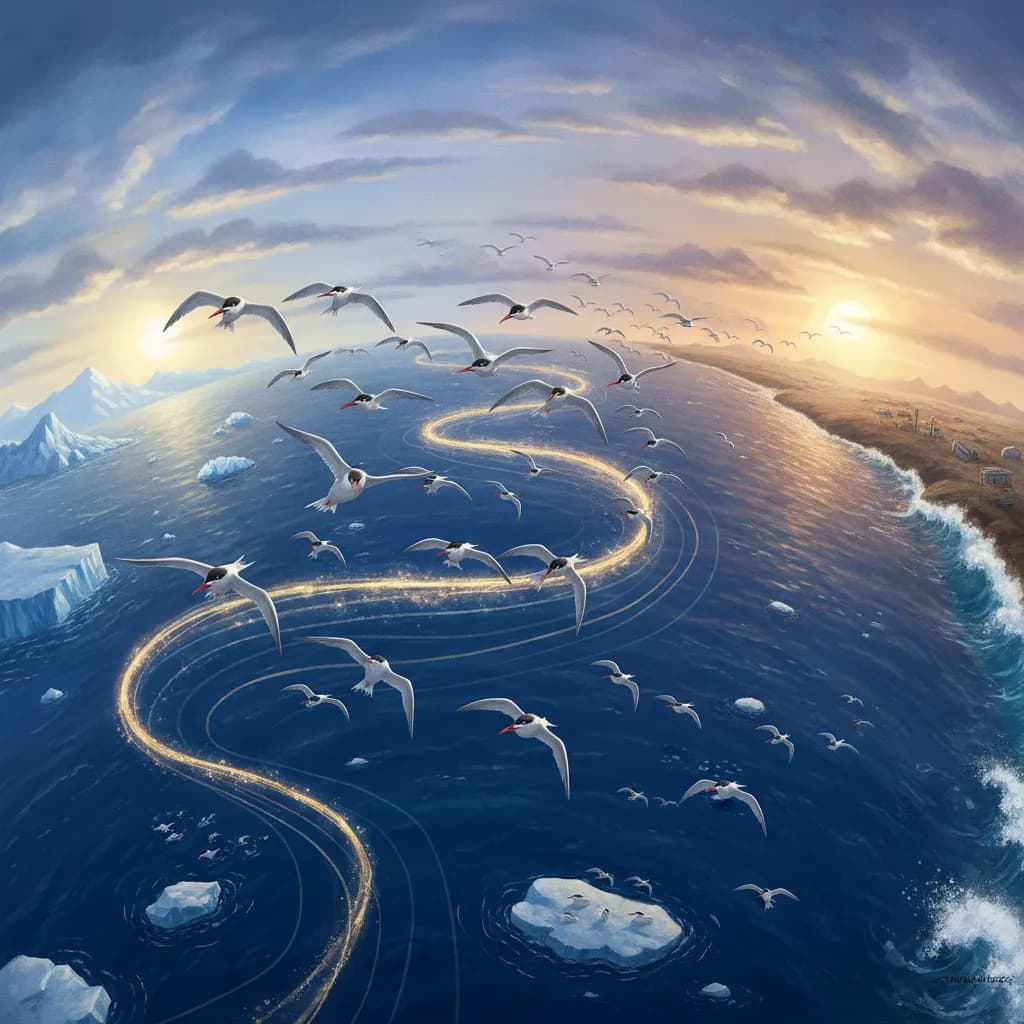
A single bird species that logs roughly 44,000 miles a year chasing summer between the Arctic and Antarctic — the longest migration of any animal on Earth.
Cheat Sheet
- Animal migration is the regular, often seasonal movement of animals between different locations, typically driven by the search for food, breeding grounds, or more favorable climate.
- The Arctic tern holds the record for the longest known migration of any animal, traveling roughly 44,000 miles round-trip annually between the Arctic and Antarctic.
- Many migratory species rely on remarkable navigational abilities, including sensing Earth's magnetic field, using the position of the sun and stars, and recognizing familiar landmarks or scent trails.
- Some migrations span multiple generations of a single species — monarch butterflies complete their full annual migration cycle across several successive generations, none of which has made the full round-trip individually.
- Human infrastructure, including roads, dams, and urban development, has significantly disrupted many traditional migration routes, contributing to population declines in several migratory species.
- Conservation efforts increasingly focus on protecting entire migratory routes and stopover habitats, not just a single species' breeding or feeding grounds, since disrupting any point along the route can undermine the whole migration.
The 60-Second Version
Animal migration is the regular, often seasonal movement of animals between different locations, typically driven by the search for food, breeding grounds, or more favorable climate. The Arctic tern holds the record for the longest known migration of any animal, traveling roughly 44,000 miles round-trip annually between the Arctic and Antarctic. Many migratory species rely on remarkable navigational abilities, including sensing Earth's magnetic field, using the position of the sun and stars, and recognizing familiar landmarks or scent trails. Some migrations span multiple generations of a single species — monarch butterflies complete their full annual migration cycle across several successive generations, none of which has made the full round-trip individually. Human infrastructure, including roads, dams, and urban development, has significantly disrupted many traditional migration routes, contributing to population declines in several migratory species. Conservation efforts increasingly focus on protecting entire migratory routes and stopover habitats, not just a single species' breeding or feeding grounds, since disrupting any point along the route can undermine the whole migration.
The Long Version
Why Animals Migrate At All
Migration is typically driven by the pursuit of resources or conditions that shift seasonally or aren't available year-round in a single location: following food availability, reaching more favorable breeding grounds, or escaping harsh seasonal climate conditions altogether. The specific triggers and patterns vary enormously across species, but the underlying logic generally comes down to maximizing survival and reproductive success across a changing environment.
The Longest Migrations on Record
The Arctic tern holds the documented record for the longest annual migration of any animal, traveling roughly 44,000 miles round-trip each year between Arctic breeding grounds and Antarctic feeding areas, effectively experiencing more daylight over the course of a year than any other creature on Earth by chasing summer conditions between both poles.
How Animals Actually Navigate Such Distances
Migratory species rely on a remarkable range of navigational strategies to travel such vast distances accurately: some animals demonstrate magnetoreception, an ability to sense Earth's magnetic field and use it as an internal compass, while others navigate using the position of the sun or stars, recognizable landmarks, or even specific scent trails, often combining multiple methods depending on the species and conditions encountered along the route.
Multi-Generational Migration: The Monarch Butterfly
Monarch butterflies present one of the most striking migration patterns known: their full annual migration cycle between North America and Mexico actually spans several successive generations, meaning no individual butterfly completes the full round-trip journey itself. Later generations somehow manage to continue the migration accurately toward locations none of them have personally visited before, a phenomenon researchers still don't fully understand at a genetic or neurological level.
The Growing Threat From Human Infrastructure
Roads, dams, urban development, and other human infrastructure increasingly intersect with and disrupt traditional migration routes, blocking passage, fragmenting habitat, or removing critical stopover locations migratory animals depend on to rest and refuel partway through their journey, contributing to documented population declines in several migratory species worldwide.
Ad slot (placeholder — set NEXT_PUBLIC_ADSENSE_SLOT_ID once an ad unit is created)
Glossary
- Migration
- The regular, often seasonal movement of animals between different locations, typically for food, breeding, or climate.
- Magnetoreception
- The ability some animals have to sense Earth's magnetic field, used for long-distance navigation.
- Stopover habitat
- A location migratory animals rely on to rest and refuel partway through a longer migration route.
- Arctic tern
- A seabird holding the record for the longest known annual migration of any animal.
- Monarch butterfly
- A species whose multi-generational migration cycle means no single individual completes the full annual round-trip.