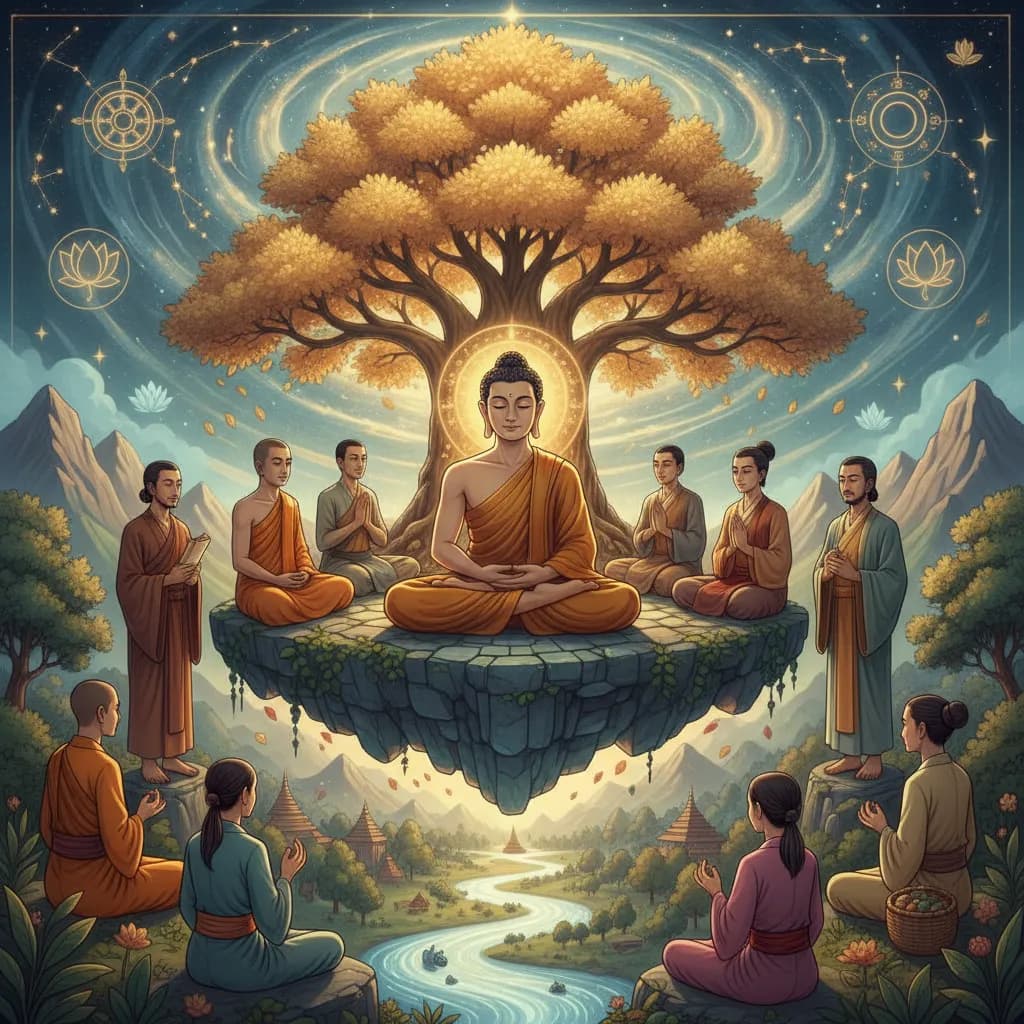
Buddhism
A major world religion that, unusually among the largest ones, isn't actually centered on worshipping a creator god at all.
Cheat Sheet
- Buddhism originated in ancient India around the 5th or 6th century BCE, founded by Siddhartha Gautama, who became known as the Buddha, meaning "the awakened one."
- The Four Noble Truths form Buddhism's foundational teaching: life inherently involves suffering, suffering arises from craving and attachment, suffering can be ended, and a specific path leads to that end.
- The Eightfold Path outlines Buddhism's practical guidance toward ending suffering, covering areas including right understanding, ethical conduct, and mental discipline through meditation.
- Unlike some other major world religions, Buddhism doesn't center on worship of a creator god, focusing instead on personal spiritual development and insight into the nature of suffering and existence.
- Buddhism split into several major traditions over time, most notably Theravada and Mahayana, which differ in certain teachings, practices, and geographic prevalence across Asia.
- Meditation plays a central role in Buddhist practice, used as a tool for cultivating mental clarity, insight, and the reduction of craving and attachment described in the Four Noble Truths.
The 60-Second Version
Buddhism originated in ancient India around the 5th or 6th century BCE, founded by Siddhartha Gautama, who became known as the Buddha, meaning "the awakened one." The Four Noble Truths form Buddhism's foundational teaching: life inherently involves suffering, suffering arises from craving and attachment, suffering can be ended, and a specific path leads to that end. The Eightfold Path outlines Buddhism's practical guidance toward ending suffering, covering areas including right understanding, ethical conduct, and mental discipline through meditation. Unlike some other major world religions, Buddhism doesn't center on worship of a creator god, focusing instead on personal spiritual development and insight into the nature of suffering and existence. Buddhism split into several major traditions over time, most notably Theravada and Mahayana, which differ in certain teachings, practices, and geographic prevalence across Asia. Meditation plays a central role in Buddhist practice, used as a tool for cultivating mental clarity, insight, and the reduction of craving and attachment described in the Four Noble Truths.
The Long Version
The Awakening of Siddhartha Gautama
Buddhism traces its origin to Siddhartha Gautama, a prince born in ancient India around the 5th or 6th century BCE who, after encountering profound human suffering and pursuing years of spiritual searching, is said to have achieved a state of deep insight or "awakening," earning him the title Buddha, meaning "the awakened one," and forming the foundation of the teachings that would become Buddhism.
The Four Noble Truths
At the heart of Buddhist teaching are the Four Noble Truths: that life inherently involves suffering or dissatisfaction, that this suffering arises specifically from craving and attachment, that suffering can actually be brought to an end, and that a specific, practical path leads toward that end, together forming the core diagnostic and prescriptive framework underlying all subsequent Buddhist teaching.
A Practical Path, Not Worship of a Creator God
The Eightfold Path lays out Buddhism's practical guidance for following through on the Four Noble Truths, covering right understanding, ethical conduct, and mental discipline cultivated significantly through meditation. Notably, Buddhism doesn't center its practice on worship of a creator god the way some other major world religions do, instead emphasizing personal insight, ethical conduct, and direct spiritual development as the primary path toward liberation from suffering.
Theravada, Mahayana, and the Central Role of Meditation
Over the centuries following its founding, Buddhism developed into several distinct major traditions, most notably Theravada and Mahayana Buddhism, which differ in certain specific teachings, practices, and their relative geographic prevalence across different parts of Asia. Across these varying traditions, meditation remains a consistently central practice, used as a tool for cultivating the mental clarity and insight needed to reduce craving and attachment as described in the Four Noble Truths.
Ad slot (placeholder — set NEXT_PUBLIC_ADSENSE_SLOT_ID once an ad unit is created)
Glossary
- Buddha
- Siddhartha Gautama, the founder of Buddhism, whose title means "the awakened one."
- Four Noble Truths
- Buddhism's foundational teaching on the nature and cause of suffering, and the path to ending it.
- Eightfold Path
- Buddhism's practical guidance toward ending suffering, covering understanding, conduct, and mental discipline.
- Nirvana
- The state of liberation from suffering and craving that Buddhist practice ultimately aims toward.
- Theravada / Mahayana
- The two major traditions Buddhism split into over time, differing in certain teachings and geographic prevalence.