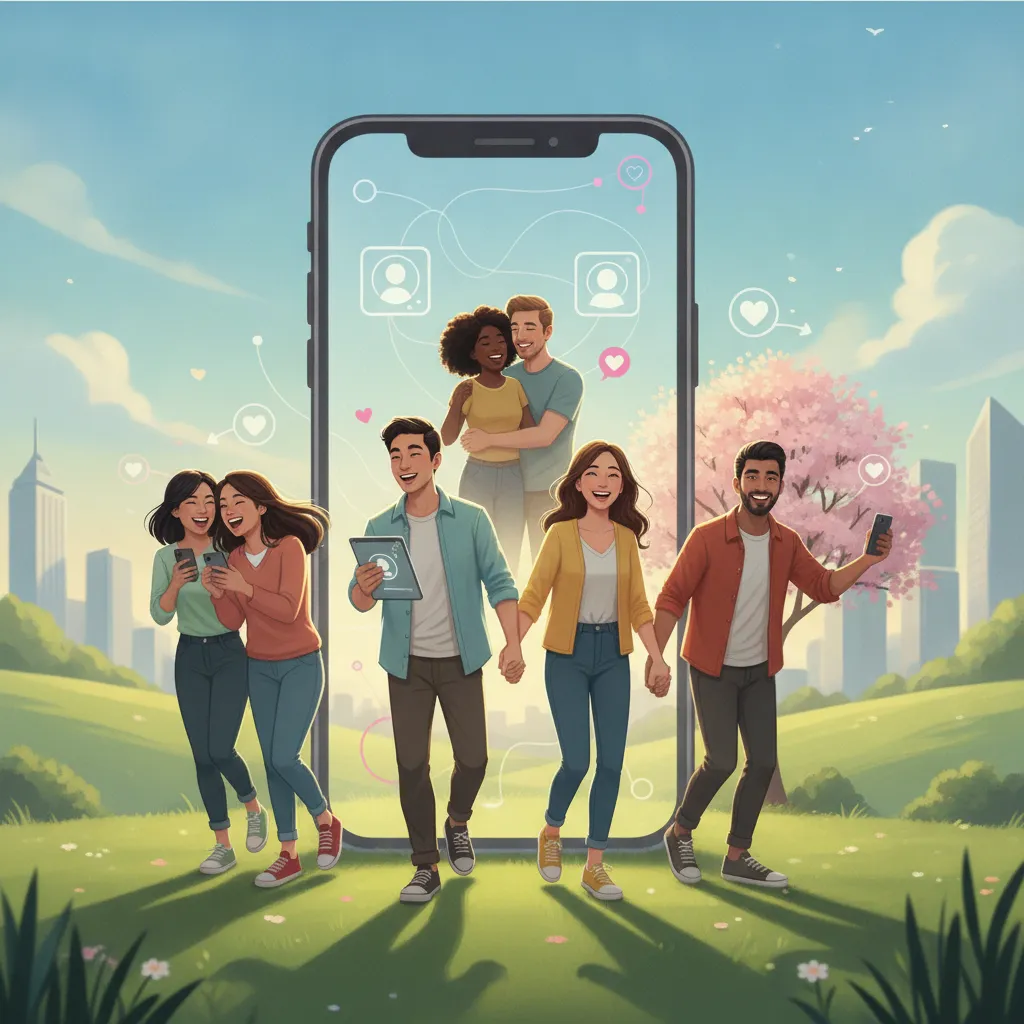
Modern Dating Apps
Despite plenty of lingering skepticism about "meeting someone online," a genuinely substantial and growing share of today's committed relationships actually started on a dating app.
Cheat Sheet
- Dating apps use smartphone-based platforms to connect potential romantic partners, generally relying on profile browsing, matching algorithms, and in-app messaging to facilitate initial contact.
- The swipe-based interface, popularized by apps like Tinder in the early 2010s, significantly changed how people browse potential matches, introducing a fast, visually driven decision-making format.
- Research on dating app usage patterns has found that a relatively small share of highly rated profiles tend to receive a disproportionately large share of overall attention and matches, a pattern often described using terms borrowed from economic inequality research.
- Different dating apps have developed distinct positioning and target audiences, with some emphasizing casual connections, others focused on serious long-term relationships, and others built around specific shared interests or communities.
- Dating app fatigue, a sense of exhaustion or burnout from prolonged or repetitive app use, has been widely reported by users and is frequently discussed alongside broader conversations about digital wellbeing and screen time.
- Despite common skepticism, a substantial and growing share of committed relationships and marriages now originate from online dating platforms, reflecting the medium's considerable and increasing mainstream normalization over time.
The 60-Second Version
Dating apps use smartphone-based platforms to connect potential romantic partners, generally relying on profile browsing, matching algorithms, and in-app messaging to facilitate initial contact. The swipe-based interface, popularized by apps like Tinder in the early 2010s, significantly changed how people browse potential matches, introducing a fast, visually driven decision-making format. Research on dating app usage patterns has found that a relatively small share of highly rated profiles tend to receive a disproportionately large share of overall attention and matches, a pattern often described using terms borrowed from economic inequality research. Different dating apps have developed distinct positioning and target audiences, with some emphasizing casual connections, others focused on serious long-term relationships, and others built around specific shared interests or communities. Dating app fatigue, a sense of exhaustion or burnout from prolonged or repetitive app use, has been widely reported by users and is frequently discussed alongside broader conversations about digital wellbeing and screen time. Despite common skepticism, a substantial and growing share of committed relationships and marriages now originate from online dating platforms, reflecting the medium's considerable and increasing mainstream normalization over time.
The Long Version
The Swipe Interface Changed Everything
The swipe-based interface, popularized by apps like Tinder in the early 2010s, significantly changed how people browse potential matches, introducing a fast, visually driven decision-making format that allowed users to quickly approve or reject profiles, a considerably different experience from earlier online dating platforms that generally relied on longer written profiles and more deliberate browsing.
Attention Isn't Evenly Distributed
Research examining actual dating app usage patterns has found that a relatively small share of highly rated profiles tend to receive a disproportionately large share of overall attention, likes, and matches, a pattern researchers have sometimes described using terms and concepts borrowed from economic inequality research, reflecting genuinely uneven outcomes in how attention gets distributed across a platform's broader user base.
Not All Apps Are Built for the Same Goal
Different dating apps have developed distinct positioning and target audiences over time, with some platforms emphasizing casual, low-commitment connections, others explicitly focused on facilitating serious long-term relationships, and still others built around specific shared interests, religious backgrounds, or particular communities, meaning the specific platform a person chooses meaningfully shapes the kind of connections and expectations they're likely to encounter.
Burnout, and a Genuine Shift in How Relationships Begin
Dating app fatigue, a sense of exhaustion or burnout from prolonged or repetitive app use, has been widely reported by users and is frequently discussed alongside broader conversations about digital wellbeing and excessive screen time. Despite this common fatigue and lingering cultural skepticism about "meeting someone online," a substantial and growing share of committed relationships and marriages now genuinely originate from online dating platforms, reflecting the medium's considerable and increasing mainstream normalization as a legitimate way people actually meet partners today.
Ad slot (placeholder — set NEXT_PUBLIC_ADSENSE_SLOT_ID once an ad unit is created)
Glossary
- Swipe interface
- The fast, visually driven browsing format popularized by apps like Tinder, allowing quick approval or rejection of potential matches.
- Matching algorithm
- The system a dating app uses to determine and surface potentially compatible profiles to a given user.
- Dating app fatigue
- A sense of exhaustion or burnout from prolonged or repetitive dating app use, widely reported by users.
- App positioning (dating)
- The specific audience and relationship goal, such as casual dating or long-term commitment, a given dating app is designed and marketed around.
- Online dating normalization
- The increasing mainstream acceptance of meeting romantic partners through digital platforms rather than exclusively in-person.
Go Deeper
- Pew Research Center — Online Dating
- Stanford University — How Couples Meet and Stay Together