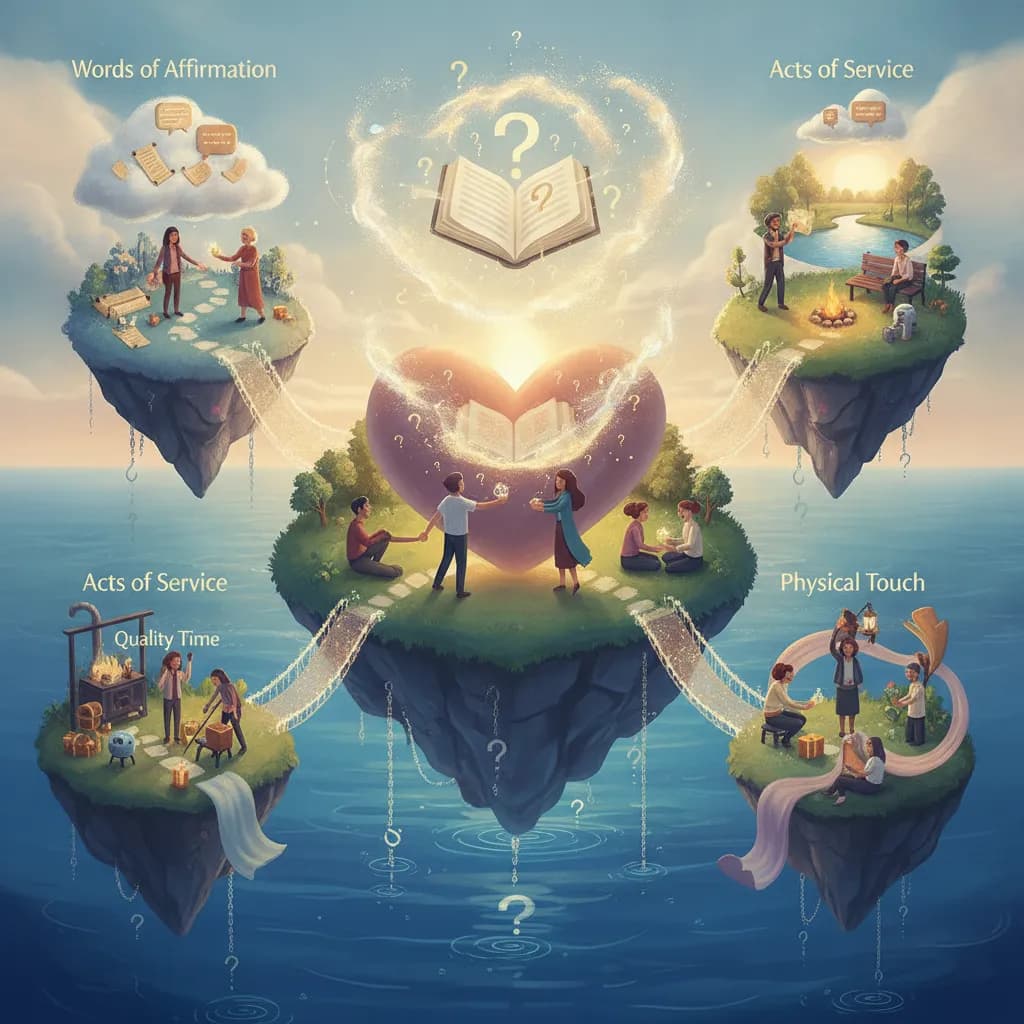
Love Languages
A framework used by millions of couples worldwide to talk about affection actually has surprisingly thin backing from rigorous academic psychological research.
Cheat Sheet
- The "five love languages" framework, developed by Gary Chapman in the early 1990s, proposes that people generally have a preferred way of both expressing and receiving love in relationships.
- The five categories, as originally proposed, are words of affirmation, quality time, receiving gifts, acts of service, and physical touch.
- The framework's core practical suggestion is that relationship satisfaction can improve when partners learn to express affection in the specific way their partner most values receiving it, rather than assuming their own preferred style is universally understood.
- Despite its enormous mainstream popularity, the love languages framework has not been strongly validated by rigorous academic psychological research, and some researchers have specifically questioned whether the five categories accurately or completely capture how people actually experience love.
- Critics note that framing love primarily around five fixed categories may oversimplify the genuinely complex and evolving nature of how individuals experience and express affection over the course of a real relationship.
- Despite these academic critiques, the framework remains widely used as an accessible, practical communication tool for couples to discuss and better understand each other's specific emotional needs and preferences.
The 60-Second Version
The "five love languages" framework, developed by Gary Chapman in the early 1990s, proposes that people generally have a preferred way of both expressing and receiving love in relationships. The five categories, as originally proposed, are words of affirmation, quality time, receiving gifts, acts of service, and physical touch. The framework's core practical suggestion is that relationship satisfaction can improve when partners learn to express affection in the specific way their partner most values receiving it, rather than assuming their own preferred style is universally understood. Despite its enormous mainstream popularity, the love languages framework has not been strongly validated by rigorous academic psychological research, and some researchers have specifically questioned whether the five categories accurately or completely capture how people actually experience love. Critics note that framing love primarily around five fixed categories may oversimplify the genuinely complex and evolving nature of how individuals experience and express affection over the course of a real relationship. Despite these academic critiques, the framework remains widely used as an accessible, practical communication tool for couples to discuss and better understand each other's specific emotional needs and preferences.
The Long Version
The Five Original Categories
The five love languages, as originally proposed by Gary Chapman, are words of affirmation, expressing love through verbal appreciation and encouragement, quality time, expressing love through focused, undivided attention, receiving gifts, expressing love through thoughtful physical tokens, acts of service, expressing love through helpful actions, and physical touch, expressing love through physical affection, with the framework proposing that most people have one or two categories they particularly value.
The Practical Suggestion Behind the Framework
The framework's core practical suggestion is that relationship satisfaction can genuinely improve when partners take the time to learn and express affection in the specific way their partner most values receiving it, rather than simply assuming their own naturally preferred style of expressing love is automatically understood or equally valued by their partner.
Why Academics Remain Skeptical
Despite the framework's enormous mainstream popularity and widespread cultural adoption, it has not been strongly validated by rigorous academic psychological research, and some researchers have specifically questioned whether these five particular categories accurately or completely capture the genuinely complex, multifaceted ways people actually experience and express love in real relationships, rather than the framework's relatively simplified five-category structure.
A Useful Conversation Starter, Even Without Strong Scientific Backing
Critics reasonably note that framing love primarily around five fixed categories may oversimplify the genuinely complex and evolving nature of how individuals experience and express affection over the actual course of a real relationship, which rarely fits neatly into a single fixed framework indefinitely. Despite these legitimate academic critiques, the framework remains widely used and valued as an accessible, practical communication tool that gives couples a shared vocabulary for discussing and better understanding each other's specific emotional needs and preferences, regardless of its scientific rigor.
Ad slot (placeholder — set NEXT_PUBLIC_ADSENSE_SLOT_ID once an ad unit is created)
Glossary
- Words of affirmation
- One of the five original love languages, involving verbal expressions of appreciation and encouragement.
- Acts of service
- One of the five original love languages, involving expressing love through helpful actions rather than words or gifts.
- Gary Chapman
- The author who developed the five love languages framework in the early 1990s.
- Quality time (love language)
- One of the five original love languages, emphasizing focused, undivided attention as a primary way of expressing and receiving love.
- Relationship communication tool
- A practical framework, like love languages, used by couples to better understand and discuss each other's emotional needs.
Go Deeper
- Gary Chapman, "The 5 Love Languages"
- American Psychological Association