Recessions
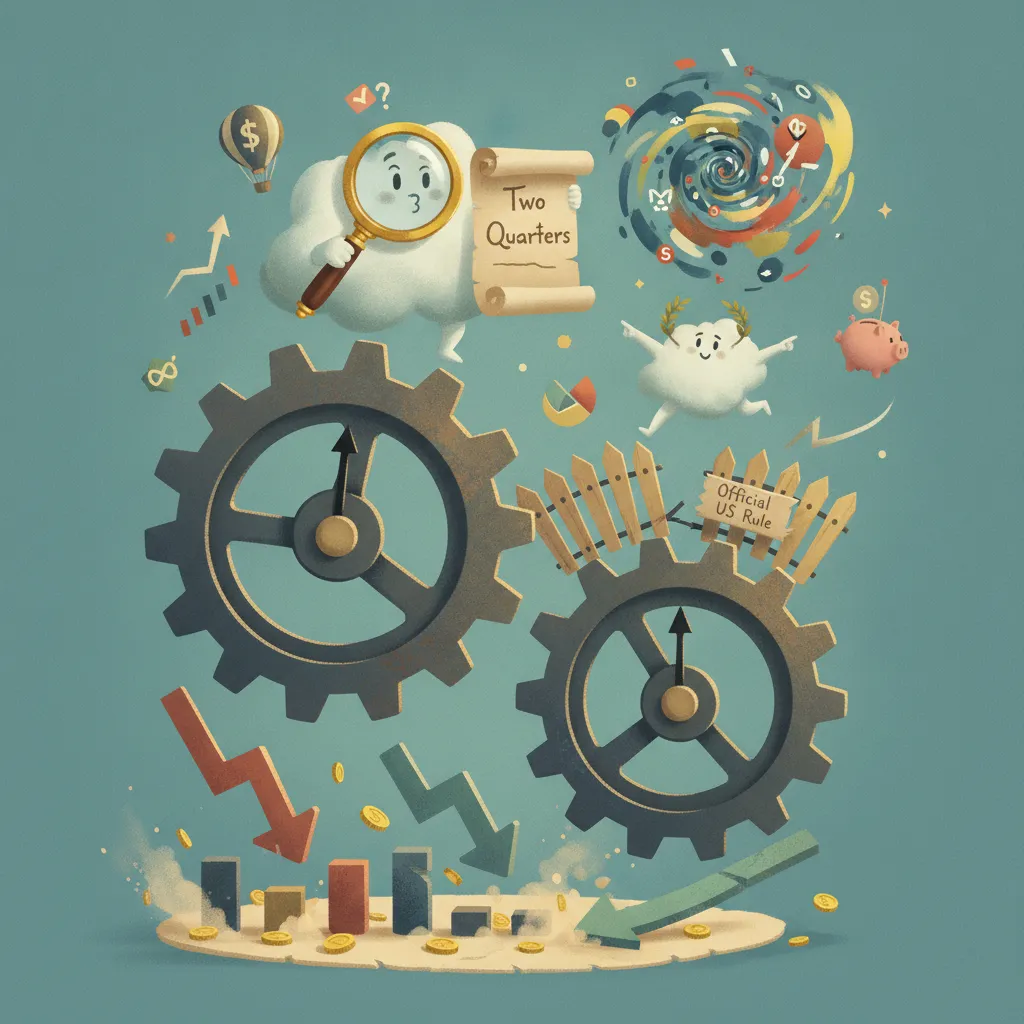
The commonly cited definition of a recession — two straight quarters of economic decline — isn't even the official rule the US actually uses to declare one.
Cheat Sheet
- A recession is a significant, widespread decline in economic activity typically lasting several months or longer, commonly (though not officially) defined as two consecutive quarters of shrinking GDP.
- In the US, recessions are formally declared by the National Bureau of Economic Research (NBER), which considers a broader range of indicators beyond just GDP, including employment and income data.
- Recessions typically involve rising unemployment, falling consumer spending, and declining business investment, feeding into each other in a self-reinforcing economic slowdown.
- Central banks and governments commonly respond to recessions using monetary policy (lowering interest rates) and fiscal policy (increased government spending or tax cuts) to try to stimulate economic activity.
- Recessions are a recurring feature of modern economic cycles rather than a rare aberration, with most economies experiencing them periodically even during long-term overall growth.
- The 2008 financial crisis and the 2020 COVID-19 recession are among the most significant recent examples, each triggered by very different underlying causes — a financial and housing crisis versus a global pandemic shutdown.
The 60-Second Version
A recession is a significant, widespread decline in economic activity typically lasting several months or longer, commonly, though not officially, defined as two consecutive quarters of shrinking GDP. In the US, recessions are formally declared by the National Bureau of Economic Research (NBER), which considers a broader range of indicators beyond just GDP, including employment and income data. Recessions typically involve rising unemployment, falling consumer spending, and declining business investment, feeding into each other in a self-reinforcing economic slowdown. Central banks and governments commonly respond to recessions using monetary policy, lowering interest rates, and fiscal policy, increased government spending or tax cuts, to try to stimulate economic activity. Recessions are a recurring feature of modern economic cycles rather than a rare aberration, with most economies experiencing them periodically even during long-term overall growth. The 2008 financial crisis and the 2020 COVID-19 recession are among the most significant recent examples, each triggered by very different underlying causes, a financial and housing crisis versus a global pandemic shutdown.
The Long Version
What Actually Counts as a Recession
While "two consecutive quarters of declining GDP" is the most commonly cited popular shorthand for a recession, it isn't actually the official standard used in the US. The National Bureau of Economic Research, the organization responsible for officially dating US recessions, instead considers a broader mix of indicators, including employment, industrial production, and personal income, sometimes declaring a recession even without two full quarters of strict GDP decline, if other indicators point clearly to a significant, broad economic downturn.
How a Slowdown Becomes Self-Reinforcing
Recessions tend to feed on themselves once underway: businesses facing falling demand cut costs, often through layoffs, which reduces household income and consumer spending further, which in turn reduces demand for businesses even more, creating a self-reinforcing downward spiral that can be difficult to reverse without deliberate intervention.
How Governments and Central Banks Respond
Policymakers typically respond to recessions through two main levers: monetary policy, where central banks lower interest rates to make borrowing cheaper and encourage spending and investment, and fiscal policy, where governments increase direct spending or cut taxes to stimulate demand directly. Both tools aim to break the self-reinforcing downward cycle and encourage renewed economic activity, though their effects generally take time to fully materialize.
Recessions Are Normal, Not Rare
Despite the significant disruption they cause, recessions are a normal, recurring part of the broader business cycle that most economies experience periodically, even ones enjoying strong long-term overall growth. The 2008 global financial crisis, triggered by a housing and banking crisis, and the sharp but comparatively short 2020 recession triggered by COVID-19 pandemic shutdowns, illustrate just how differently a recession's underlying causes, and resulting shape, can vary.
Ad slot (placeholder — set NEXT_PUBLIC_ADSENSE_SLOT_ID once an ad unit is created)
Glossary
- GDP (Gross Domestic Product)
- The total value of goods and services produced in an economy, a primary measure used to track recessions.
- NBER (National Bureau of Economic Research)
- The organization that officially declares US recessions based on a broad set of economic indicators.
- Monetary policy
- Central bank actions, like adjusting interest rates, used to influence the economy, including during recessions.
- Fiscal policy
- Government actions involving spending and taxation used to influence the economy, including during recessions.
- Business cycle
- The recurring pattern of economic expansion and contraction, including recessions, that economies experience over time.