GDP
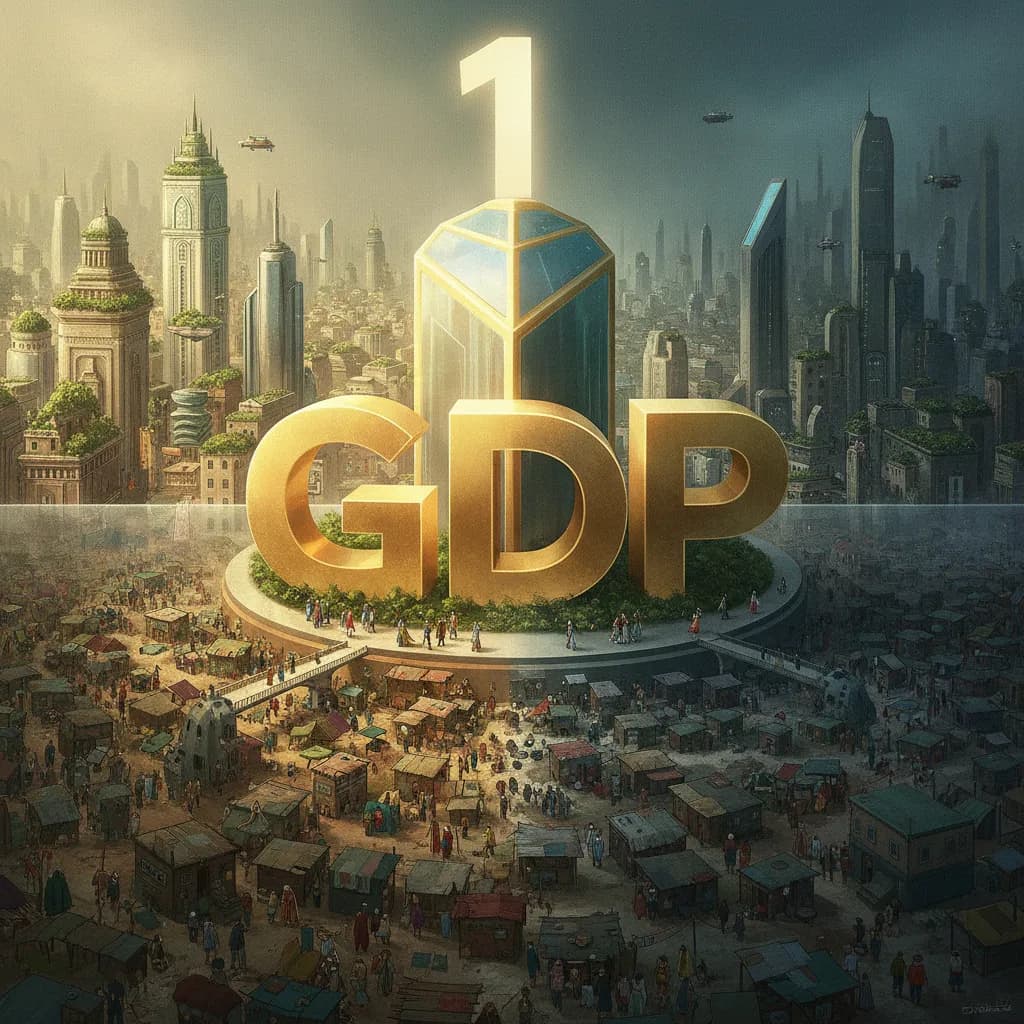
GDP is treated as the single defining number for a country's economic health, yet it says nothing directly about how evenly that wealth is actually shared.
Cheat Sheet
- Gross Domestic Product (GDP) measures the total monetary value of all goods and services produced within a country's borders over a specific period, typically a quarter or a year.
- GDP is widely used as the primary indicator of a country's overall economic size and health, though it does not directly measure quality of life, income inequality, or environmental sustainability.
- GDP can be calculated using several approaches, including adding up total spending, total income earned, or the total value produced across all sectors of the economy, which should theoretically all yield the same result.
- Real GDP adjusts for inflation to allow meaningful comparison of economic growth over time, while nominal GDP reflects current prices without that adjustment.
- GDP per capita, calculated by dividing total GDP by a country's population, is commonly used to compare average economic output per person across countries of different sizes.
- Two consecutive quarters of declining GDP is a commonly cited informal benchmark for identifying a recession, though official recession designations often consider additional economic factors as well.
The 60-Second Version
Gross Domestic Product (GDP) measures the total monetary value of all goods and services produced within a country's borders over a specific period, typically a quarter or a year. GDP is widely used as the primary indicator of a country's overall economic size and health, though it does not directly measure quality of life, income inequality, or environmental sustainability. GDP can be calculated using several approaches, including adding up total spending, total income earned, or the total value produced across all sectors of the economy, which should theoretically all yield the same result. Real GDP adjusts for inflation to allow meaningful comparison of economic growth over time, while nominal GDP reflects current prices without that adjustment. GDP per capita, calculated by dividing total GDP by a country's population, is commonly used to compare average economic output per person across countries of different sizes. Two consecutive quarters of declining GDP is a commonly cited informal benchmark for identifying a recession, though official recession designations often consider additional economic factors as well.
The Long Version
What GDP Actually Measures
Gross Domestic Product (GDP) measures the total monetary value of all goods and services produced within a country's borders over a specific period, typically reported quarterly or annually. It has become the most widely referenced single number for describing the size of a national economy, used constantly by governments, economists, and media outlets alike.
A Useful Number With Real Limits
GDP is widely used as the primary indicator of a country's overall economic size and health, though it does not directly measure quality of life, income inequality, or environmental sustainability, meaning a country can post strong GDP growth while a significant share of its population sees little of that growth's benefit, or while environmental costs go entirely uncounted in the headline figure.
Three Ways to Calculate the Same Number
GDP can be calculated using several different approaches, including adding up total spending across the economy, totaling all income earned, or summing the total value produced across every sector of the economy, and all three approaches should theoretically converge on the same result, since one person's spending is fundamentally another's income and reflects value actually produced somewhere in the economy.
Real vs. Nominal, and GDP Per Capita
Real GDP adjusts for inflation, allowing for a meaningful comparison of genuine economic growth over time, while nominal GDP simply reflects current prices without that adjustment, meaning nominal GDP can rise even when real economic output hasn't meaningfully grown, purely due to rising prices. Separately, GDP per capita, calculated by dividing total GDP by a country's population, is commonly used to compare average economic output per person across countries of very different total sizes and populations, offering a more useful basis for comparing living standards than raw total GDP alone. Relatedly, two consecutive quarters of declining GDP is a commonly cited informal benchmark for identifying a recession, though official recession designations, particularly in the United States, often weigh additional economic factors like employment and consumer spending as well.
Ad slot (placeholder — set NEXT_PUBLIC_ADSENSE_SLOT_ID once an ad unit is created)
Glossary
- Gross Domestic Product (GDP)
- The total monetary value of all goods and services produced within a country's borders over a specific period.
- Real GDP
- GDP that has been adjusted for inflation, allowing meaningful comparison of economic growth over time.
- Nominal GDP
- GDP measured using current prices, without adjusting for inflation.
- GDP per capita
- Total GDP divided by a country's population, used to compare average economic output per person across countries.
- Recession
- A significant decline in economic activity, commonly and informally identified by two consecutive quarters of declining GDP.