How an IPO Works
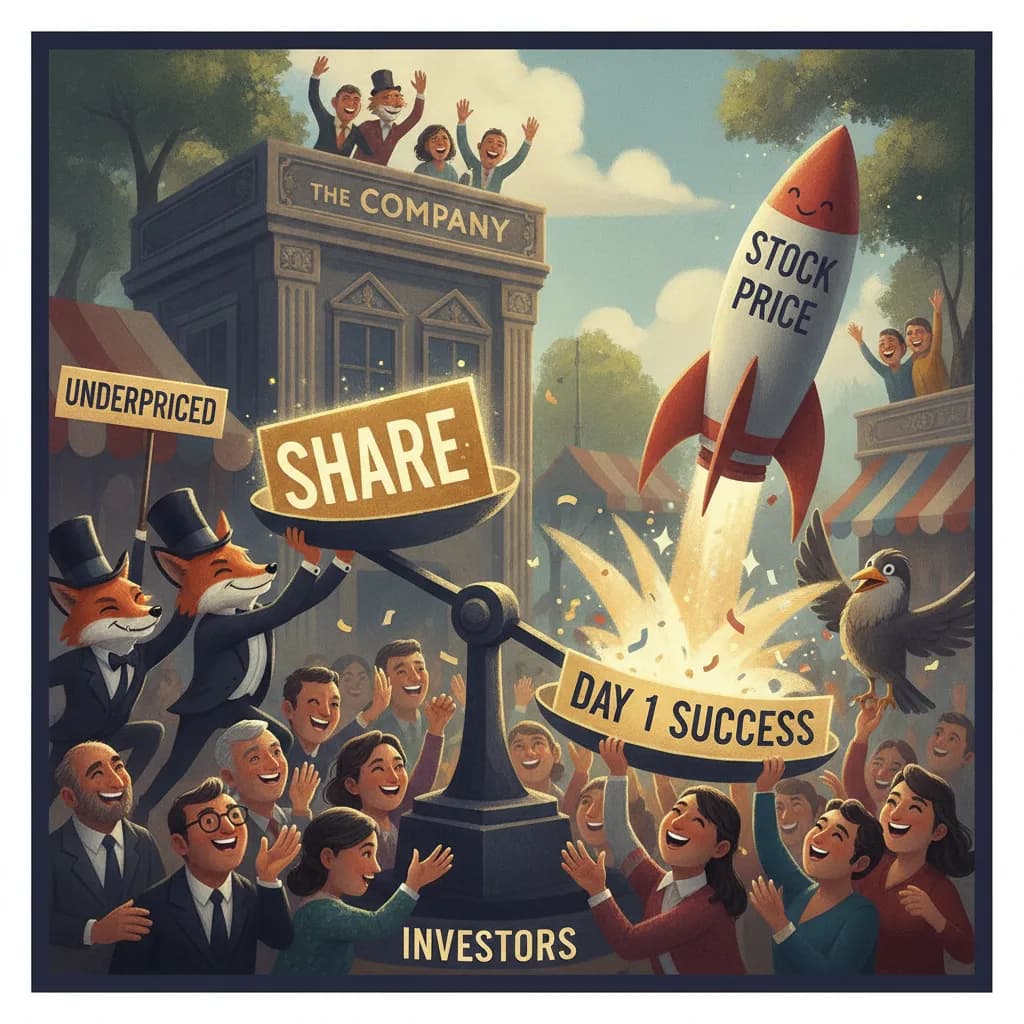
A process where a company's own bankers often deliberately underprice its shares — because a stock price jump on day one is treated as a sign of success.
Cheat Sheet
- An IPO (Initial Public Offering) is the process by which a private company sells shares to the public for the first time, becoming a publicly traded company.
- Companies typically pursue an IPO to raise substantial capital, provide an exit for early investors and employees, and gain the prestige and liquidity of public trading.
- Investment banks play a central role in an IPO, helping set the initial share price, market the offering to investors, and manage the actual sale process (a role called underwriting).
- The initial share price is often deliberately set somewhat conservatively, since a strong first-day price jump (a "pop") is seen as a sign of a well-managed, successful offering.
- Going public significantly increases a company's regulatory and disclosure obligations, requiring regular public financial reporting that private companies aren't required to provide.
- Not every company chooses a traditional IPO — alternatives like direct listings (skipping new share issuance) and SPAC mergers have become more common alternative routes to going public.
The 60-Second Version
An IPO, Initial Public Offering, is the process by which a private company sells shares to the public for the first time, becoming a publicly traded company. Companies typically pursue an IPO to raise substantial capital, provide an exit for early investors and employees, and gain the prestige and liquidity of public trading. Investment banks play a central role in an IPO, helping set the initial share price, market the offering to investors, and manage the actual sale process, a role called underwriting. The initial share price is often deliberately set somewhat conservatively, since a strong first-day price jump, a "pop," is seen as a sign of a well-managed, successful offering. Going public significantly increases a company's regulatory and disclosure obligations, requiring regular public financial reporting that private companies aren't required to provide. Not every company chooses a traditional IPO — alternatives like direct listings, skipping new share issuance, and SPAC mergers have become more common alternative routes to going public.
The Long Version
What Actually Happens When a Company "Goes Public"
Going public means a company sells shares of ownership directly to public investors for the first time, listing those shares on a stock exchange where they can then be freely bought and sold. This process converts what was previously private ownership, held by founders, employees, and private investors, into shares available to the general investing public, while raising substantial new capital for the company in the process.
The Investment Bank's Role: Underwriting
Investment banks serve as underwriters throughout the IPO process, helping the company determine an appropriate initial share price based on its financials and market conditions, formally marketing the offering to institutional investors through a series of presentations known as a roadshow, and ultimately managing the actual sale and allocation of shares on the day the company goes public.
Why a First-Day Price Pop Is Considered a Good Sign
IPO share prices are often set somewhat conservatively relative to what the market might actually be willing to pay, since a meaningful price increase on the first day of trading, commonly called a "pop," is widely interpreted as a signal of strong investor demand and a well-managed offering. This dynamic means some value is often deliberately left on the table for the initial investors who receive shares at the IPO price, rather than fully capturing the maximum possible price from day one.
Alternatives to the Traditional IPO
While the traditional underwritten IPO remains the most common path to going public, some companies have opted for alternative routes: a direct listing skips the process of issuing and selling new shares entirely, instead simply listing existing shares directly for public trading, while a SPAC merger involves merging with an already publicly traded shell company specifically created to take a private company public through an acquisition rather than a traditional IPO process.
Ad slot (placeholder — set NEXT_PUBLIC_ADSENSE_SLOT_ID once an ad unit is created)
Glossary
- IPO (Initial Public Offering)
- The process of a private company selling shares to the public for the first time.
- Underwriter
- An investment bank that manages the IPO process, including setting price and marketing shares to investors.
- Direct listing
- An alternative to a traditional IPO where existing shares are listed directly on an exchange without issuing new shares.
- SPAC (Special Purpose Acquisition Company)
- A publicly traded shell company that merges with a private company to take it public, an alternative route to a traditional IPO.
- Lock-up period
- A set time after an IPO during which company insiders are restricted from selling their shares.