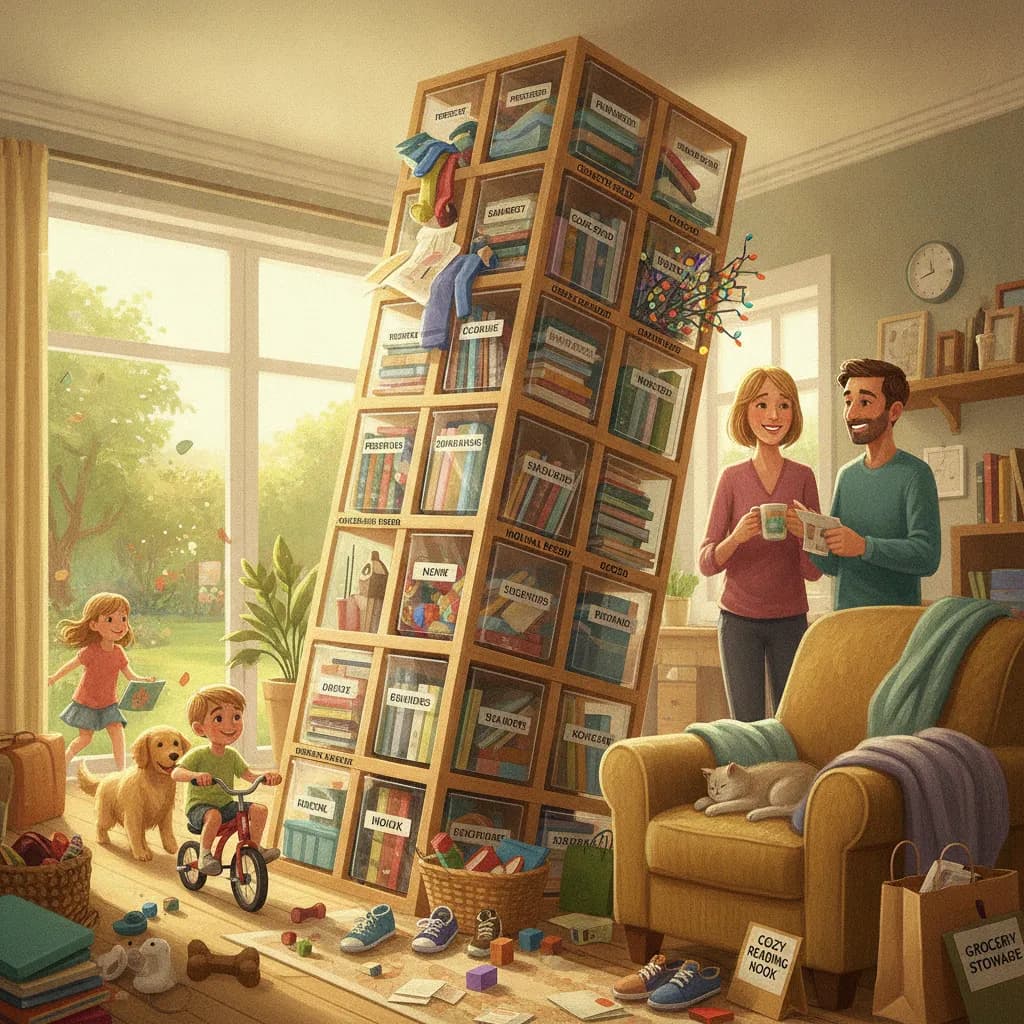
Organizing Systems
Most organizing systems don't fail because they were poorly designed on paper — they fail because they were designed for an idealized household that doesn't actually match how real people behave day to day.
Cheat Sheet
- An organizing system is a consistent, repeatable method for how possessions are sorted, stored, and maintained over time, distinct from a single one-time decluttering or cleanup effort.
- Effective organizing systems generally establish a specific, consistent "home" for every category of item, making it clear where something belongs and reducing the likelihood of clutter re-accumulating.
- The "one in, one out" principle, removing an existing item whenever a new similar one is acquired, is a widely recommended practical rule for preventing gradual possession accumulation over time.
- Maintenance routines, such as brief regular tidying sessions rather than infrequent large overhauls, are generally considered more sustainable for keeping an organizing system genuinely functional long-term.
- A common reason organizing systems eventually break down is that they were designed around an idealized version of a household's habits rather than realistically accounting for how people actually behave day to day.
- Digital organizing systems, including file naming conventions and folder structures, follow similar underlying principles to physical organizing systems, emphasizing consistency and a clear, predictable location for every category of item.
The 60-Second Version
An organizing system is a consistent, repeatable method for how possessions are sorted, stored, and maintained over time, distinct from a single one-time decluttering or cleanup effort. Effective organizing systems generally establish a specific, consistent "home" for every category of item, making it clear where something belongs and reducing the likelihood of clutter re-accumulating. The "one in, one out" principle, removing an existing item whenever a new similar one is acquired, is a widely recommended practical rule for preventing gradual possession accumulation over time. Maintenance routines, such as brief regular tidying sessions rather than infrequent large overhauls, are generally considered more sustainable for keeping an organizing system genuinely functional long-term. A common reason organizing systems eventually break down is that they were designed around an idealized version of a household's habits rather than realistically accounting for how people actually behave day to day. Digital organizing systems, including file naming conventions and folder structures, follow similar underlying principles to physical organizing systems, emphasizing consistency and a clear, predictable location for every category of item.
The Long Version
Every Item Needs a Consistent Home
Effective organizing systems generally establish a specific, consistent "home," or designated storage location, for every category of item in a household, making it immediately clear where something belongs when it's not in active use, a foundational principle that significantly reduces the likelihood of clutter re-accumulating compared to a more ad hoc approach without designated locations.
Preventing Accumulation Before It Starts
The "one in, one out" principle, removing an existing item whenever a new similar item is acquired, such as donating an old piece of clothing when a new one is purchased, is a widely recommended practical rule for preventing gradual possession accumulation over time, addressing clutter at its actual source rather than only through periodic decluttering sessions after it's already built up.
Small Regular Maintenance Over Big Overhauls
Maintenance routines, such as brief, regular tidying sessions built into a normal weekly rhythm, are generally considered considerably more sustainable for keeping an organizing system genuinely functional long-term than relying on infrequent, larger overhaul sessions, since small consistent upkeep prevents the kind of significant clutter buildup that eventually requires a much more time-consuming and effortful full reset.
Why Systems Break Down, and How Digital Organization Mirrors Physical Organization
A common and important reason organizing systems eventually break down is that they were designed around an idealized version of a household's habits and available time, rather than realistically accounting for how people actually behave day to day, meaning a genuinely sustainable system generally needs to be honest about actual routines rather than aspirational ones. These same underlying organizing principles, consistency and a clear, predictable location for every category, apply directly to digital organization as well, including file naming conventions and folder structures that make locating a specific digital file just as straightforward as locating a specific physical item.
Ad slot (placeholder — set NEXT_PUBLIC_ADSENSE_SLOT_ID once an ad unit is created)
Glossary
- Designated home (for an item)
- A specific, consistent storage location assigned to a category of item, a core principle of effective organizing systems.
- One in, one out
- A practical organizing rule removing an existing item whenever a new similar item is acquired, helping prevent gradual accumulation.
- Maintenance routine
- Brief, regular tidying sessions intended to sustain an organizing system over time, as opposed to infrequent large overhauls.
- System breakdown (organizing)
- The common failure of an organizing system designed around idealized habits rather than a household's actual day-to-day behavior.
- Digital organization
- File naming conventions and folder structures applying similar organizing principles to digital rather than physical possessions.