The French Revolution
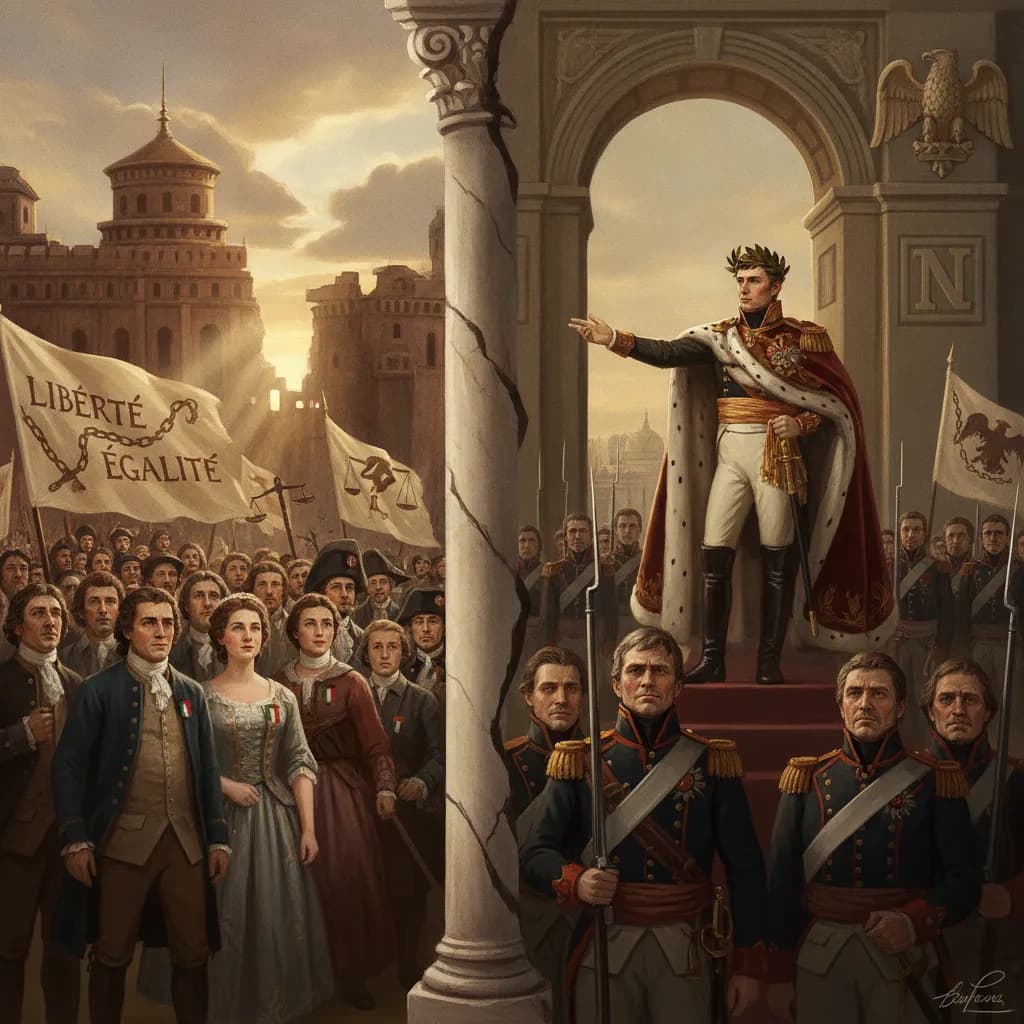
A revolution that began by demanding liberty and equality, and ended less than a decade later with a self-crowned emperor.
Cheat Sheet
- The French Revolution (1789-1799) overthrew France's centuries-old monarchy, driven by widespread financial crisis, food shortages, and deep resentment of rigid social class privilege.
- The storming of the Bastille prison on July 14, 1789 became the revolution's iconic opening symbol, still commemorated today as France's national holiday.
- The revolution's rallying cry, "Liberty, Equality, Fraternity," articulated Enlightenment-inspired ideals that would go on to influence democratic movements well beyond France itself.
- King Louis XVI and Queen Marie Antoinette were both eventually tried and executed by guillotine, a stark symbol of the revolution's radical break from monarchy.
- The Reign of Terror (1793-1794), led primarily by Maximilien Robespierre, saw tens of thousands executed as revolutionary leaders turned on perceived enemies, including former allies.
- The revolution ultimately gave way to Napoleon Bonaparte's rise to power, who would go on to crown himself emperor, illustrating how the revolution's outcome diverged sharply from its original democratic ideals.
The 60-Second Version
The French Revolution, spanning 1789 to 1799, overthrew France's centuries-old monarchy, driven by widespread financial crisis, food shortages, and deep resentment of rigid social class privilege. The storming of the Bastille prison on July 14, 1789 became the revolution's iconic opening symbol, still commemorated today as France's national holiday. The revolution's rallying cry, "Liberty, Equality, Fraternity," articulated Enlightenment-inspired ideals that would go on to influence democratic movements well beyond France itself. King Louis XVI and Queen Marie Antoinette were both eventually tried and executed by guillotine, a stark symbol of the revolution's radical break from monarchy. The Reign of Terror, from 1793 to 1794, led primarily by Maximilien Robespierre, saw tens of thousands executed as revolutionary leaders turned on perceived enemies, including former allies. The revolution ultimately gave way to Napoleon Bonaparte's rise to power, who would go on to crown himself emperor, illustrating how the revolution's outcome diverged sharply from its original democratic ideals.
The Long Version
The Conditions That Sparked Revolution
By the late 1780s, France faced a severe financial crisis, worsened by costly wars and lavish royal spending, combined with widespread food shortages and a rigid social class system that placed the heaviest tax burden on commoners while nobility and clergy retained substantial privileges. This combination of economic hardship and deep social resentment created the volatile conditions that ultimately triggered revolution.
The Bastille and the Revolution's Opening Act
Tensions escalated sharply when King Louis XVI convened the Estates-General, France's traditional assembly of the three social estates, for the first time in over a century, giving commoners a formal platform to challenge the existing order. On July 14, 1789, Parisian revolutionaries stormed the Bastille, a prison symbolizing royal authority, an event that quickly became the revolution's most iconic opening symbol and is still commemorated today as France's national holiday.
From Monarchy to the Reign of Terror
The revolution progressed rapidly from initial reforms toward increasingly radical measures, ultimately abolishing the monarchy entirely and executing King Louis XVI and Queen Marie Antoinette by guillotine. The subsequent Reign of Terror, led primarily by Maximilien Robespierre from 1793 to 1794, saw tens of thousands executed as revolutionary leaders aggressively targeted perceived enemies of the revolution, including former revolutionary allies who fell out of favor.
Napoleon and the Revolution's Complicated Legacy
The instability following the Reign of Terror eventually created an opening for Napoleon Bonaparte, a military general who rose rapidly through the revolutionary chaos before ultimately seizing power and crowning himself emperor, a striking irony given the revolution's original anti-monarchical, democratic ideals. Despite this outcome, the French Revolution's core principles of liberty, equality, and popular sovereignty went on to profoundly influence democratic and revolutionary movements across the world.
Ad slot (placeholder — set NEXT_PUBLIC_ADSENSE_SLOT_ID once an ad unit is created)
Glossary
- Bastille
- A Paris prison and symbol of royal authority whose storming on July 14, 1789 marked the revolution's iconic beginning.
- Reign of Terror
- A 1793-1794 period of mass executions carried out by revolutionary leaders against perceived enemies of the revolution.
- Estates-General
- France's traditional assembly of the three social estates, whose convening in 1789 helped trigger the revolution.
- Guillotine
- The execution device that became a defining symbol of the French Revolution's violence.
- Napoleon Bonaparte
- The military leader who rose to power in the revolution's aftermath and eventually crowned himself emperor of France.
Go Deeper
- Encyclopaedia Britannica — French Revolution
- The National WWI Museum — not applicable