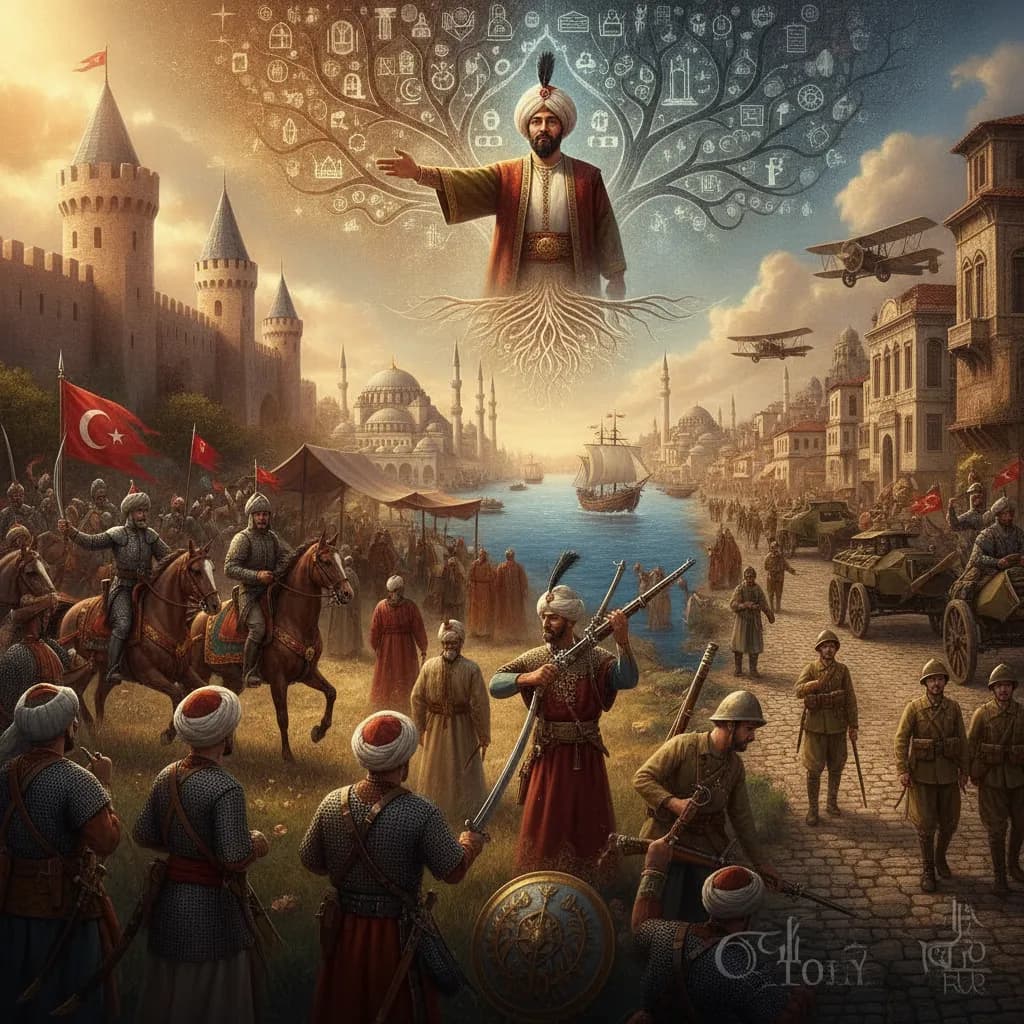
The Ottoman Empire
An empire that lasted over 600 years — long enough to span from the age of medieval knights all the way to the aftermath of World War I.
Cheat Sheet
- The Ottoman Empire lasted over 600 years, from the late 13th century until 1922, making it one of history's longest-running and most influential empires.
- At its peak, the Ottoman Empire controlled territory spanning three continents, including Southeast Europe, the Middle East, and North Africa.
- The 1453 Ottoman conquest of Constantinople, capital of the Byzantine Empire, marked a pivotal turning point, giving the Ottomans control of a strategically vital crossroads between Europe and Asia.
- The empire was notable for its relatively pragmatic religious tolerance policy toward non-Muslim subjects, who were generally permitted to practice their own religions in exchange for a specific tax.
- Ottoman military and administrative innovation, including an elite corps of soldiers called the Janissaries, contributed significantly to the empire's long-running power and stability.
- The empire gradually declined over the 19th and early 20th centuries, ultimately dissolving after World War I, with modern Turkey emerging from its former core territory in 1923.
The 60-Second Version
The Ottoman Empire lasted over 600 years, from the late 13th century until 1922, making it one of history's longest-running and most influential empires. At its peak, the Ottoman Empire controlled territory spanning three continents, including Southeast Europe, the Middle East, and North Africa. The 1453 Ottoman conquest of Constantinople, capital of the Byzantine Empire, marked a pivotal turning point, giving the Ottomans control of a strategically vital crossroads between Europe and Asia. The empire was notable for its relatively pragmatic religious tolerance policy toward non-Muslim subjects, who were generally permitted to practice their own religions in exchange for a specific tax. Ottoman military and administrative innovation, including an elite corps of soldiers called the Janissaries, contributed significantly to the empire's long-running power and stability. The empire gradually declined over the 19th and early 20th centuries, ultimately dissolving after World War I, with modern Turkey emerging from its former core territory in 1923.
The Long Version
Six Centuries of Imperial Rule
Founded in the late 13th century, the Ottoman Empire grew from a small regional state into one of history's longest-lasting and most powerful empires, surviving for over 600 years until its formal dissolution in 1922, a span of time covering an enormous range of shifting global political, military, and technological change.
Capturing Constantinople
The 1453 Ottoman conquest of Constantinople, the storied capital of the Byzantine Empire, stands as one of the empire's most pivotal moments, giving the Ottomans control over a uniquely strategic crossroads connecting Europe and Asia and cementing their status as a dominant regional and eventually global power.
Governing a Religiously Diverse Empire
Spanning territory and populations across three continents, the Ottoman Empire developed a relatively pragmatic approach to governing its religiously diverse subjects, generally permitting non-Muslim communities to practice their own religions and manage many of their own internal affairs in exchange for a specific tax, an approach that contributed meaningfully to the empire's long-term stability across such a diverse territory.
Decline and the Birth of Modern Turkey
Beginning in the 19th century, the Ottoman Empire experienced a prolonged period of military, economic, and political decline relative to rising European powers, a decline that accelerated sharply after its defeat in World War I. The empire was formally dissolved in 1922, with the modern Republic of Turkey emerging directly from its former core territory in 1923 under new, distinctly non-imperial leadership.
Ad slot (placeholder — set NEXT_PUBLIC_ADSENSE_SLOT_ID once an ad unit is created)
Glossary
- Constantinople
- The former Byzantine capital conquered by the Ottomans in 1453, later renamed Istanbul.
- Sultan
- The title held by the Ottoman Empire's supreme ruler.
- Janissaries
- An elite Ottoman military corps that played a significant role in the empire's military success.
- Millet system
- The Ottoman administrative approach allowing religious communities significant autonomy over their own internal affairs.
- Republic of Turkey
- The modern nation that emerged from the Ottoman Empire's core territory following its dissolution in 1922-1923.