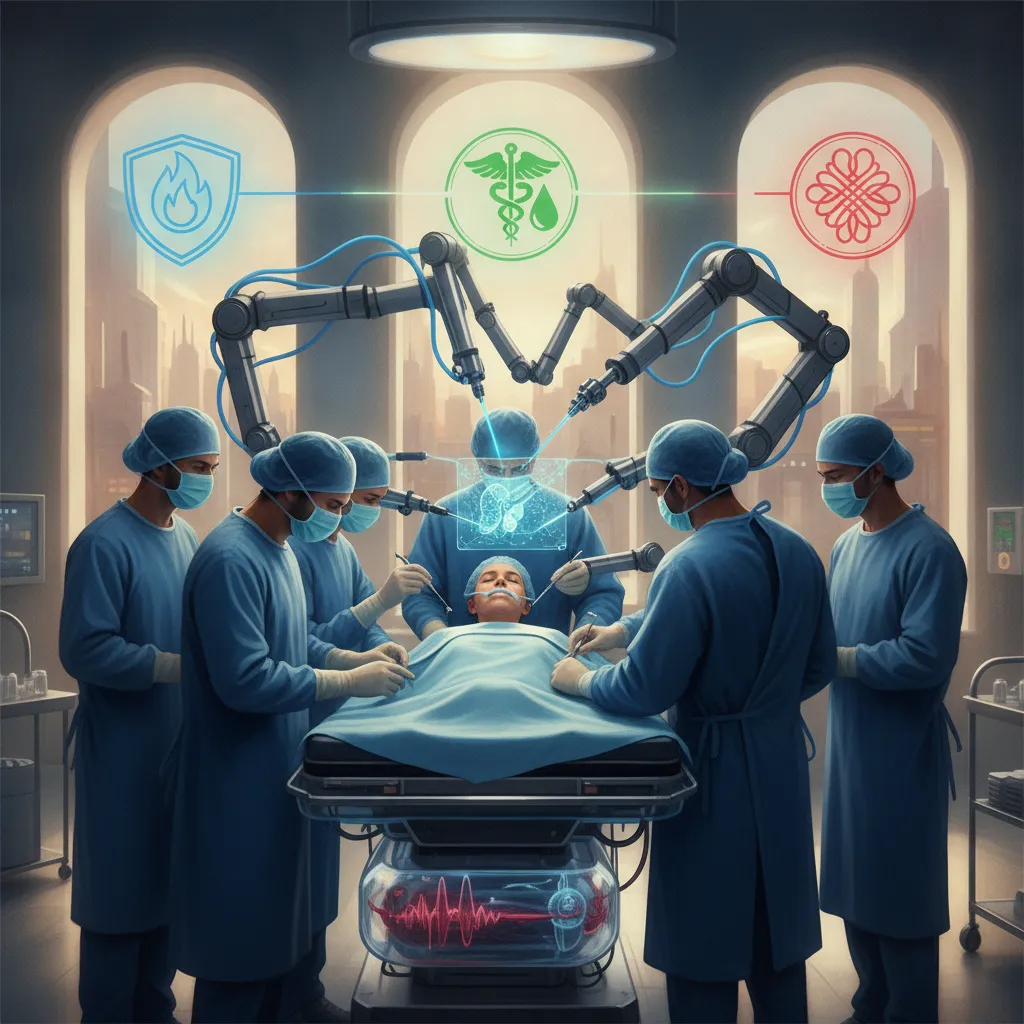
Modern Surgery
Before three specific breakthroughs, surgery meant being fully conscious, at serious risk of deadly infection, and hoping you didn't bleed out on the table.
Cheat Sheet
- Modern surgery has been transformed by three major historical breakthroughs — anesthesia, antiseptic technique, and blood transfusion — each of which dramatically reduced pain, infection, and death from surgical procedures.
- Minimally invasive techniques, including laparoscopic surgery performed through small incisions using cameras and specialized instruments, have significantly reduced recovery time compared to traditional open surgery for many procedures.
- Robotic-assisted surgery allows surgeons to control precise robotic instruments from a console, offering enhanced precision and range of motion for certain complex procedures.
- Organ transplantation, first successfully performed in the mid-20th century, remains one of modern surgery's most complex achievements, requiring careful matching and ongoing immune suppression to prevent organ rejection.
- Surgical safety protocols, including standardized surgical checklists, have been shown in research to measurably reduce complications and errors during procedures.
- Despite dramatic technological advances, surgery still carries inherent risks, and the decision to operate always involves weighing those risks against a procedure's expected benefit for a specific patient.
The 60-Second Version
Modern surgery has been transformed by three major historical breakthroughs, anesthesia, antiseptic technique, and blood transfusion, each of which dramatically reduced pain, infection, and death from surgical procedures. Minimally invasive techniques, including laparoscopic surgery performed through small incisions using cameras and specialized instruments, have significantly reduced recovery time compared to traditional open surgery for many procedures. Robotic-assisted surgery allows surgeons to control precise robotic instruments from a console, offering enhanced precision and range of motion for certain complex procedures. Organ transplantation, first successfully performed in the mid-20th century, remains one of modern surgery's most complex achievements, requiring careful matching and ongoing immune suppression to prevent organ rejection. Surgical safety protocols, including standardized surgical checklists, have been shown in research to measurably reduce complications and errors during procedures. Despite dramatic technological advances, surgery still carries inherent risks, and the decision to operate always involves weighing those risks against a procedure's expected benefit for a specific patient.
The Long Version
Three Breakthroughs That Made Modern Surgery Possible
Before the 19th century, surgery was an agonizing, often deadly last resort, transformed by three foundational breakthroughs: anesthesia, which eliminated the need for patients to remain fully conscious and in severe pain during procedures; antiseptic technique, which dramatically reduced deadly post-surgical infections by controlling harmful microorganisms in the surgical environment; and reliable blood transfusion, which addressed the previously fatal risk of severe blood loss during major operations.
Smaller Incisions, Faster Recovery
Minimally invasive surgical techniques, most notably laparoscopic surgery performed through small incisions using a camera and specialized long instruments, have significantly reduced patient recovery time, scarring, and complication risk compared to traditional open surgery for a wide and growing range of procedures, representing one of the most significant shifts in surgical practice over recent decades.
Robotic Precision and the Ongoing Complexity of Transplantation
Robotic-assisted surgery extends minimally invasive techniques further, allowing a surgeon to control highly precise robotic instruments from a console, offering enhanced dexterity and visualization for certain complex procedures. Separately, organ transplantation, first successfully achieved in the mid-20th century, remains among modern surgery's most complex ongoing achievements, requiring careful donor-recipient matching and continued immune-suppressing medication to prevent the recipient's body from rejecting the new organ.
Safety Protocols and the Persistent Reality of Risk
Standardized safety protocols, including formal surgical checklists confirming critical steps before, during, and after a procedure, have been shown in research to measurably reduce surgical complications and errors. Even with all of modern surgery's technological advances, every procedure still carries some inherent risk, meaning the decision to operate always involves a careful weighing of expected benefit against those risks for each individual patient's specific situation.
Ad slot (placeholder — set NEXT_PUBLIC_ADSENSE_SLOT_ID once an ad unit is created)
Glossary
- Anesthesia
- Medication used to eliminate pain and, often, consciousness during surgical procedures.
- Antiseptic technique
- Surgical practices aimed at preventing infection by eliminating harmful microorganisms from the surgical environment.
- Laparoscopic surgery
- Minimally invasive surgery performed through small incisions using a camera and specialized instruments.
- Robotic-assisted surgery
- A surgical approach where a surgeon controls precise robotic instruments from a console for certain complex procedures.
- Organ transplantation
- The surgical replacement of a diseased or damaged organ with a healthy one from a donor.