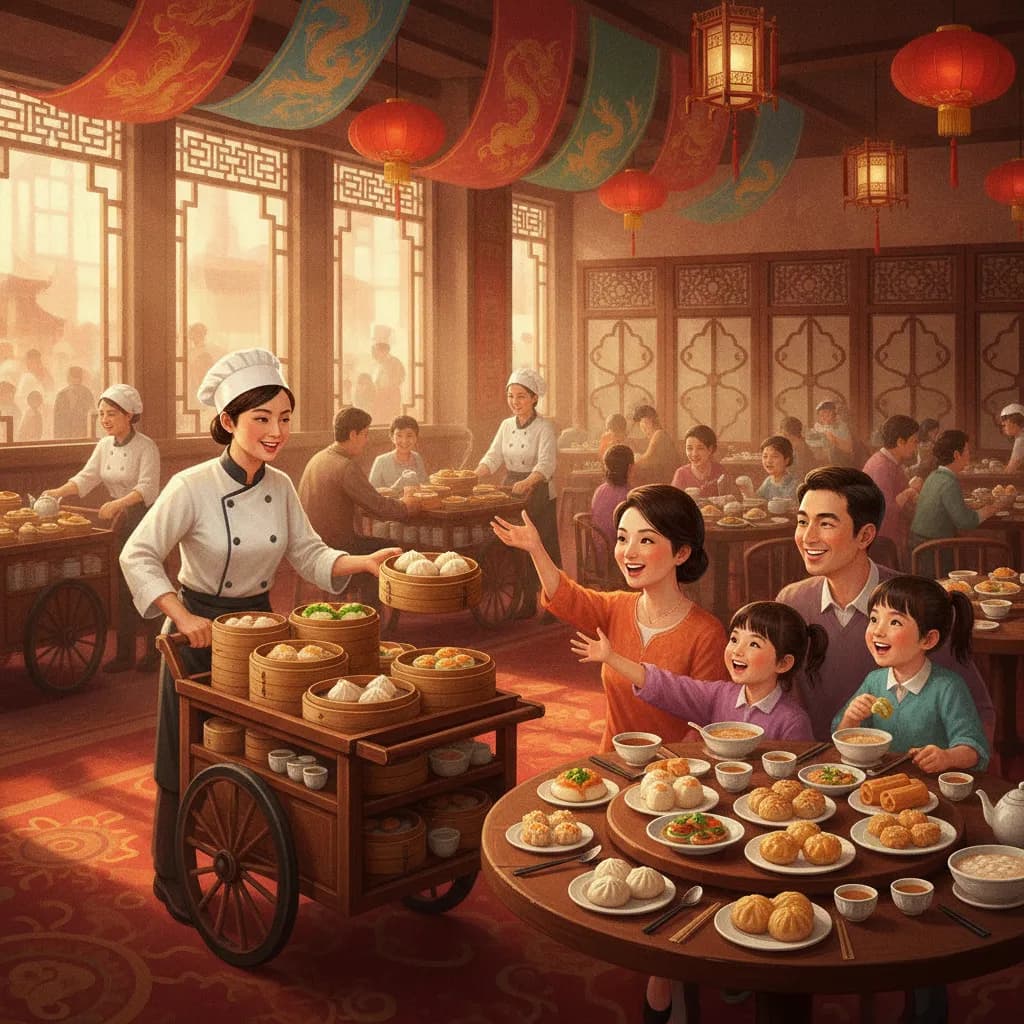
Dim Sum
A meal named after touching your heart, traditionally eaten from a cart rolling right past your table.
Cheat Sheet
- Dim sum is a Cantonese tradition of small, shareable dishes, traditionally served with tea — the two are historically inseparable.
- "Yum cha," meaning "drink tea," is often used interchangeably with dim sum itself, reflecting how central tea is to the tradition.
- Dishes are traditionally served from rolling carts that circulate through the restaurant, though many modern restaurants now use order sheets instead.
- Har gow (shrimp dumplings with a translucent wrapper) and siu mai (open-topped pork dumplings) are considered the two benchmark dishes for judging a restaurant's quality.
- Bamboo steamer baskets are the traditional cooking and serving vessel for most dumpling-based dishes.
- The name "dim sum" roughly translates to "touch the heart," reflecting the dishes' role as small, delicate treats rather than a full formal meal.
The 60-Second Version
Dim sum is a Cantonese tradition of small, shareable dishes — mostly dumplings, buns, and other bite-sized items — traditionally served together with tea as part of a broader ritual called "yum cha," literally "drink tea," a term often used interchangeably with dim sum itself. Classically, dishes circulate through the restaurant on rolling carts that servers push between tables, letting diners simply point at whatever looks good as it passes, though many modern restaurants have shifted to order sheets instead. Har gow (shrimp dumplings with a thin, translucent wrapper) and siu mai (open-topped pork and shrimp dumplings) are considered the benchmark dishes serious diners use to judge a restaurant's overall quality. The name "dim sum" roughly translates to "touch the heart," reflecting the dishes' role as small, delicate treats meant to be lingered over with tea and conversation rather than a single formal sit-down meal.
The Long Version
Tea and Small Plates
Tea isn't a side accompaniment to dim sum — it's arguably the actual center of the tradition, with the small dishes built around it rather than the other way around. "Yum cha" literally means "drink tea," and in Cantonese culture the phrase is often used to describe the entire outing, tea included, rather than referring narrowly to the beverage itself. Choosing a tea (varieties like jasmine, oolong, and pu-erh are common) is often the very first decision made when a group sits down, before any food is even ordered.
Dishes Worth Knowing
Har gow, delicate shrimp dumplings wrapped in a thin, translucent wheat-starch skin, requires real technical skill to fold and steam correctly, which is why it's often treated as a benchmark for judging a kitchen's overall competence. Siu mai, open-topped dumplings typically filled with a mix of pork and shrimp, are almost as universally ordered. Cheung fun — soft steamed rice noodle rolls, often wrapped around shrimp or beef and finished with a savory soy-based sauce — and char siu bao, fluffy steamed buns filled with barbecued pork, round out the dishes most consistently found on any real dim sum table.
The Cart (and Its Decline)
The image most associated with dim sum internationally is the rolling cart, stacked with bamboo steamer baskets and small plates, pushed by servers who circulate continuously through the dining room so guests can simply point at whatever catches their eye as it passes. That system has genuinely declined in many restaurants in recent years, particularly outside China and Hong Kong, replaced by paper order sheets and kitchen-to-table service, largely for efficiency and food-freshness reasons — a shift that longtime diners often describe with real nostalgia.
Origins in the Teahouse
Dim sum's roots trace to teahouses along ancient trade routes in southern China, particularly around Guangzhou (historically known as Canton), where travelers and merchants would stop to rest and drink tea, with small snacks gradually becoming a fixture of that teahouse culture over centuries. Hong Kong played an especially significant role in popularizing and refining dim sum into the more elaborate, restaurant-based tradition recognized worldwide today, and the city remains closely associated with the cuisine internationally even though its true origins lie further inland in Guangzhou.
Ad slot (placeholder — set NEXT_PUBLIC_ADSENSE_SLOT_ID once an ad unit is created)
Glossary
- Yum cha
- Literally "drink tea" — the broader social ritual of tea and small dishes that dim sum is traditionally part of.
- Har gow
- Shrimp dumplings with a thin, translucent wheat-starch wrapper, a benchmark dish for quality.
- Siu mai
- Open-topped steamed dumplings typically filled with pork and shrimp.
- Cheung fun
- Steamed rice noodle rolls, often filled with shrimp or beef and served with soy sauce.
- Bamboo steamer
- A stacked woven-bamboo basket used to steam dumplings, a traditional serving vessel as much as a cooking tool.