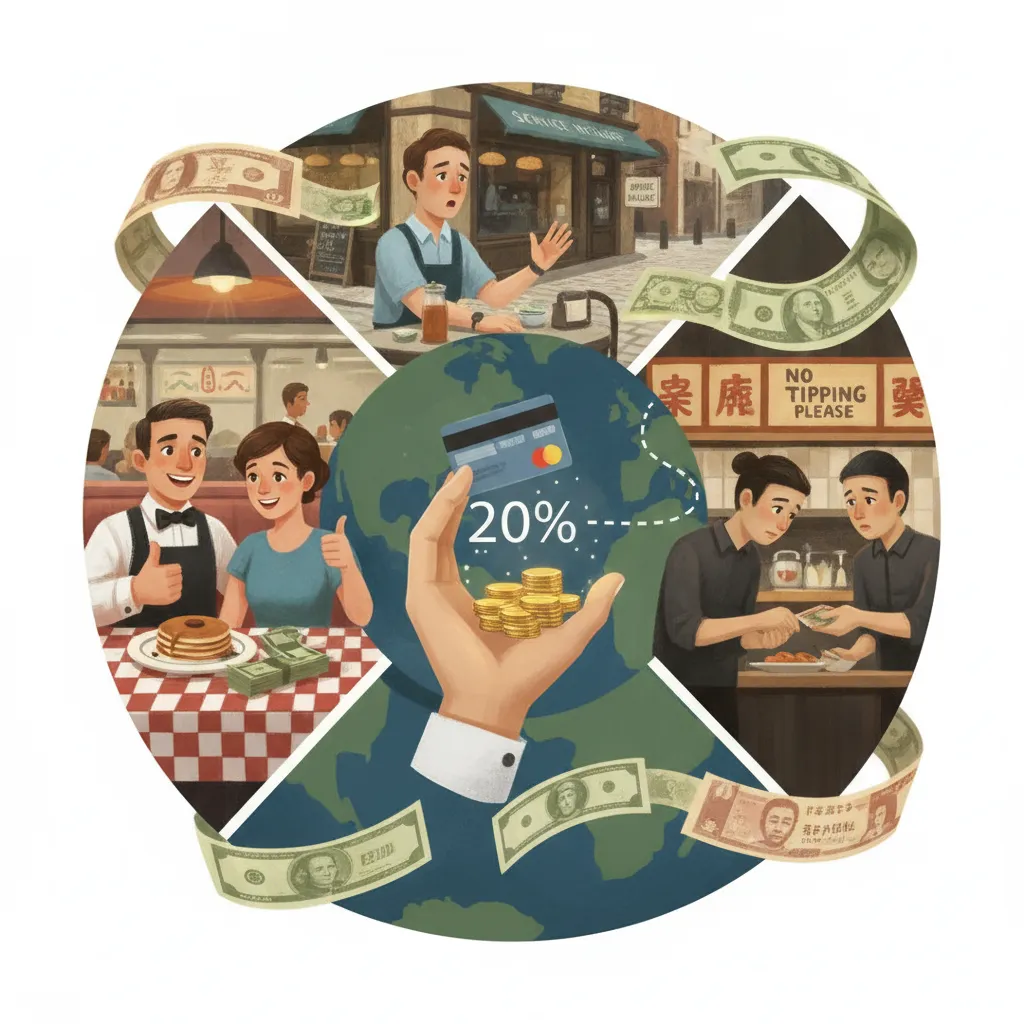
Tipping Around the World
A single American habit — tipping 20% at dinner — that can range from expected to genuinely confusing depending entirely on which country you're in.
Cheat Sheet
- Tipping norms vary dramatically by country — the US has an unusually strong tipping culture, with 15-20% at restaurants widely expected, while many countries consider tipping unnecessary or even mildly awkward.
- In much of Europe, service is often already included in the bill (sometimes noted as "service compris" or a service charge), making an additional large tip less expected than in the US.
- In Japan, tipping is generally not customary at all, and can sometimes be perceived as confusing or even slightly insulting, since excellent service is considered a standard baseline rather than something to be separately rewarded.
- The strength of American tipping culture is closely tied to US labor law, where tipped workers can legally be paid a lower base wage than the standard minimum wage, with tips expected to make up the difference.
- In many Middle Eastern and Latin American countries, a modest tip (often 10% or less) is appreciated but far less rigidly expected than the US norm.
- Regardless of local custom, rounding up a bill or leaving small change is rarely considered offensive anywhere, making it a reasonably safe default when norms are unclear.
The 60-Second Version
Tipping norms vary dramatically by country — the US has an unusually strong tipping culture, with 15-20% at restaurants widely expected, while many countries consider tipping unnecessary or even mildly awkward. In much of Europe, service is often already included in the bill, sometimes noted as "service compris" or as a separate service charge, making an additional large tip less expected than in the US. In Japan, tipping is generally not customary at all, and can sometimes be perceived as confusing or even slightly insulting, since excellent service is considered a standard baseline rather than something to be separately rewarded. The strength of American tipping culture is closely tied to US labor law, where tipped workers can legally be paid a lower base wage than the standard minimum wage, with tips expected to make up the difference. In many Middle Eastern and Latin American countries, a modest tip, often 10% or less, is appreciated but far less rigidly expected than the US norm. Regardless of local custom, rounding up a bill or leaving small change is rarely considered offensive anywhere, making it a reasonably safe default when norms are unclear.
The Long Version
Why American Tipping Culture Is Unusually Strong
The US stands out globally for how central and expected tipping is, particularly in restaurants, where 15-20% of the bill is widely treated as a baseline rather than a bonus for exceptional service. This is closely tied to US labor law, which in many states allows employers to legally pay tipped workers a base wage well below the standard minimum wage, on the assumption that tips will reliably make up the difference, effectively shifting a portion of workers' guaranteed income onto customer discretion.
Where Service Is Already Included
Across much of continental Europe, restaurant bills frequently already include a service charge, sometimes explicitly labeled "service compris" in France or shown as a separate line item elsewhere, meaning waitstaff aren't relying on discretionary tips the way American servers typically are. In these contexts, leaving a small additional amount, rounding up or adding a few extra euros, is appreciated as a nice gesture but isn't treated as a required or expected obligation.
Countries Where Tipping Isn't Expected at All
In Japan, tipping is generally not part of the culture at all, and can occasionally create genuine confusion or mild discomfort for service staff, since excellent, attentive service is considered the standard baseline of any transaction rather than something meriting a separate cash reward. Similar norms, where tipping is uncommon or even actively discouraged, exist in parts of South Korea and other East Asian countries.
A Safe Default When You're Not Sure
In many Middle Eastern and Latin American countries, a modest tip, often around 10% or less, is genuinely appreciated but far less rigidly expected or scrutinized than the American norm. Given how much tipping expectations vary, a reasonable default when traveling somewhere unfamiliar is simply rounding up the bill or leaving small change, a gesture that's rarely considered offensive or inappropriate anywhere, even in cultures where formal tipping isn't customary.
Ad slot (placeholder — set NEXT_PUBLIC_ADSENSE_SLOT_ID once an ad unit is created)
Glossary
- Service charge
- A fee, often 10-15%, automatically added to a bill in many countries, sometimes in place of an additional tip.
- Tipped minimum wage
- A lower base wage some jurisdictions, including much of the US, legally allow employers to pay tipped workers.
- Service compris
- A French phrase indicating that service is already included in a listed price.
- Gratuity
- A formal term for a tip, a voluntary payment given in appreciation of service.
- Omakase
- A Japanese dining style where the chef selects the meal for the guest, a context where tipping remains uncommon despite high perceived service quality.