Fine Dining Etiquette
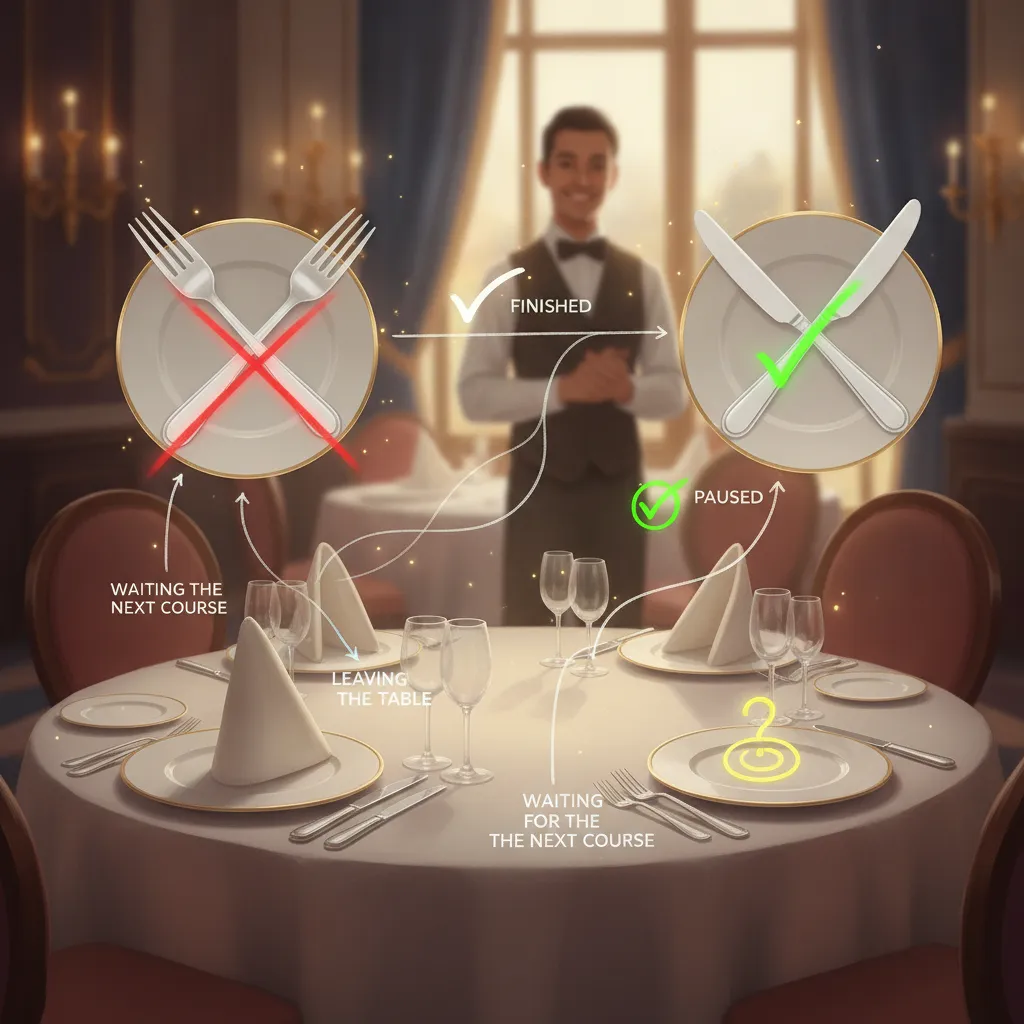
A silent language of forks, napkins, and plate positions that lets you signal an entire meal's status without saying a word to your server.
Cheat Sheet
- At a formal table setting, utensils are used from the outside in, with each course's specific fork or spoon positioned in the order it will be needed.
- Placing your napkin on your chair (not the table) signals you're temporarily leaving the table, while leaving it on the table signals the meal is finished.
- The "finished" position for utensils — typically placed together diagonally across the plate — signals to waitstaff that they can clear your plate.
- Waiting for everyone at the table to be served before eating is a widely expected courtesy in most fine dining settings.
- Ordering and paying for wine typically follows a specific ritual: the host tastes a small pour first to approve the bottle before it's served to the full table.
- Fine dining etiquette varies meaningfully by culture — practices considered standard in Western fine dining aren't universal, and assuming they are can itself be a faux pas abroad.
The 60-Second Version
At a formal table setting, utensils are used from the outside in, with each course's specific fork or spoon positioned in the exact order it will be needed. Placing your napkin on your chair, not the table, signals you're temporarily leaving the table, while leaving it on the table signals the meal is finished. The "finished" position for utensils, typically placed together diagonally across the plate, signals to waitstaff that they can clear your plate. Waiting for everyone at the table to be served before eating is a widely expected courtesy in most fine dining settings. Ordering and paying for wine typically follows a specific ritual, where the host tastes a small pour first to approve the bottle before it's served to the full table. It's worth remembering that fine dining etiquette varies meaningfully by culture — practices considered standard in Western fine dining aren't universal, and assuming they are can itself be a faux pas abroad.
The Long Version
Reading a Formal Table Setting
A formal place setting arranges utensils in the order they'll actually be used across the meal, working from the outside in toward the plate as each course arrives, meaning a diner never needs to guess which fork goes with which course. This convention, while it can look intimidating at a glance, is designed specifically to remove guesswork rather than add ceremony for its own sake.
What Your Napkin and Utensils Are Quietly Telling Your Server
Small gestures at a fine dining table carry specific, widely understood meanings: placing your napkin on your chair when you briefly step away signals you're coming back, while leaving it on the table at the meal's end signals you're finished entirely. Similarly, positioning your utensils together, often diagonally across the plate, after finishing a course is a quiet, universally recognized cue to attentive waitstaff that they can clear the plate without needing to ask.
The Wine Tasting Ritual
When wine is ordered at a formal meal, a small amount is typically poured first for the host, or whoever ordered it, to taste and approve, a ritual originally meant to catch a flawed or "corked" bottle before it's served to the entire table, rather than a test of personal preference for the specific wine's taste.
Etiquette Isn't Universal Across Cultures
Much of what's commonly taught as "fine dining etiquette" actually reflects specifically Western, and often French-influenced, dining conventions, which don't necessarily apply the same way in other culinary cultures around the world. Assuming a single universal etiquette standard, rather than adapting to local customs when dining internationally, can itself come across as a cultural misstep.
Ad slot (placeholder — set NEXT_PUBLIC_ADSENSE_SLOT_ID once an ad unit is created)
Glossary
- Outside-in rule
- The convention of using formal table utensils in order from the outside of the setting inward, course by course.
- Finished position
- A standardized way of placing utensils together on a plate to signal to staff that a course is complete.
- Amuse-bouche
- A small, complimentary bite served before the meal officially begins, meant to preview the chef's style.
- Sommelier
- A trained wine expert, often present in fine dining restaurants to guide wine selection and service.
- Cover charge
- A per-person fee sometimes added at restaurants, historically originating from covering the cost of bread and table settings.