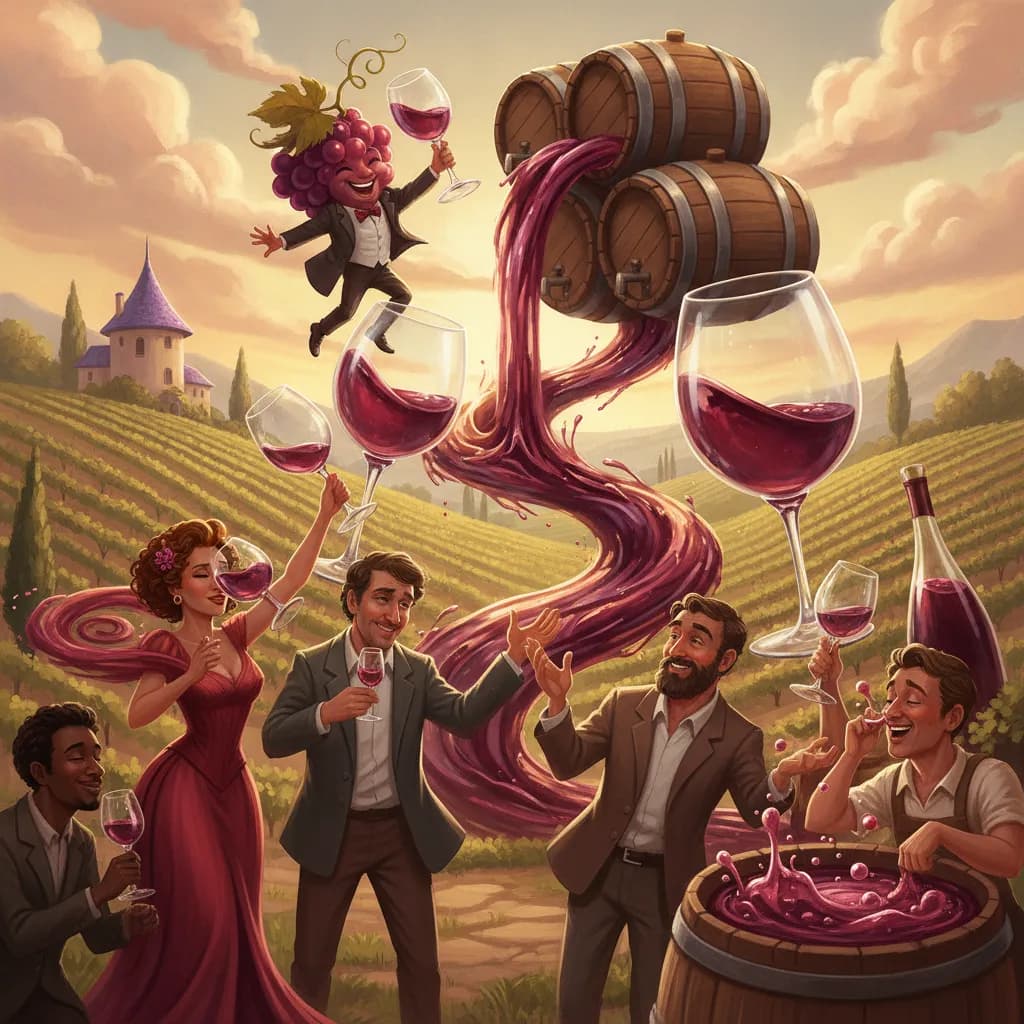
Wine
It's fermented grape juice, and yet somehow an entire industry exists around swirling it, sniffing it, and arguing about it.
Cheat Sheet
- Red vs. white isn't about the grape's color alone — it's whether the grape skins ferment along with the juice (red) or get removed first (white).
- Tannins are the dry, mouth-puckering sensation in red wine — they come from grape skins, seeds, and oak barrels.
- "Vintage" just means the year the grapes were harvested, printed right on the label.
- Terroir is the idea that soil, climate, and geography give wine from a specific place its own signature taste.
- Decanting (pouring wine into a wide container before serving) lets it breathe, softening harsh flavors in young, tannic reds.
- "Corked" wine isn't about literal cork bits in your glass — it's a musty, wet-cardboard fault from a contaminated cork.
The 60-Second Version
Wine is grape juice that's been fermented — yeast eats the sugar in the grapes and converts it to alcohol. That's the whole trick. Everything else — red versus white, dry versus sweet, a $12 bottle versus a $1,200 one — comes down to grape variety, where it was grown, and how it was made. Red wine ferments with the grape skins still in the mix, which is where its color and tannins come from; white wine has the skins removed early, giving a lighter, crisper result. Rosé splits the difference, with brief skin contact. You don't need to identify tasting notes of "wet stone" or "leather" to enjoy it — but knowing a few terms will get you through most wine lists without flinching.
The Long Version
Grapes and Regions
A handful of grape varieties dominate the wine world: Cabernet Sauvignon and Pinot Noir among reds, Chardonnay and Sauvignon Blanc among whites, each with a distinct flavor profile shaped further by climate and soil — the "terroir" concept, the idea that a specific patch of land gives its wine a signature taste no other region can fully replicate. Classic regions carry their own reputations built over centuries: Bordeaux and Burgundy in France, Tuscany in Italy, Napa Valley in California, and Rioja in Spain, each associated with particular grapes, blending traditions, and styles. Old World regions (Europe) tend to label wine by place (a "Burgundy" or a "Chianti"), assuming buyers already know which grape that implies, while New World regions (the US, Australia, Chile) more often label by grape variety directly, which is part of why the two label styles can feel so different to a newcomer.
How Wine Is Made
After fermentation, many reds (and some whites) age in oak barrels, which soften tannins and add flavors like vanilla, spice, or toast; others stay in stainless steel to preserve a cleaner, more fruit-forward character untouched by wood. Sparkling wine, including Champagne, gets its bubbles from a second fermentation that traps carbon dioxide inside the sealed bottle — true Champagne can only carry that name if it comes from the Champagne region of France and is made using that specific traditional method, a legal protection most other sparkling wines (Prosecco, Cava) don't share. Rosé, often misunderstood as a blend of red and white, is actually made much like red wine but with only brief skin contact — hours instead of weeks — before the skins are removed, which is what gives it a pink color rather than deep red.
Tasting and Modern Trends
A basic tasting approach — look at the color, swirl to release aromas, smell before you sip, then taste — is really just a way of paying more deliberate attention, not a test to pass or fail. In recent years, "natural wine" (minimal intervention, often no added sulfites, wild rather than cultivated yeast) has become its own movement among drinkers and winemakers seeking a more rustic, unfiltered style over the polished consistency of mass-market bottles — though critics argue the category lacks a clear legal definition and can be inconsistent in quality. Wine scoring systems (the 100-point scale popularized by critic Robert Parker being the most famous) remain influential in the industry and heavily affect prices, even as many sommeliers argue a wine's fit with food and personal taste matters more than any single number.
Ad slot (placeholder — set NEXT_PUBLIC_ADSENSE_SLOT_ID once an ad unit is created)
Glossary
- Terroir
- The specific combination of soil, climate, and geography that shapes a wine's character.
- Tannin
- A compound from grape skins/seeds/oak that creates a dry, gripping sensation in red wine.
- Vintage
- The year the grapes were harvested.
- Sommelier
- A trained wine professional, often found curating a restaurant's wine list.
- Corked
- A wine fault causing a musty smell, from a contaminated cork — not literal cork floating in the glass.