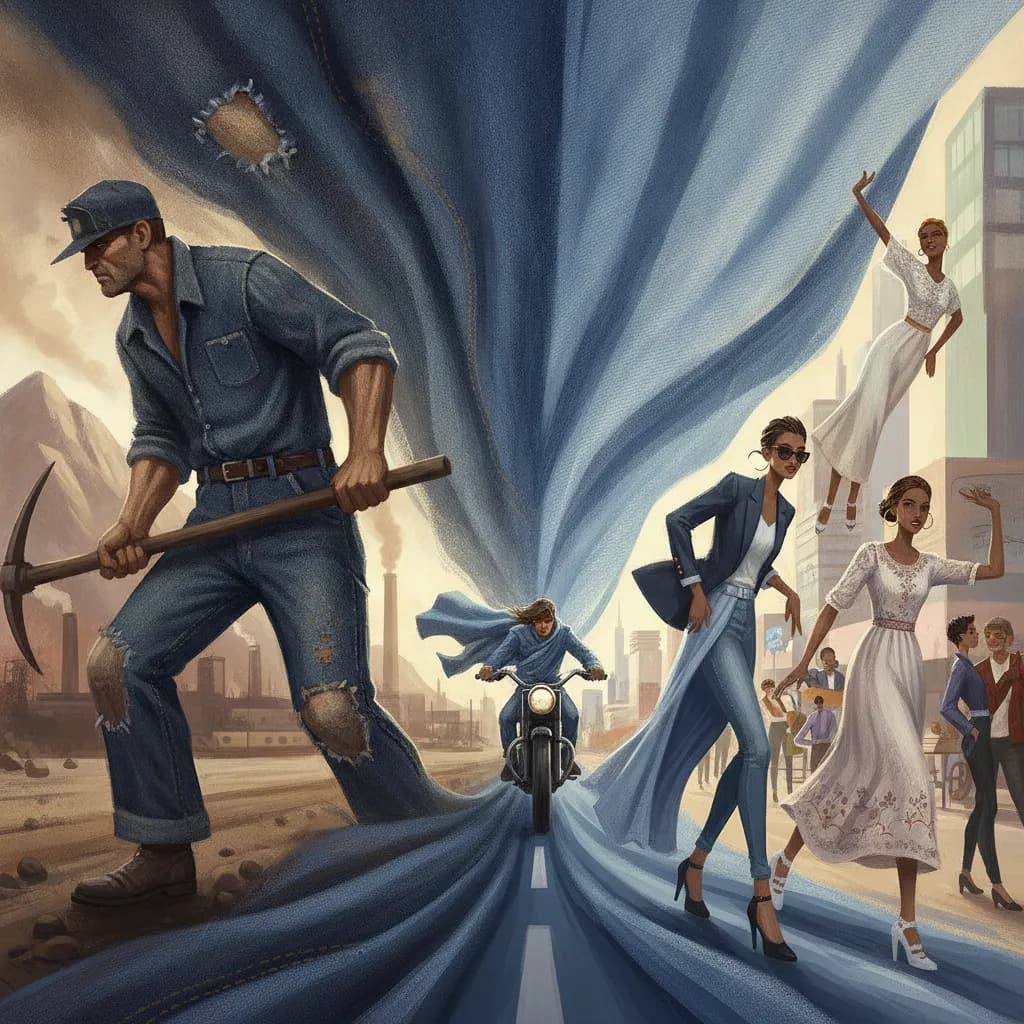
Denim
A fabric originally chosen purely for its ability to survive hard manual labor eventually became one of the most universally worn fashion items on the planet.
Cheat Sheet
- Denim is a sturdy cotton twill fabric, traditionally woven with a distinctive diagonal ribbing pattern, originally developed for its exceptional durability rather than fashion.
- Blue jeans, the most iconic denim garment, were originally created in the late 19th century as durable workwear for laborers and miners, only later evolving into a mainstream fashion staple.
- Denim's characteristic fading pattern develops through repeated wear and washing, with indigo dye gradually wearing away from the fabric's raised surface areas, producing each pair's unique, individualized wear pattern over time.
- Raw or "selvedge" denim, woven on traditional narrow-width looms and left unwashed and untreated after dyeing, is particularly valued by denim enthusiasts for developing distinctive, highly personalized fading patterns through wear alone.
- Denim's specific weight, measured in ounces per square yard, significantly affects both its durability and comfort, with heavier denim generally offering greater durability at the cost of reduced initial flexibility.
- Denim has moved through dramatically different eras of cultural association, from practical workwear to a symbol of youth rebellion in the mid-20th century to a now-universal, socially accepted fashion basic worn across virtually every demographic and setting.
The 60-Second Version
Denim is a sturdy cotton twill fabric, traditionally woven with a distinctive diagonal ribbing pattern, originally developed for its exceptional durability rather than fashion. Blue jeans, the most iconic denim garment, were originally created in the late 19th century as durable workwear for laborers and miners, only later evolving into a mainstream fashion staple. Denim's characteristic fading pattern develops through repeated wear and washing, with indigo dye gradually wearing away from the fabric's raised surface areas, producing each pair's unique, individualized wear pattern over time. Raw or "selvedge" denim, woven on traditional narrow-width looms and left unwashed and untreated after dyeing, is particularly valued by denim enthusiasts for developing distinctive, highly personalized fading patterns through wear alone. Denim's specific weight, measured in ounces per square yard, significantly affects both its durability and comfort, with heavier denim generally offering greater durability at the cost of reduced initial flexibility. Denim has moved through dramatically different eras of cultural association, from practical workwear to a symbol of youth rebellion in the mid-20th century to a now-universal, socially accepted fashion basic worn across virtually every demographic and setting.
The Long Version
Built for Labor, Not Fashion
Blue jeans, the most iconic denim garment, were originally created in the late 19th century specifically as durable workwear for laborers and miners, valued at the time purely for the fabric's exceptional resistance to wear and tear during physically demanding manual labor, with no particular fashion intention behind the original design.
Why Denim Fades the Way It Does
Denim's characteristic fading pattern develops through repeated wear and washing, as indigo dye gradually wears away specifically from the fabric's raised surface areas that experience the most friction, a gradual process that produces each individual pair's unique, personalized wear pattern over time, a distinctive visual effect not achievable with most other dyed fabrics.
Raw Denim and the Appeal of Untouched Fading
Raw or "selvedge" denim, woven on traditional narrow-width looms and deliberately left unwashed and untreated after dyeing, is particularly valued by denim enthusiasts precisely because it develops distinctive, highly personalized fading patterns purely through the wearer's own actual use, rather than through artificial pre-distressing techniques applied during manufacturing.
From Workwear to Rebellion to Universal Staple
Denim's specific weight, measured in ounces per square yard, significantly affects both its durability and overall comfort, with heavier denim generally offering greater durability at the cost of somewhat reduced initial flexibility. Culturally, denim has moved through dramatically different eras of association, from practical workwear to a symbol of youth rebellion during the mid-20th century to today's essentially universal, socially accepted fashion basic worn across virtually every demographic, setting, and price point.
Ad slot (placeholder — set NEXT_PUBLIC_ADSENSE_SLOT_ID once an ad unit is created)
Glossary
- Twill weave
- A weaving pattern producing a distinctive diagonal ribbing, characteristic of denim fabric.
- Indigo dye
- The traditional blue dye used to color denim, responsible for its characteristic fading pattern as it wears away with use.
- Selvedge denim
- Denim woven on traditional narrow-width looms, valued for producing distinctive, unwashed fading patterns through wear.
- Denim weight
- A measure of denim's thickness in ounces per square yard, significantly affecting its durability and comfort.
- Workwear
- Durable clothing originally designed for manual labor, the original purpose blue jeans and denim were developed for.
Go Deeper
- The Denim Museum
- The Metropolitan Museum of Art — Costume Institute