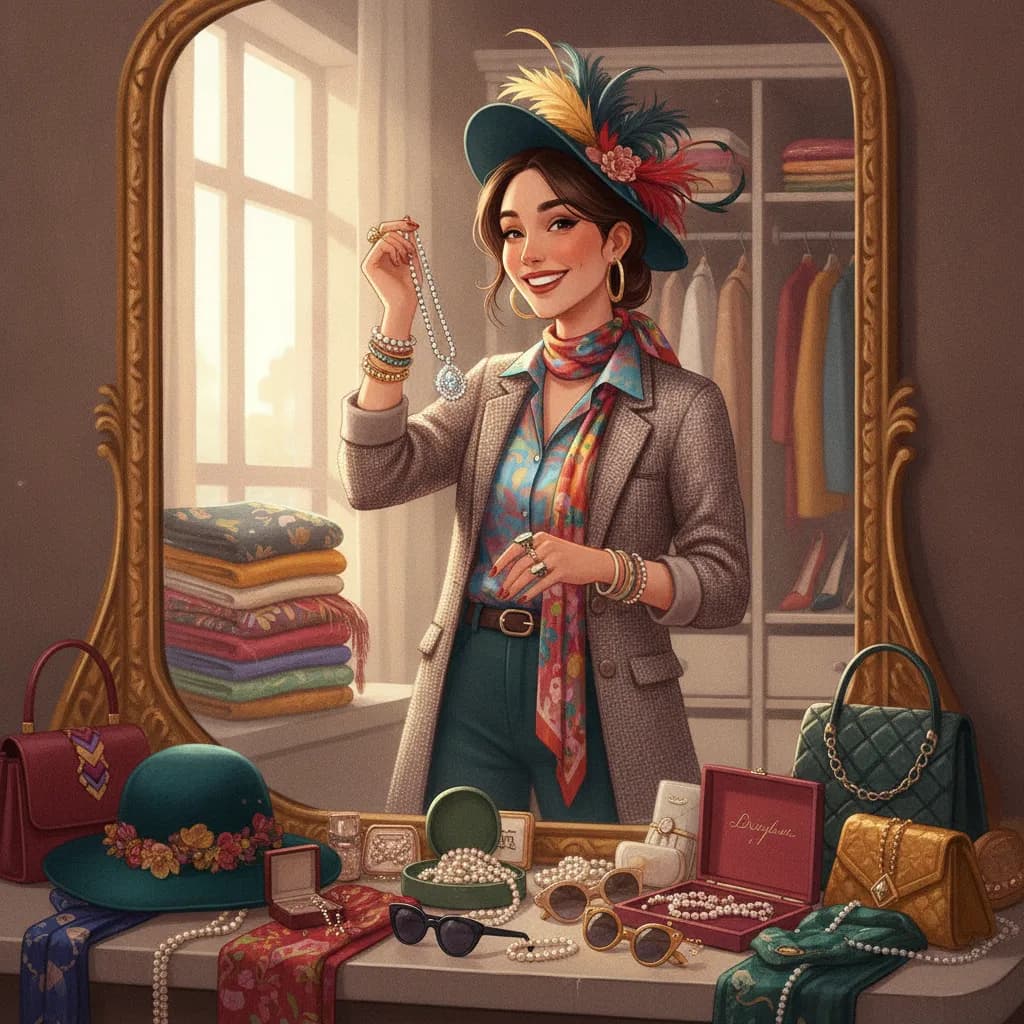
Accessorizing
One of fashion's most enduring pieces of styling advice boils down to a single instruction: look in the mirror before you leave, and take one thing off.
Cheat Sheet
- Accessorizing refers to the practice of adding items such as jewelry, bags, belts, scarves, and hats to an outfit, meaningfully shaping its overall look without requiring new clothing itself.
- A commonly cited styling guideline suggests reviewing an outfit before leaving and removing one accessory, based on the idea that restraint often produces a more polished, intentional overall look than maximal accessorizing.
- Accessories can serve a dual practical and aesthetic function, such as a scarf providing warmth while also adding color or texture, or a bag providing storage while also completing an outfit's overall visual balance.
- Proportion and scale, matching the size of an accessory to a person's frame and the rest of an outfit, is a widely cited principle for achieving a well-balanced accessorized look.
- Accessories are frequently highlighted as one of the most cost-effective ways to meaningfully refresh or update an existing wardrobe, since a relatively small, lower-cost addition can significantly change an outfit's overall impression.
- Statement accessories, deliberately bold or eye-catching pieces meant to serve as an outfit's clear visual focal point, are generally paired with otherwise simpler, more understated clothing to avoid visual competition.
The 60-Second Version
Accessorizing refers to the practice of adding items such as jewelry, bags, belts, scarves, and hats to an outfit, meaningfully shaping its overall look without requiring new clothing itself. A commonly cited styling guideline suggests reviewing an outfit before leaving and removing one accessory, based on the idea that restraint often produces a more polished, intentional overall look than maximal accessorizing. Accessories can serve a dual practical and aesthetic function, such as a scarf providing warmth while also adding color or texture, or a bag providing storage while also completing an outfit's overall visual balance. Proportion and scale, matching the size of an accessory to a person's frame and the rest of an outfit, is a widely cited principle for achieving a well-balanced accessorized look. Accessories are frequently highlighted as one of the most cost-effective ways to meaningfully refresh or update an existing wardrobe, since a relatively small, lower-cost addition can significantly change an outfit's overall impression. Statement accessories, deliberately bold or eye-catching pieces meant to serve as an outfit's clear visual focal point, are generally paired with otherwise simpler, more understated clothing to avoid visual competition.
The Long Version
The Case for Restraint
A commonly cited styling guideline, often attributed to designer Coco Chanel, suggests reviewing a finished outfit before leaving and removing one accessory, based on the underlying idea that restraint frequently produces a more polished, intentional overall look than piling on the maximum number of accessories a person can reasonably wear at once.
Function and Style at the Same Time
Accessories can serve a genuinely useful dual practical and aesthetic function simultaneously, such as a scarf providing real warmth while also adding meaningful color or texture to an outfit, or a bag providing genuine practical storage while also helping complete an outfit's overall visual balance, making well-chosen accessories more than purely decorative additions.
Getting the Scale Right
Proportion and scale, thoughtfully matching the size of a given accessory to an individual's frame and to the rest of a specific outfit, is a widely cited principle for achieving a genuinely well-balanced accessorized look, since an accessory that's dramatically oversized or undersized relative to the wearer or outfit can throw off an otherwise well put-together look.
A Low-Cost Way to Refresh an Entire Wardrobe
Accessories are frequently highlighted as one of the most cost-effective ways to meaningfully refresh or update an existing wardrobe, since a relatively small, lower-cost addition, a new bag, a distinctive piece of jewelry, or a patterned scarf, can significantly change an outfit's overall impression without requiring an entirely new clothing purchase. When using a deliberately bold statement accessory specifically meant to serve as an outfit's clear visual focal point, it's generally paired with otherwise simpler, more understated clothing, avoiding visual competition between multiple strong focal points at once.
Ad slot (placeholder — set NEXT_PUBLIC_ADSENSE_SLOT_ID once an ad unit is created)
Glossary
- Statement accessory
- A deliberately bold or eye-catching accessory meant to serve as an outfit's clear visual focal point.
- Proportion (accessorizing)
- Matching the size and scale of an accessory to a person's frame and overall outfit, a widely cited styling principle.
- Coco Chanel's rule
- A commonly cited styling guideline suggesting removing one accessory before leaving, favoring restraint over excess.
- Dual-function accessory
- An accessory serving both a practical purpose and an aesthetic one, such as a scarf providing both warmth and visual style.
- Wardrobe refresh
- Meaningfully updating an existing wardrobe's overall look through lower-cost additions like accessories, rather than buying entirely new clothing.