Surrealism
An entire art movement built on the deliberate goal of shutting off conscious control, just to see what the unconscious mind produces when nothing is filtering it.
Cheat Sheet
- Surrealism is an early 20th-century artistic and literary movement that sought to unlock the creative power of the unconscious mind, often producing dreamlike, irrational, or fantastical imagery.
- The movement was significantly influenced by Sigmund Freud's psychoanalytic theories about the unconscious mind, dreams, and repressed desire.
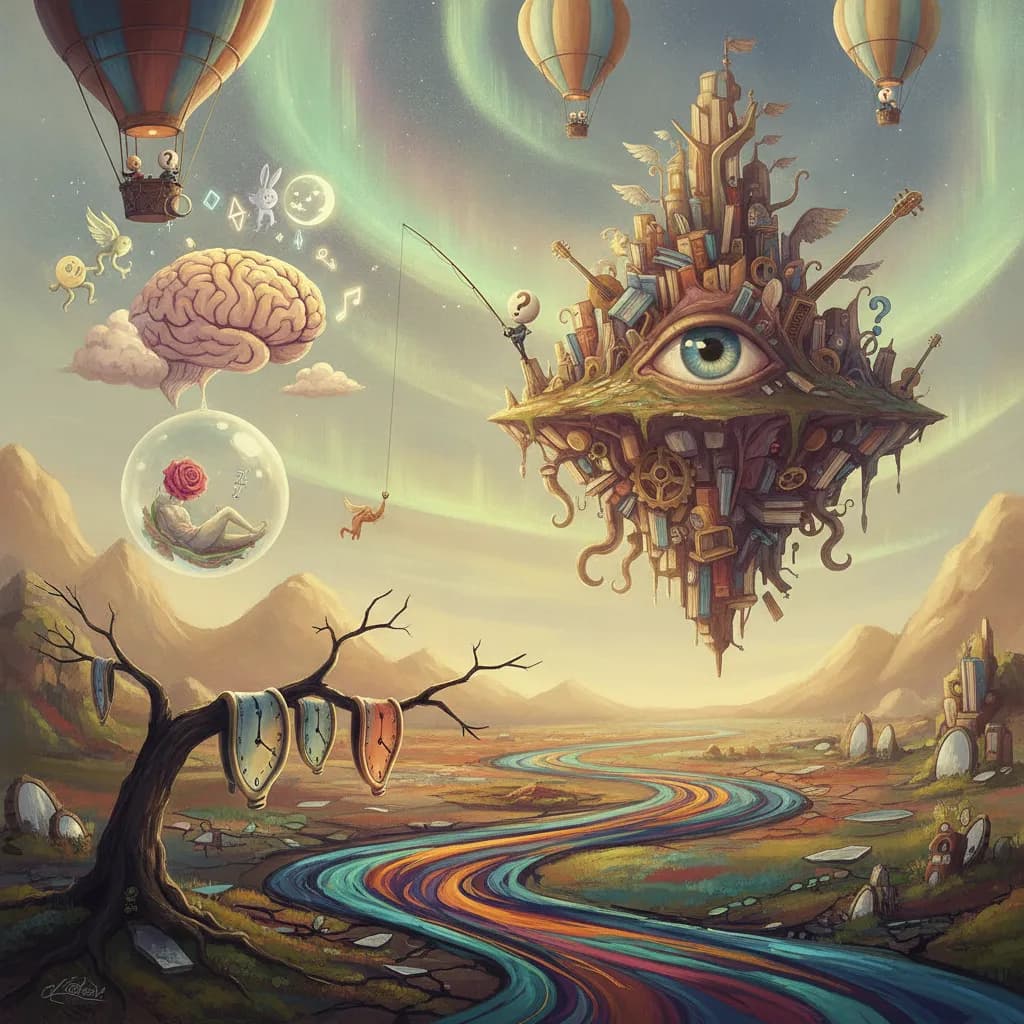
- Salvador Dalí, known for meticulously rendered yet bizarre and dreamlike imagery like melting clocks, became one of Surrealism's most widely recognized figures.
- René Magritte's work frequently played with the relationship between images, objects, and language, questioning the assumed connection between a picture and the thing it represents.
- Surrealist artists and writers experimented with techniques like automatic writing and drawing, deliberately suppressing conscious control in an attempt to access unconscious creative material directly.
- Surrealism grew directly out of the earlier Dada movement, sharing Dada's rejection of conventional rationalism, but channeling that rejection into a more structured, psychologically driven creative exploration.
The 60-Second Version
Surrealism is an early 20th-century artistic and literary movement that sought to unlock the creative power of the unconscious mind, often producing dreamlike, irrational, or fantastical imagery. The movement was significantly influenced by Sigmund Freud's psychoanalytic theories about the unconscious mind, dreams, and repressed desire. Salvador Dalí, known for meticulously rendered yet bizarre and dreamlike imagery like melting clocks, became one of Surrealism's most widely recognized figures. René Magritte's work frequently played with the relationship between images, objects, and language, questioning the assumed connection between a picture and the thing it represents. Surrealist artists and writers experimented with techniques like automatic writing and drawing, deliberately suppressing conscious control in an attempt to access unconscious creative material directly. Surrealism grew directly out of the earlier Dada movement, sharing Dada's rejection of conventional rationalism, but channeling that rejection into a more structured, psychologically driven creative exploration.
The Long Version
Freud's Influence on an Entire Art Movement
Surrealism developed significantly under the influence of Sigmund Freud's psychoanalytic theories regarding the unconscious mind, dreams, and repressed desire, with Surrealist artists and writers treating the unconscious as a rich, largely untapped creative source that conventional rational thought and artistic convention had long suppressed or ignored.
Dalí's Meticulously Rendered Dreamscapes
Salvador Dalí became one of Surrealism's most widely recognized figures, known for paintings executed with meticulous technical precision that nonetheless depicted bizarre, dreamlike, and often disorienting imagery, such as his famous melting clocks, a striking combination of realistic rendering and genuinely irrational subject matter that became closely associated with the broader movement in popular imagination.
Magritte and the Puzzle of Representation
René Magritte's work took a somewhat different Surrealist approach, frequently exploring the philosophically slippery relationship between images, the objects they depict, and language itself, questioning the assumed straightforward connection between a picture and the real thing it supposedly represents, a conceptually playful strand of Surrealism distinct from Dalí's more overtly dreamlike imagery.
Automatic Technique and Roots in Dada
Surrealist artists and writers experimented with techniques including automatic writing and drawing, deliberately attempting to suppress conscious control in order to access unconscious creative material more directly, an approach that grew directly out of the earlier Dada movement's rejection of conventional rationalism, though Surrealism channeled that same underlying rejection into a more structured, psychologically grounded creative exploration rather than Dada's more purely anti-establishment provocation.
Ad slot (placeholder — set NEXT_PUBLIC_ADSENSE_SLOT_ID once an ad unit is created)
Glossary
- Automatic writing/drawing
- A Surrealist technique deliberately suppressing conscious control in an attempt to directly access unconscious creative material.
- Salvador Dalí
- A prominent Surrealist artist known for meticulously rendered yet bizarre, dreamlike imagery.
- René Magritte
- A Surrealist artist known for work exploring the relationship between images, objects, and language.
- Psychoanalysis
- Sigmund Freud's theoretical framework regarding the unconscious mind, dreams, and repressed desire, a significant influence on Surrealism.
- Dada
- An earlier avant-garde movement rejecting conventional rationalism, from which Surrealism directly developed.