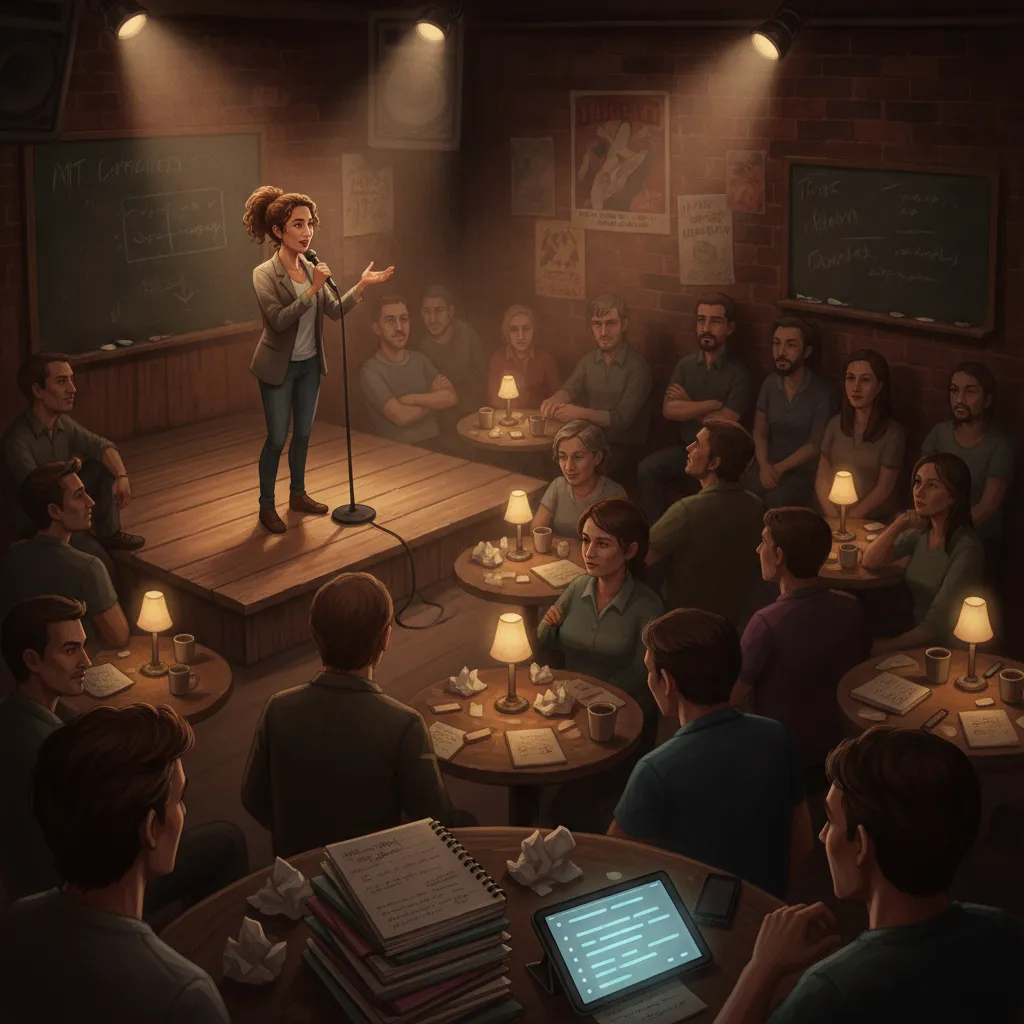
Stand-up Comedy
A format where the actual jokes are often the least of the work — most of a comedian's time goes into testing and re-testing timing in front of small, unforgiving rooms.
Cheat Sheet
- Stand-up comedy is a performance format where a single comedian delivers a scripted (or partly improvised) routine of jokes and stories directly to a live audience.
- Modern stand-up developed largely out of earlier vaudeville and nightclub comic traditions in the mid-20th century United States, evolving significantly through the decades since.
- Comedians typically develop material over months or years, testing jokes repeatedly in smaller clubs to refine timing and wording before a routine reaches its polished final form.
- A comedy "special," a recorded full-length stand-up performance, has become the industry's primary format for reaching a wide audience, especially since the rise of streaming platforms.
- Comedic delivery techniques like timing, callbacks (referencing an earlier joke later in the set), and misdirection are central technical skills separate from the actual content of the jokes themselves.
- Stand-up has increasingly become a platform for pointed social and political commentary, alongside its traditional observational and personal storytelling roots.
The 60-Second Version
Stand-up comedy is a performance format where a single comedian delivers a scripted, or partly improvised, routine of jokes and stories directly to a live audience. Modern stand-up developed largely out of earlier vaudeville and nightclub comic traditions in the mid-20th century United States, evolving significantly through the decades since. Comedians typically develop material over months or years, testing jokes repeatedly in smaller clubs to refine timing and wording before a routine reaches its polished final form. A comedy "special," a recorded full-length stand-up performance, has become the industry's primary format for reaching a wide audience, especially since the rise of streaming platforms. Comedic delivery techniques like timing, callbacks, referencing an earlier joke later in the set, and misdirection are central technical skills separate from the actual content of the jokes themselves. Stand-up has increasingly become a platform for pointed social and political commentary, alongside its traditional observational and personal storytelling roots.
The Long Version
One Person, One Microphone
At its core, stand-up strips performance down to its simplest possible form: a single performer, a microphone, and a live audience, with no supporting cast, set, or scripted scene partners to rely on. This stripped-down format places enormous weight on a comedian's individual writing, timing, and stage presence, since there's nowhere for weak material or delivery to hide.
From Vaudeville to Modern Stand-Up
Modern stand-up traces its roots to earlier American entertainment traditions like vaudeville variety shows and nightclub comic acts of the early-to-mid 20th century, gradually evolving into the more personal, direct-address format recognized today, shaped significantly by comedians who pioneered more confessional, observational styles starting in the 1950s and 1960s.
How Material Actually Gets Built
Contrary to how polished a finished stand-up special might appear, most jokes go through an extensive, often unglamorous development process: comedians frequently test new material repeatedly at smaller clubs and open mics, adjusting wording, timing, and structure based on how live audiences actually respond, refining a joke over weeks or months before it reaches the tightly honed form eventually seen in a special or televised set.
The Rise of the Comedy Special
The comedy special, a recorded full-length stand-up performance, has become the industry's dominant format for reaching wide audiences, a shift significantly accelerated by streaming platforms investing heavily in exclusive specials from major comedians, giving stand-up a level of mainstream visibility and monetization that earlier eras, reliant mostly on live touring and occasional television appearances, didn't have.
Ad slot (placeholder — set NEXT_PUBLIC_ADSENSE_SLOT_ID once an ad unit is created)
Glossary
- Special
- A recorded, full-length stand-up comedy performance, typically released for wide audience viewing.
- Callback
- A comedic technique referencing an earlier joke again later in a set for renewed comedic effect.
- Bit
- A distinct segment or extended joke within a stand-up routine.
- Open mic
- An informal, often unpaid performance slot where comedians test new material in front of a live audience.
- Set
- A comedian's full performance during a single appearance.
Go Deeper
- The Comedy Cellar
- "Sick in the Head" by Judd Apatow