Opera
A centuries-old art form once considered genuinely popular mass entertainment, not the exclusive high-culture pursuit it's often assumed to be today.
Cheat Sheet
- Opera combines orchestral music, solo and choral singing, and staged drama into a single unified theatrical art form, originating in Italy around 1600.
- An aria is an extended solo vocal showcase within an opera, typically the emotional centerpiece of a scene, while recitative is more speech-like sung dialogue that advances the plot.
- Voice types in opera are classified by range and character — soprano and tenor are the most common leading roles, with mezzo-soprano, contralto, baritone, and bass rounding out the full vocal spectrum.
- Composers like Mozart, Verdi, Puccini, and Wagner each left a massive, still widely performed body of operatic work, spanning vastly different musical styles and eras.
- Most opera houses now use supertitles, projected translations displayed above or near the stage, since operas are traditionally performed in their original language.
- Opera was historically a genuinely popular, mass entertainment form in many European cities, not the exclusively elite pursuit it's sometimes perceived as today.
The 60-Second Version
Opera combines orchestral music, solo and choral singing, and staged drama into a single unified theatrical art form, originating in Italy around 1600. An aria is an extended solo vocal showcase within an opera, typically the emotional centerpiece of a scene, while recitative is more speech-like sung dialogue that advances the plot. Voice types in opera are classified by range and character — soprano and tenor are the most common leading roles, with mezzo-soprano, contralto, baritone, and bass rounding out the full vocal spectrum. Composers like Mozart, Verdi, Puccini, and Wagner each left a massive, still widely performed body of operatic work, spanning vastly different musical styles and eras. Most opera houses now use supertitles, projected translations displayed above or near the stage, since operas are traditionally performed in their original language. Opera was historically a genuinely popular, mass entertainment form in many European cities, not the exclusively elite pursuit it's sometimes perceived as today.
The Long Version
Where Opera Began
Opera emerged in Italy around 1600, originally conceived by a group of Florentine intellectuals attempting to revive what they believed ancient Greek drama's musical storytelling had been like. From that experimental beginning, opera rapidly developed into a distinct and hugely popular theatrical form, spreading across Italy and then throughout Europe over the following centuries.
Arias, Recitative, and How a Scene Actually Works
A typical operatic scene alternates between recitative, speech-like sung dialogue used to move the plot forward efficiently, and arias, extended solo vocal showcases where the music slows down to let a character express deep emotion, often the true emotional and musical highlight of the entire scene. This structure lets opera balance narrative pacing with moments of genuine musical and emotional intensity.
Voice Types and Famous Composers
Operatic voices are classified into a defined set of types based on range and vocal character: soprano and tenor are the most common leading roles, historically cast as romantic leads, while mezzo-soprano, contralto, baritone, and bass round out the full spectrum, each type often associated with specific dramatic character functions. Composers including Mozart, Verdi, Puccini, and Wagner each left an enormous and stylistically distinct body of operatic work still central to companies' repertoires worldwide, spanning everything from Mozart's Classical-era elegance to Wagner's massive, mythologically inspired epics.
From Popular Entertainment to Perceived Elite Art
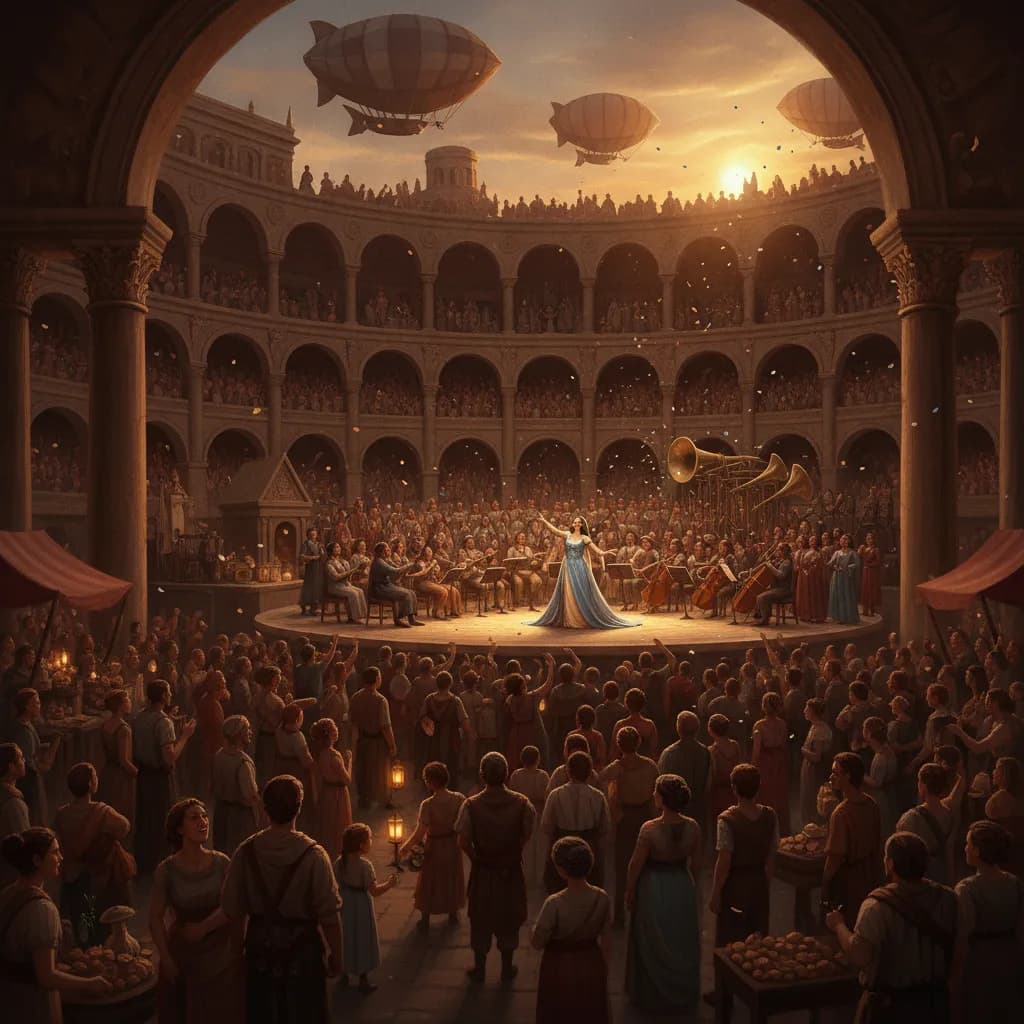
Contrary to opera's modern reputation as an exclusively elite cultural pursuit, it was historically genuinely popular mass entertainment in many European cities, with opera houses serving a broad cross-section of society rather than only the wealthy. Modern opera houses have also widely adopted supertitles, projected translations displayed during the performance, specifically to make productions more accessible to audiences unfamiliar with the opera's original language.
Ad slot (placeholder — set NEXT_PUBLIC_ADSENSE_SLOT_ID once an ad unit is created)
Glossary
- Aria
- An extended solo vocal showcase within an opera, typically the emotional highlight of a scene.
- Recitative
- Speech-like sung dialogue in opera used to advance the plot between arias.
- Libretto
- The written text or lyrics of an opera.
- Soprano
- The highest common female singing voice type, frequently cast in leading operatic roles.
- Supertitles
- Projected translations displayed during an opera performance, since operas are usually sung in their original language.