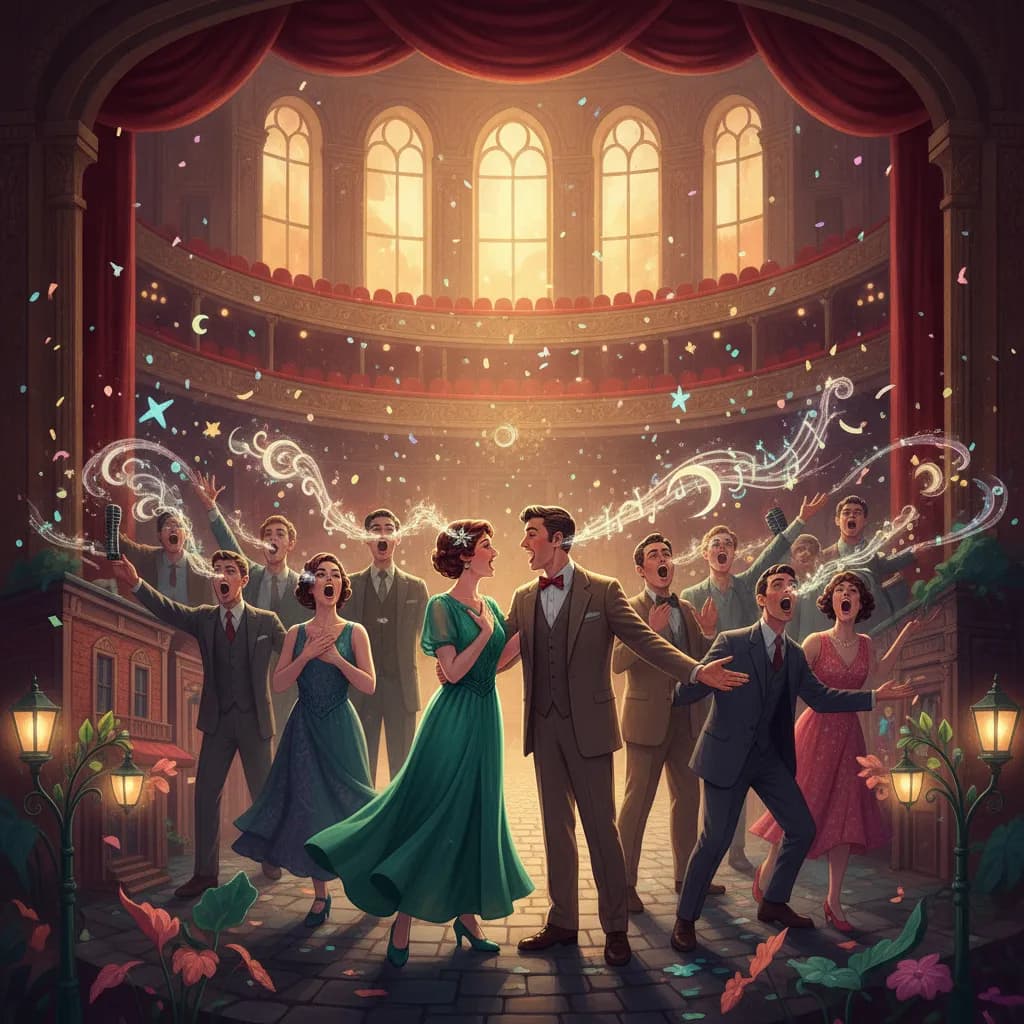
Musical Theater
A theatrical genre built on a storytelling trick that would feel absurd in almost any other context — characters simply bursting into song mid-conversation to express what they're really feeling.
Cheat Sheet
- Musical theater combines spoken dialogue, song, and often dance into a single unified theatrical production, with music typically advancing the plot or revealing character rather than serving as a standalone interlude.
- Broadway, centered in New York City, and London's West End are widely considered the two most prominent commercial hubs for professional musical theater production in the English-speaking world.
- The "Golden Age" of American musical theater, roughly spanning the 1940s through the 1960s, produced numerous enduringly popular shows and helped establish many of the genre's core storytelling conventions.
- A musical's "book" refers to its spoken dialogue and overall dramatic structure, distinct from its musical score, or the songs and orchestral music that accompany the production.
- Jukebox musicals, built around a pre-existing catalog of popular songs rather than an original score, have become an increasingly significant commercial category within the genre.
- Modern musical theater continues to evolve stylistically, incorporating contemporary musical genres like hip-hop and pop well beyond the traditional show-tune style associated with earlier eras of the genre.
The 60-Second Version
Musical theater combines spoken dialogue, song, and often dance into a single unified theatrical production, with music typically advancing the plot or revealing character rather than serving as a standalone interlude. Broadway, centered in New York City, and London's West End are widely considered the two most prominent commercial hubs for professional musical theater production in the English-speaking world. The "Golden Age" of American musical theater, roughly spanning the 1940s through the 1960s, produced numerous enduringly popular shows and helped establish many of the genre's core storytelling conventions. A musical's "book" refers to its spoken dialogue and overall dramatic structure, distinct from its musical score, or the songs and orchestral music that accompany the production. Jukebox musicals, built around a pre-existing catalog of popular songs rather than an original score, have become an increasingly significant commercial category within the genre. Modern musical theater continues to evolve stylistically, incorporating contemporary musical genres like hip-hop and pop well beyond the traditional show-tune style associated with earlier eras of the genre.
The Long Version
Song and Dialogue as a Unified Storytelling Tool
Musical theater's defining feature is its integration of spoken dialogue, song, and often dance into a single unified narrative, with musical numbers in well-crafted musicals generally designed to actively advance the plot or reveal character motivation, rather than functioning as a separate, disconnected performance interlude within the larger story.
Broadway and the West End as Commercial Centers
Broadway, centered in New York City's theater district, and London's West End are widely regarded as the two most prominent commercial hubs for professional musical theater in the English-speaking world, both hosting long-running commercial productions and serving as significant benchmarks of success and prestige within the industry.
The Golden Age's Lasting Influence
The so-called Golden Age of American musical theater, roughly spanning the 1940s through the 1960s, produced numerous shows that remain enduringly popular and frequently revived today, helping establish many of the genre's core storytelling and structural conventions that subsequent musicals, even those breaking from tradition, continue to reference or react against.
Book vs. Score, and the Rise of the Jukebox Musical
A musical's "book," its spoken dialogue and overall dramatic structure, is distinct from its score, the songs and orchestral music accompanying the production, and different musicals emphasize each element differently. In recent decades, jukebox musicals, built around a pre-existing catalog of popular songs rather than an original score, have become an increasingly significant commercial category, alongside a broader ongoing stylistic evolution incorporating contemporary genres like hip-hop and pop well beyond the traditional show-tune sound of earlier eras.
Ad slot (placeholder — set NEXT_PUBLIC_ADSENSE_SLOT_ID once an ad unit is created)
Glossary
- Book
- A musical's spoken dialogue and overall dramatic structure, distinct from its musical score.
- Score
- The songs and orchestral music accompanying a musical theater production.
- Broadway
- The commercial theater district centered in New York City, one of the most prominent hubs for professional musical theater.
- Golden Age (of musical theater)
- The period roughly spanning the 1940s through 1960s that produced many enduringly popular American musicals.
- Jukebox musical
- A musical built around a pre-existing catalog of popular songs rather than an original score.