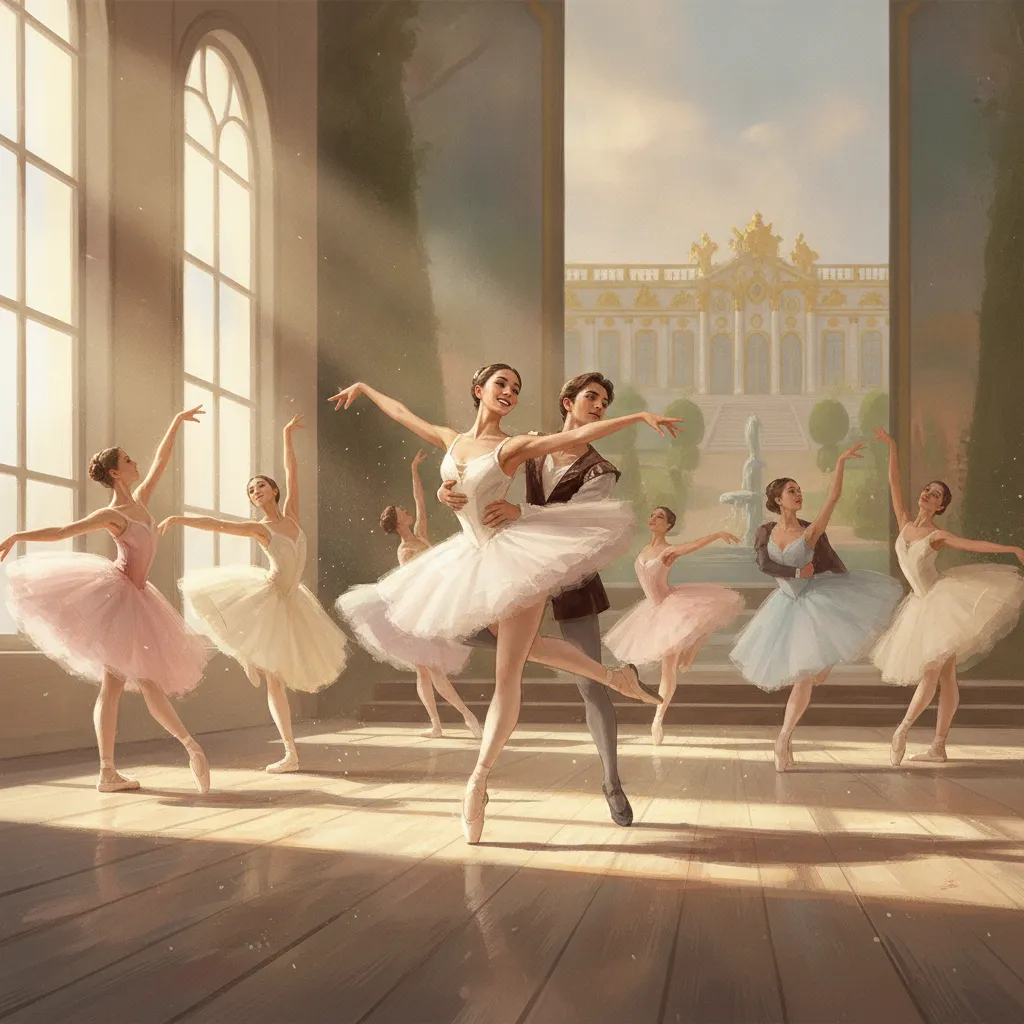
Ballet
A dance form so technically codified that dancers worldwide still use the same French vocabulary developed centuries ago in the court of Louis XIV.
Cheat Sheet
- Ballet is a highly technical, codified form of dance originating in the Italian Renaissance courts before being formalized further in 17th-century France.
- Classical ballet technique is built around a standardized vocabulary of positions and movements, still taught using French terminology worldwide today.
- Pointe work, dancing on the tips of fully extended toes using specialized reinforced shoes, is one of ballet's most recognizable and physically demanding techniques, generally only performed by women.
- Famous ballets like Swan Lake, The Nutcracker, and Giselle remain staples of the classical repertoire, performed by companies worldwide for well over a century.
- Ballet training typically begins in early childhood and demands years of rigorous technical development before a dancer is ready for professional company-level performance.
- 20th-century choreographers like George Balanchine helped push ballet in a more modern, abstract direction, moving beyond strictly narrative, story-driven classical works.
The 60-Second Version
Ballet is a highly technical, codified form of dance originating in the Italian Renaissance courts before being formalized further in 17th-century France. Classical ballet technique is built around a standardized vocabulary of positions and movements, still taught using French terminology worldwide today. Pointe work, dancing on the tips of fully extended toes using specialized reinforced shoes, is one of ballet's most recognizable and physically demanding techniques, generally only performed by women. Famous ballets like Swan Lake, The Nutcracker, and Giselle remain staples of the classical repertoire, performed by companies worldwide for well over a century. Ballet training typically begins in early childhood and demands years of rigorous technical development before a dancer is ready for professional company-level performance. 20th-century choreographers like George Balanchine helped push ballet in a more modern, abstract direction, moving beyond strictly narrative, story-driven classical works.
The Long Version
From Renaissance Courts to Codified Technique
Ballet originated as entertainment within Italian Renaissance courts before being brought to France, where King Louis XIV, himself an enthusiastic dancer, helped formalize its technique and establish the first professional ballet academy in the 17th century. This French formalization is why ballet terminology worldwide remains French to this day, regardless of the language spoken in the country a given company performs in.
Pointe Work and the Physical Demands of Ballet
Pointe work, dancing on the very tips of fully extended toes supported by specially reinforced pointe shoes, is among ballet's most demanding and recognizable techniques, requiring years of gradual, carefully supervised strength training before a dancer is physically ready to attempt it safely. Alongside pointe work, ballet demands an unusual combination of extreme flexibility, precise muscular control, and sustained strength, explaining why serious training typically begins in early childhood, long before a dancer might be ready for professional company-level performance.
The Classical Repertoire's Staples
Certain ballets have remained central to the classical repertoire for well over a century, performed repeatedly by companies around the world: Swan Lake, Tchaikovsky's tragic tale of a princess cursed to live as a swan; The Nutcracker, a beloved holiday staple for many companies' annual seasons; and Giselle, a Romantic-era ballet centered on love, betrayal, and forgiveness.
Pushing Ballet Into the Modern Era
While classical ballet remained rooted in narrative storytelling for centuries, 20th-century choreographers like George Balanchine helped push the art form toward a more abstract, plotless style, emphasizing musicality and pure movement over conventional story-driven narrative, significantly expanding what ballet as a form was considered capable of expressing beyond its traditional classical repertoire.
Ad slot (placeholder — set NEXT_PUBLIC_ADSENSE_SLOT_ID once an ad unit is created)
Glossary
- Pointe work
- Dancing on the tips of fully extended toes using specialized reinforced shoes, a hallmark of classical ballet technique.
- Choreographer
- The person who designs and arranges a ballet's specific sequence of movements.
- Corps de ballet
- The group of dancers performing together in a ballet, distinct from principal soloists.
- Pas de deux
- A duet dance performed by two dancers, typically a central romantic or dramatic centerpiece of a ballet.
- Repertoire
- The established collection of works a ballet company regularly performs.