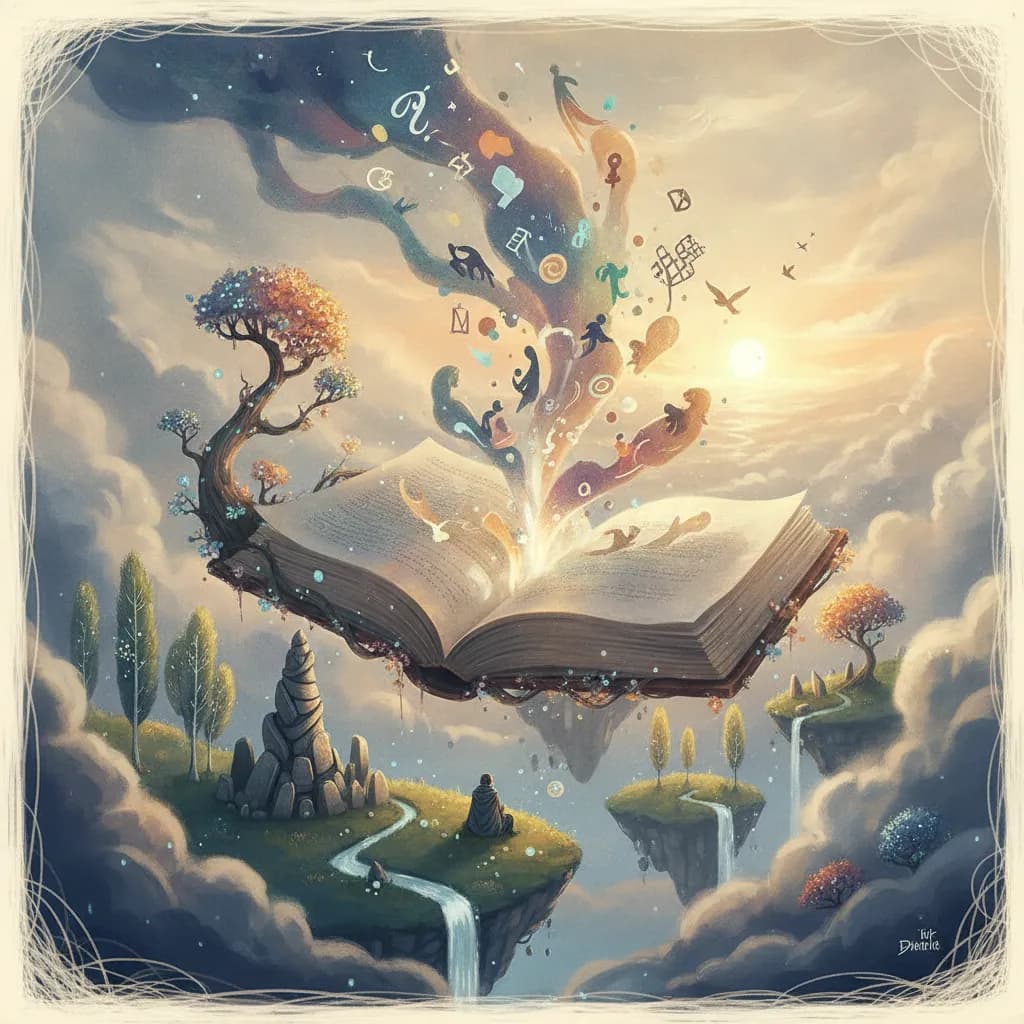
Poetry
A literary form that often does more with fewer words than an entire novel — sometimes intentionally leaving room for every reader to find a different meaning.
Cheat Sheet
- Poetry is a literary form distinguished from prose by its deliberate use of rhythm, sound, line breaks, and condensed language to convey meaning and emotion.
- Major poetic forms include the sonnet (a strict 14-line structure), free verse (no fixed rhyme or meter), and haiku (a compact three-line Japanese form).
- Meter, the rhythmic pattern of stressed and unstressed syllables in a line, was central to much traditional poetry before free verse became widely popular in the 20th century.
- Poetry has served historically important oral and cultural functions well beyond entertainment — from epic poems preserving history before written language to protest poetry driving social movements.
- Spoken word and slam poetry, performance-based poetic traditions, have brought poetry back into a live, competitive, community-oriented context distinct from purely page-based reading.
- Poetry's condensed, ambiguous language often allows the same poem to be read and interpreted meaningfully differently by different readers, a quality distinct from most prose writing.
The 60-Second Version
Poetry is a literary form distinguished from prose by its deliberate use of rhythm, sound, line breaks, and condensed language to convey meaning and emotion. Major poetic forms include the sonnet, a strict 14-line structure, free verse, with no fixed rhyme or meter, and haiku, a compact three-line Japanese form. Meter, the rhythmic pattern of stressed and unstressed syllables in a line, was central to much traditional poetry before free verse became widely popular in the 20th century. Poetry has served historically important oral and cultural functions well beyond entertainment, from epic poems preserving history before written language existed to protest poetry driving social movements. Spoken word and slam poetry, performance-based poetic traditions, have brought poetry back into a live, competitive, community-oriented context distinct from purely page-based reading. Poetry's condensed, ambiguous language often allows the same poem to be read and interpreted meaningfully differently by different readers, a quality distinct from most prose writing.
The Long Version
What Actually Separates Poetry From Prose
Poetry distinguishes itself from prose primarily through its deliberate attention to sound, rhythm, and the visual and rhythmic effect of line breaks, often compressing meaning into far fewer words than prose would use to convey a comparable idea or feeling. This compression, along with poetry's frequent use of imagery, metaphor, and ambiguity, is part of why poems often reward, and even require, multiple readings to fully absorb.
Major Forms Worth Knowing
Poetry spans many structured and unstructured forms: the sonnet, a strict 14-line form with a defined rhyme scheme, closely associated with Shakespeare and earlier Italian poets; free verse, which abandons fixed rhyme and meter entirely in favor of more flexible, natural rhythms; and haiku, a compact traditional Japanese form typically built around three lines and a seasonal or nature-focused image. Each form imposes, or deliberately rejects, specific structural constraints that shape how a poem's meaning and rhythm actually unfold.
Poetry's Historical Role Beyond Entertainment
Long before written language was widespread, epic poems served as a primary method for preserving and transmitting history, mythology, and cultural values across generations through oral memorization and performance. In more recent history, poetry has also served as a powerful vehicle for social and political movements, with protest poetry playing a documented role in civil rights, anti-war, and other social movements throughout the 20th century.
Slam Poetry and the Return to Performance
Slam poetry and the broader spoken word tradition brought poetry back into a live, performance-based, often explicitly competitive context, judged directly by audience response rather than purely evaluated on the page. This performance-centered revival has helped introduce poetry to audiences who might not otherwise engage with it as a purely written literary form.
Ad slot (placeholder — set NEXT_PUBLIC_ADSENSE_SLOT_ID once an ad unit is created)
Glossary
- Meter
- The rhythmic pattern of stressed and unstressed syllables in a line of poetry.
- Free verse
- Poetry without a fixed rhyme scheme or meter.
- Sonnet
- A traditional 14-line poem, often following a strict rhyme scheme, closely associated with Shakespeare.
- Haiku
- A short, traditional Japanese poetic form, typically structured in three lines.
- Slam poetry
- A competitive, performance-based poetic tradition, often centered on spoken delivery rather than written form.