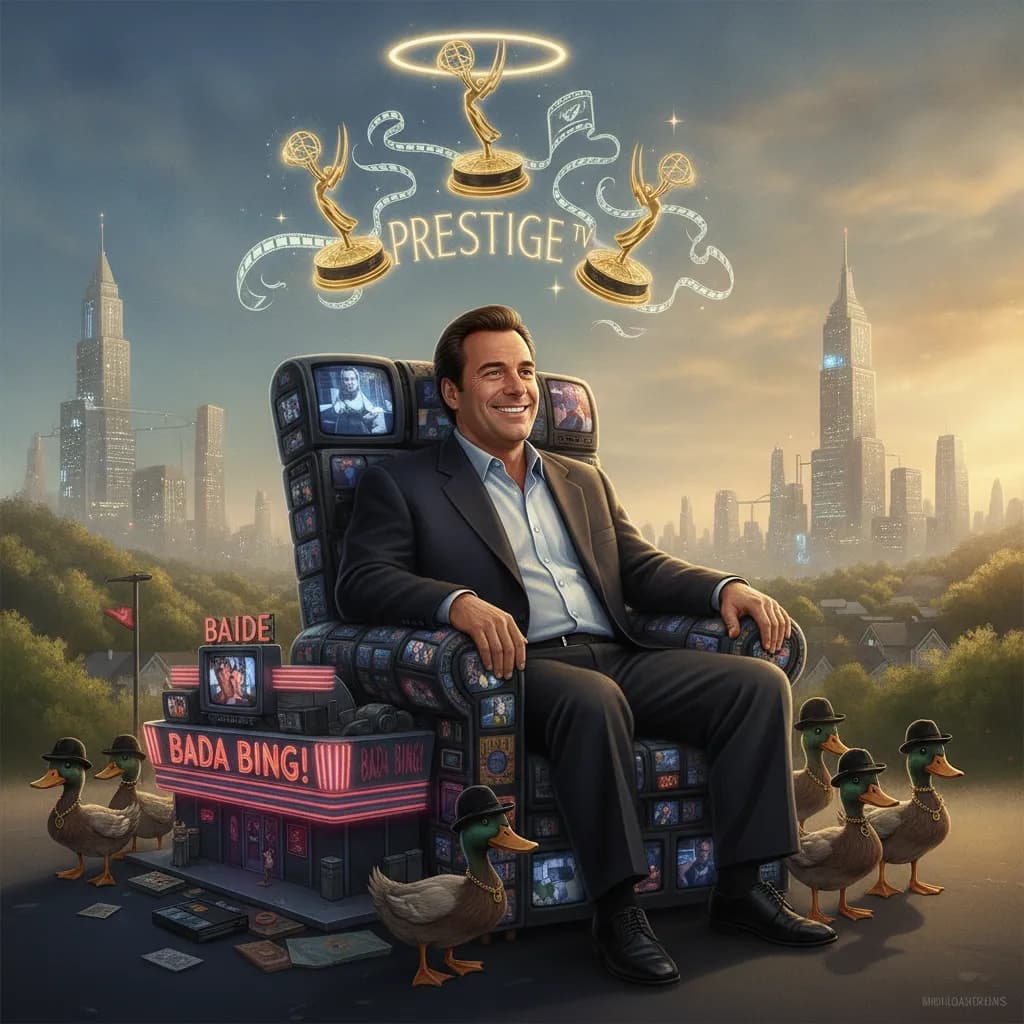
Prestige TV
A single show, The Sopranos, that's widely credited with convincing critics television could be taken as seriously as film.
Cheat Sheet
- "Prestige TV" describes a wave of ambitious, cinematic, critically acclaimed television series that began reshaping the medium's reputation starting in the late 1990s and 2000s.
- The Sopranos (1999) is widely credited as the show that kicked off the prestige TV era, proving a TV drama could achieve the narrative complexity and critical respect previously reserved for film.
- Premium cable and, later, streaming platforms (HBO, then Netflix and others) provided the freedom from broadcast content restrictions and advertising pressures that let prestige TV take creative risks.
- Prestige dramas are typically defined by serialized, novelistic storytelling, morally complex protagonists, and high production values comparable to feature films.
- The rise of streaming intensified competition for prestige content, with platforms investing enormous budgets specifically to attract subscribers through critically acclaimed original series.
- Critics have noted a degree of "prestige TV fatigue" in recent years, as the sheer volume of high-budget serialized dramas has made it harder for any single show to stand out as it once did.
The 60-Second Version
"Prestige TV" describes a wave of ambitious, cinematic, critically acclaimed television series that began reshaping the medium's reputation starting in the late 1990s and 2000s. The Sopranos (1999) is widely credited as the show that kicked off the prestige TV era, proving a TV drama could achieve the narrative complexity and critical respect previously reserved for film. Premium cable, and later streaming platforms, HBO first and then Netflix and others, provided the freedom from broadcast content restrictions and advertising pressures that let prestige TV take genuine creative risks. Prestige dramas are typically defined by serialized, novelistic storytelling, morally complex protagonists, and high production values comparable to feature films. The rise of streaming intensified competition for prestige content, with platforms investing enormous budgets specifically to attract subscribers through critically acclaimed original series. Critics have noted a degree of "prestige TV fatigue" in recent years, as the sheer volume of high-budget serialized dramas has made it harder for any single show to stand out as it once did.
The Long Version
How The Sopranos Changed Everything
Before The Sopranos premiered in 1999, television drama was widely regarded by critics as a fundamentally lesser medium than film, constrained by episodic formulas and broadcast content standards. The Sopranos, centered on a morally complex mob boss protagonist and told with genuinely novelistic long-term storytelling, demonstrated that television could achieve a level of narrative ambition and critical respect previously reserved almost exclusively for cinema, directly paving the way for the prestige dramas that followed.
Freedom From Broadcast Restrictions
A major enabling factor behind prestige TV's rise was the creative freedom offered by premium cable channels like HBO, which, unlike traditional advertiser-supported broadcast networks, weren't constrained by the same content restrictions or need to appeal to the broadest possible mainstream audience every single episode. This freedom let showrunners pursue morally ambiguous protagonists, darker themes, and slower, more deliberate storytelling than broadcast television traditionally allowed.
What Actually Makes TV "Prestige"
Prestige dramas share several recurring traits: serialized storytelling where episodes build directly on each other rather than resetting weekly, morally complex anti-hero protagonists rather than straightforwardly heroic leads, and film-level production values, cinematography, and acting talent, all combining to elevate the medium's perceived artistic seriousness.
Streaming, Peak TV, and Prestige Fatigue
The rise of streaming platforms dramatically intensified competition for prestige content, with services investing enormous budgets in original series specifically to attract and retain subscribers, contributing to what's often called "Peak TV," an era with an unprecedented volume of high-budget scripted television being produced simultaneously. This sheer volume has led some critics to describe a degree of "prestige fatigue," where the once-rare distinction of a truly prestigious, must-watch drama has become harder to achieve amid so much competing high-quality content.
Ad slot (placeholder — set NEXT_PUBLIC_ADSENSE_SLOT_ID once an ad unit is created)
Glossary
- Serialized storytelling
- A narrative structure where episodes build directly on each other as an ongoing story, rather than resetting each episode.
- Premium cable
- Subscription-based cable channels, like HBO, historically free from broadcast advertising and content restrictions.
- Anti-hero
- A morally complex, often flawed protagonist, a defining character type of many prestige dramas.
- Showrunner
- The person with overall creative authority over a television series, often its head writer and executive producer.
- Peak TV
- A term describing the current era of an unusually large volume of high-budget scripted television being produced simultaneously.
Go Deeper
- Emmy Awards — Outstanding Drama Series
- "Difficult Men" by Brett Martin