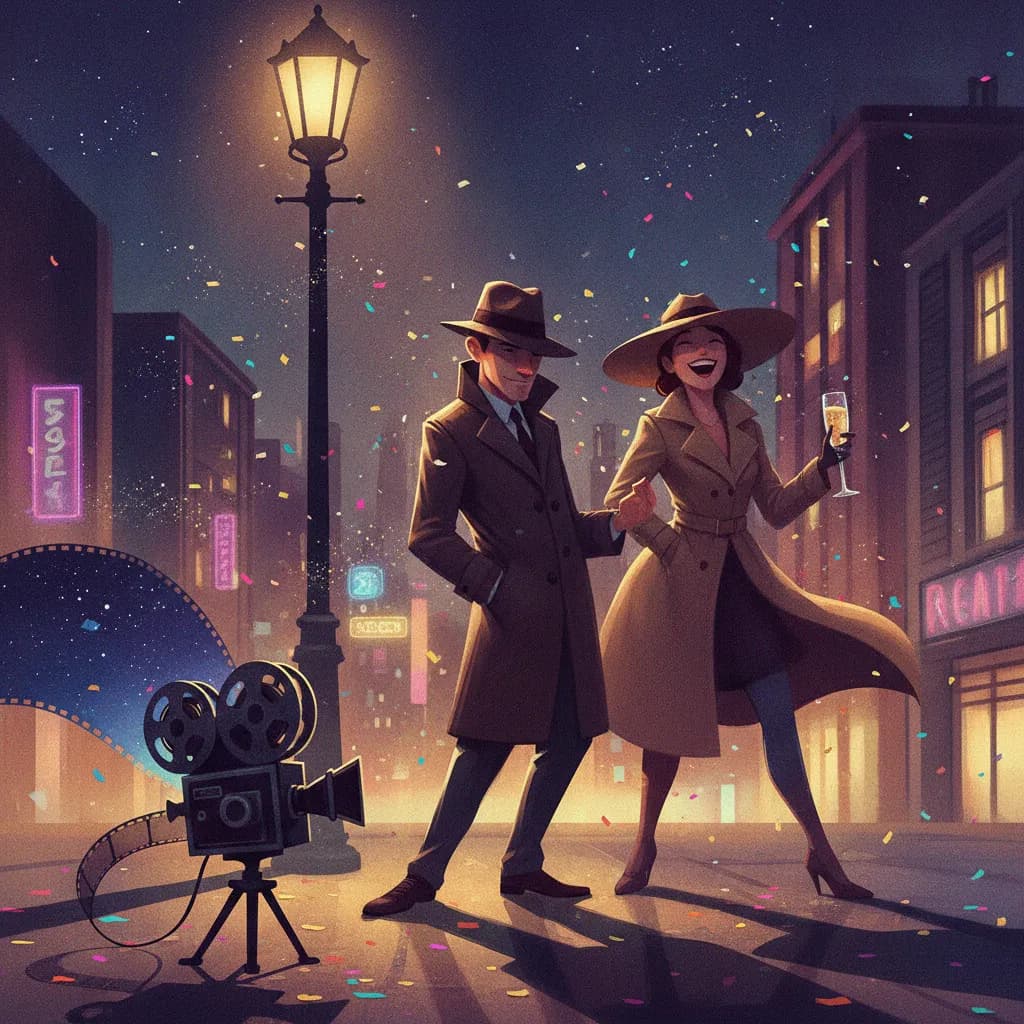
Film Noir
A movement so defined by shadow and cynicism that critics didn't even have a name for it until years after its golden age had already passed.
Cheat Sheet
- Film noir is a stylistic and thematic movement, not a strict genre, defined by moody black-and-white cinematography, cynical narration, and morally compromised characters.
- The classic film noir era ran roughly from the early 1940s to the late 1950s in American cinema, emerging partly from Depression-era anxiety and World War II's aftermath.
- Visually, noir relies heavily on high-contrast lighting, deep shadows, and unusual camera angles, techniques borrowed partly from German Expressionist cinema.
- The "femme fatale" — a seductive, morally ambiguous woman who leads the protagonist toward danger or ruin — is one of noir's most recognizable recurring character archetypes.
- Noir plots frequently center on crime, private detectives, and characters caught in circumstances beyond their control, with endings that are often bleak or morally ambiguous rather than neatly resolved.
- "Neo-noir" describes later films that revive noir's visual style and cynical tone in a modern setting, from Chinatown (1974) to more recent examples.
The 60-Second Version
Film noir is a stylistic and thematic movement, not a strict genre, defined by moody black-and-white cinematography, cynical narration, and morally compromised characters. The classic film noir era ran roughly from the early 1940s to the late 1950s in American cinema, emerging partly from Depression-era anxiety and World War II's aftermath. Visually, noir relies heavily on high-contrast lighting, deep shadows, and unusual camera angles, techniques borrowed partly from German Expressionist cinema. The "femme fatale," a seductive, morally ambiguous woman who leads the protagonist toward danger or ruin, is one of noir's most recognizable recurring character archetypes. Noir plots frequently center on crime, private detectives, and characters caught in circumstances beyond their control, with endings that are often bleak or morally ambiguous rather than neatly resolved. "Neo-noir" describes later films that revive noir's visual style and cynical tone in a modern setting, from Chinatown (1974) to more recent examples.
The Long Version
A Style, Not a Genre
Unlike genres defined by subject matter, noir is better understood as a visual and tonal sensibility that could be applied across crime dramas, mysteries, and thrillers alike. French critics actually coined the term "film noir," meaning "black film," years after the classic American films they were describing had already been made, retroactively recognizing a shared style across films that American critics and studios at the time hadn't necessarily grouped together themselves.
Where the Look Came From
Noir's signature visual style, deep shadows, high-contrast lighting, and dramatic, off-kilter camera angles, drew heavily on German Expressionist cinema, a style many noir directors and cinematographers, some of them European émigrés themselves, had been directly exposed to before working in Hollywood. This visual approach reinforced noir's thematic preoccupation with moral ambiguity and hidden danger lurking beneath a seemingly ordinary surface.
The Femme Fatale and Noir's Recurring Cast
Noir films drew on a recognizable set of character archetypes, most famously the femme fatale, a seductive, morally ambiguous woman whose actions frequently draw the protagonist toward ruin, alongside cynical, world-weary private detectives and characters caught in situations spiraling beyond their control. First-person voiceover narration, delivering hard-boiled, often fatalistic commentary, became another signature device reinforcing noir's distinctly pessimistic tone.
Neo-Noir: The Style Lives On
Long after the classic noir era faded by the late 1950s, filmmakers continued reviving its visual style and cynical themes in later decades, a movement generally referred to as "neo-noir." Films like Chinatown (1974) explicitly recalled classic noir's atmosphere and moral ambiguity while working in a more modern production context, demonstrating just how enduringly influential noir's original visual and thematic template turned out to be.
Ad slot (placeholder — set NEXT_PUBLIC_ADSENSE_SLOT_ID once an ad unit is created)
Glossary
- Femme fatale
- A seductive, morally ambiguous female character type common in noir, often leading the protagonist toward danger.
- German Expressionism
- An earlier German film movement known for dramatic lighting and angular visuals, a major stylistic influence on noir.
- Voiceover narration
- A first-person narrated commentary track, frequently used in noir to convey a cynical, world-weary tone.
- Neo-noir
- Films made after the classic noir era that deliberately revive its visual style and cynical themes.
- Chiaroscuro
- A dramatic lighting technique using strong contrasts between light and dark, central to noir's visual identity.
Go Deeper
- American Film Institute — Film Noir
- "Film Noir: An Encyclopedic Reference" by Alain Silver and Elizabeth Ward