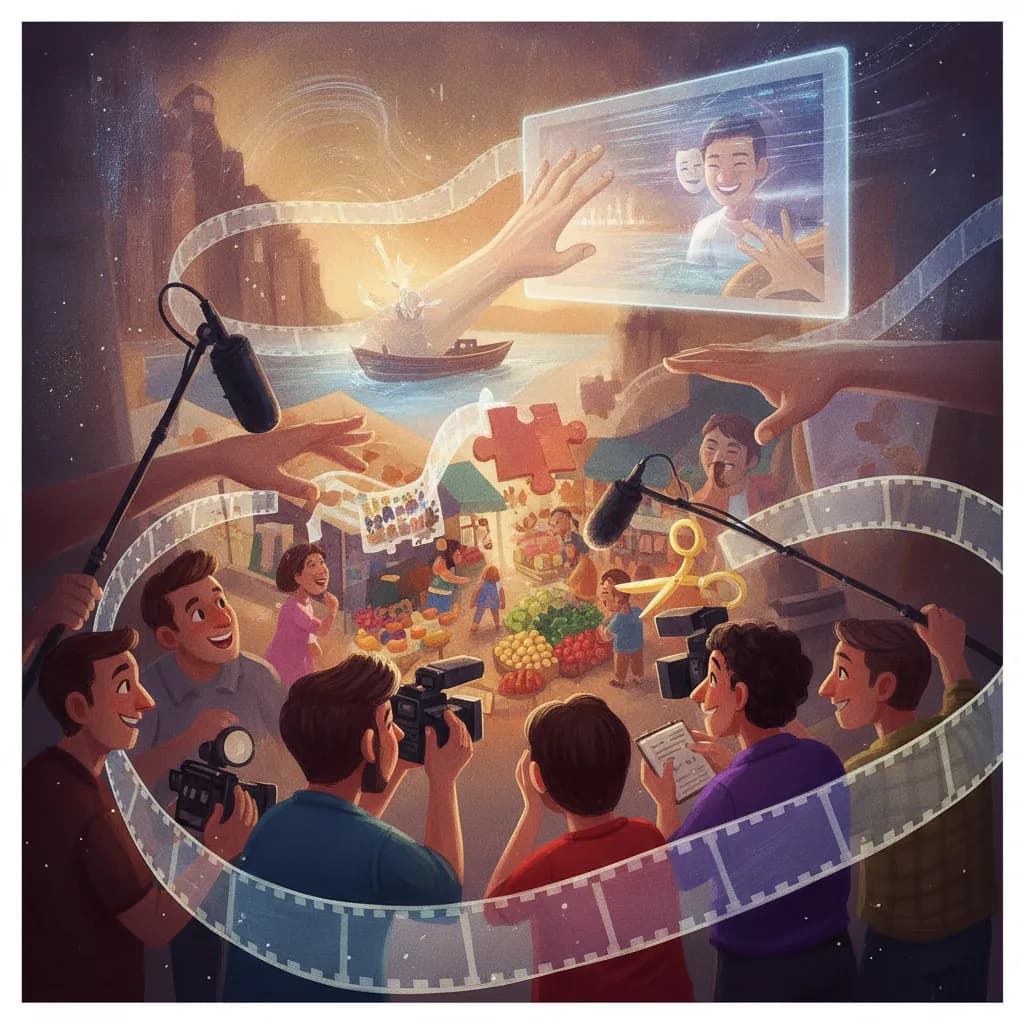
Documentary Filmmaking
A film genre that claims to show us "real life" — while every single editing choice a filmmaker makes is quietly, unavoidably shaping the story we end up seeing.
Cheat Sheet
- Documentary filmmaking involves creating non-fiction films that document real people, events, or subjects, though the specific approach to "truth" and objectivity varies considerably across different documentary styles.
- Direct cinema and cinéma vérité are two influential documentary approaches emphasizing minimal directorial intervention, aiming to observe events as they naturally unfold rather than staging or heavily directing them.
- Many documentaries incorporate explicit directorial perspective or advocacy, openly acknowledging that complete objectivity is neither fully achievable nor, in some filmmakers' view, always the appropriate goal.
- Documentary subjects range enormously, spanning nature and science, historical events, biography, true crime, and social or political issues, each often calling for a distinct stylistic approach.
- The rise of streaming platforms has significantly expanded audience access to and demand for documentary content, contributing to a notable surge in documentary production and viewership in recent years.
- Ethical questions, including how documentary subjects are portrayed, whether informed consent is properly obtained, and how editing choices can shape or distort a subject's story, are an active and ongoing area of concern within the documentary field.
The 60-Second Version
Documentary filmmaking involves creating non-fiction films that document real people, events, or subjects, though the specific approach to "truth" and objectivity varies considerably across different documentary styles. Direct cinema and cinéma vérité are two influential documentary approaches emphasizing minimal directorial intervention, aiming to observe events as they naturally unfold rather than staging or heavily directing them. Many documentaries incorporate explicit directorial perspective or advocacy, openly acknowledging that complete objectivity is neither fully achievable nor, in some filmmakers' view, always the appropriate goal. Documentary subjects range enormously, spanning nature and science, historical events, biography, true crime, and social or political issues, each often calling for a distinct stylistic approach. The rise of streaming platforms has significantly expanded audience access to and demand for documentary content, contributing to a notable surge in documentary production and viewership in recent years. Ethical questions, including how documentary subjects are portrayed, whether informed consent is properly obtained, and how editing choices can shape or distort a subject's story, are an active and ongoing area of concern within the documentary field.
The Long Version
Observing Without Intervening
Direct cinema and cinéma vérité represent two influential, closely related documentary approaches that emphasize minimal directorial intervention, aiming to observe events as they naturally unfold without staging or heavily directing the subjects being filmed, a stylistic philosophy built on the belief that stepping back allows a more authentic representation of reality to emerge on screen.
When Filmmakers Choose Not to Be Neutral
Many documentaries instead incorporate explicit directorial perspective or advocacy, openly using the film to make a specific argument or convey a particular point of view, an approach that acknowledges complete objectivity is neither fully achievable in practice nor, in the view of many filmmakers, always the most honest or valuable goal for a given subject and story.
A Genre Spanning Enormously Different Subjects
Documentary subjects range enormously, spanning nature and science, historical events, biography, true crime, and social or political issues, with each specific subject area often calling for its own distinct stylistic approach, pacing, and narrative structure suited to the particular material and story being told.
Streaming's Effect on Documentary Demand, and Persistent Ethical Questions
The rise of major streaming platforms has significantly expanded audience access to and overall demand for documentary content, contributing to a notable surge in documentary production and viewership in recent years. Alongside this growth, ethical questions remain an active and ongoing concern within the field, including how documentary subjects are portrayed, whether meaningful informed consent has been properly obtained, and how editing choices, even in well-intentioned documentaries, can meaningfully shape or distort a subject's actual story.
Ad slot (placeholder — set NEXT_PUBLIC_ADSENSE_SLOT_ID once an ad unit is created)
Glossary
- Direct cinema
- A documentary style emphasizing minimal directorial intervention, observing events as they naturally unfold.
- Cinéma vérité
- A related documentary style, often involving more direct filmmaker interaction with subjects than direct cinema, while still emphasizing observed reality.
- Advocacy documentary
- A documentary style that openly incorporates the filmmaker's own perspective or argument, rather than aiming for strict neutrality.
- Informed consent
- A documentary subject's knowing agreement to participate and be portrayed in a film, a significant ongoing ethical consideration.
- True crime
- A popular documentary subgenre focused on real criminal cases and investigations.