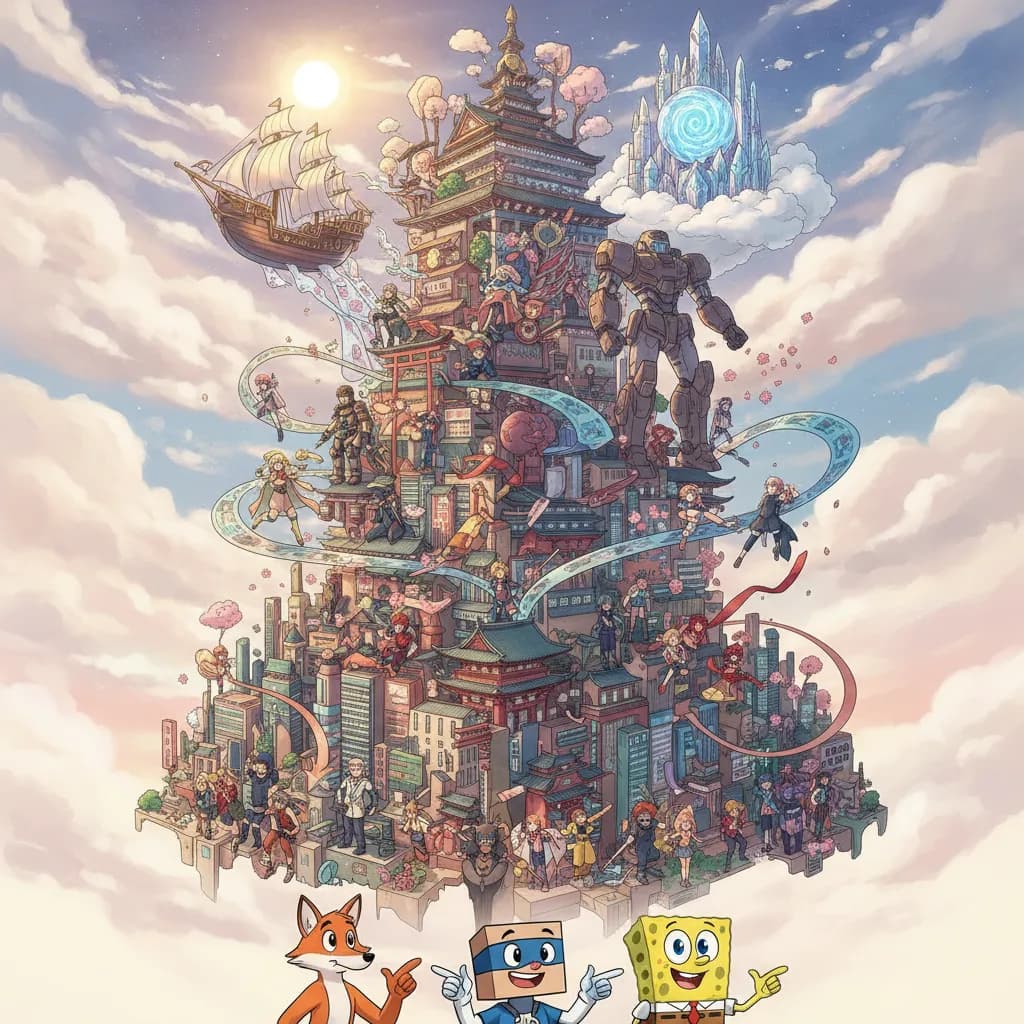
Anime
An entire animation industry that Western audiences spent decades dismissing as "cartoons for kids," despite it covering nearly every genre and audience imaginable.
Cheat Sheet
- Anime refers to animation produced in Japan, spanning an enormous range of genres, tones, and target audiences well beyond the "cartoons for kids" stereotype common outside Japan.
- Manga (Japanese comics) and anime are closely linked but distinct — many popular anime series are direct adaptations of existing manga source material.
- Studio Ghibli, co-founded by director Hayao Miyazaki, is among the most internationally acclaimed anime studios, known for films like Spirited Away and My Neighbor Totoro.
- Anime is typically categorized by target demographic — shonen (young male audience), shojo (young female audience), seinen (adult male), and josei (adult female) — which shapes tone and content.
- Streaming platforms have dramatically expanded anime's global audience over the past decade, with simulcasts now bringing new episodes to international viewers within hours of their Japanese broadcast.
- Anime has produced some of the highest-grossing films in Japanese box office history, occasionally outperforming major Hollywood releases domestically.
The 60-Second Version
Anime refers to animation produced in Japan, spanning an enormous range of genres, tones, and target audiences well beyond the "cartoons for kids" stereotype common outside Japan. Manga, Japanese comics, and anime are closely linked but distinct — many popular anime series are direct adaptations of existing manga source material. Studio Ghibli, co-founded by director Hayao Miyazaki, is among the most internationally acclaimed anime studios, known for films like Spirited Away and My Neighbor Totoro. Anime is typically categorized by target demographic — shonen for a young male audience, shojo for a young female audience, seinen for adult men, and josei for adult women — which shapes tone and content considerably. Streaming platforms have dramatically expanded anime's global audience over the past decade, with simulcasts now bringing new episodes to international viewers within hours of their Japanese broadcast. Anime has also produced some of the highest-grossing films in Japanese box office history, occasionally outperforming major Hollywood releases domestically.
The Long Version
Not Just One Genre or Audience
Outside Japan, anime is sometimes mistakenly treated as a single genre defined by a particular visual style, when it's really an entire national animation industry covering essentially every genre prose or live-action film does, from lighthearted comedy to serious war drama to horror, aimed at audiences ranging from young children to mature adults.
Manga's Close Relationship With Anime
A huge share of popular anime series originate as manga, Japanese comic books typically serialized in weekly or monthly magazines before being collected into volumes. Successful manga are frequently adapted into anime once they've built a substantial readership, meaning many anime viewers are actually experiencing a second adaptation of a story that began, and often continues, in print form.
Studio Ghibli and International Acclaim
Studio Ghibli, co-founded by director Hayao Miyazaki along with Isao Takahata, became one of the most critically respected animation studios in the world, known for meticulously hand-crafted, emotionally resonant films like Spirited Away, which won the Academy Award for Best Animated Feature, and My Neighbor Totoro, helping introduce many international audiences to anime as a serious artistic medium rather than purely genre entertainment.
How Streaming Changed Anime's Global Reach
For decades, international anime fans often had to wait months or years for official translated releases, relying heavily on fan-made and often unofficial translations in the meantime. The rise of dedicated streaming platforms has largely eliminated that gap through simulcasting, releasing new episodes internationally, with official subtitles, within hours of their original Japanese broadcast, dramatically accelerating anime's global fan community and cultural reach.
Ad slot (placeholder — set NEXT_PUBLIC_ADSENSE_SLOT_ID once an ad unit is created)
Glossary
- Manga
- Japanese comic books or graphic novels, often the original source material anime series are adapted from.
- Shonen
- An anime and manga category aimed primarily at young male audiences, often action-oriented.
- Studio Ghibli
- A celebrated Japanese animation studio co-founded by director Hayao Miyazaki.
- Simulcast
- Releasing new anime episodes internationally at nearly the same time as their original Japanese broadcast.
- Otaku
- A Japanese term for an enthusiastic fan of anime, manga, or related media, sometimes carrying different connotations in Japan versus internationally.